





























Yellowstone National Park – America’s famous national park is a destination that nature lovers often visit. So, is Yellowstone National Park worth visiting, how to visit Yellowstone National Park, what to do in Yellowstone National Park, how to get to Yellowstone National Park? Let’s explore what’s special about Yellowstone National Park through our ULTIMATE Yellowstone National Park Travel Guide: Top Things to Do, See, Stay, Tips & MORE below!
- 15+ Best & Most Beautiful National Parks in the US You Shouldn’t Miss
- Antelope Canyon travel blog — Upper Antelope vs Lower Antelope & photography tips and best camera settings for Antelope Canyon
- Bryce Canyon itinerary — How to visit Bryce Canyon in one day?
- Grand Circle USA blog — The guide & suggested perfect Grand Circle road trip itinerary for 3 weeks
- The ULTIMATE Universal Studios Orlando travel guide & Suggested 1-day itinerary
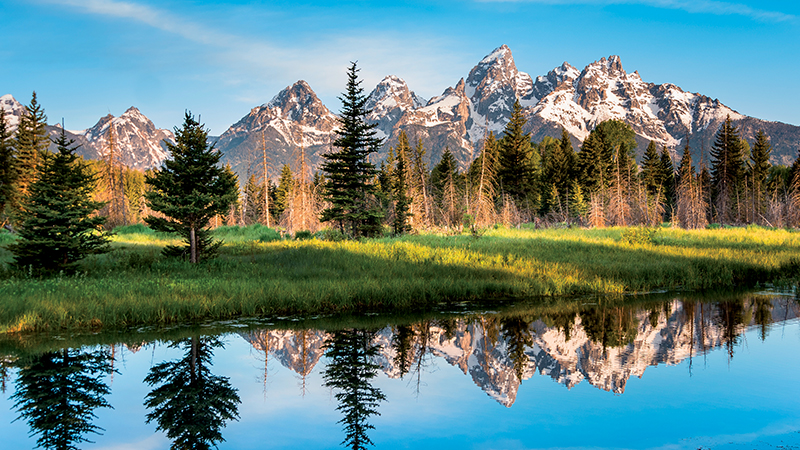
If you are looking for a journey to immerse yourself in the wild, where geysers boil, hot springs are colorful and bison freely graze, then Yellowstone National Park is the destination not to be missed. This is the first national park in the world, famous for its majestic landscape and the most diverse ecosystem in the United States.
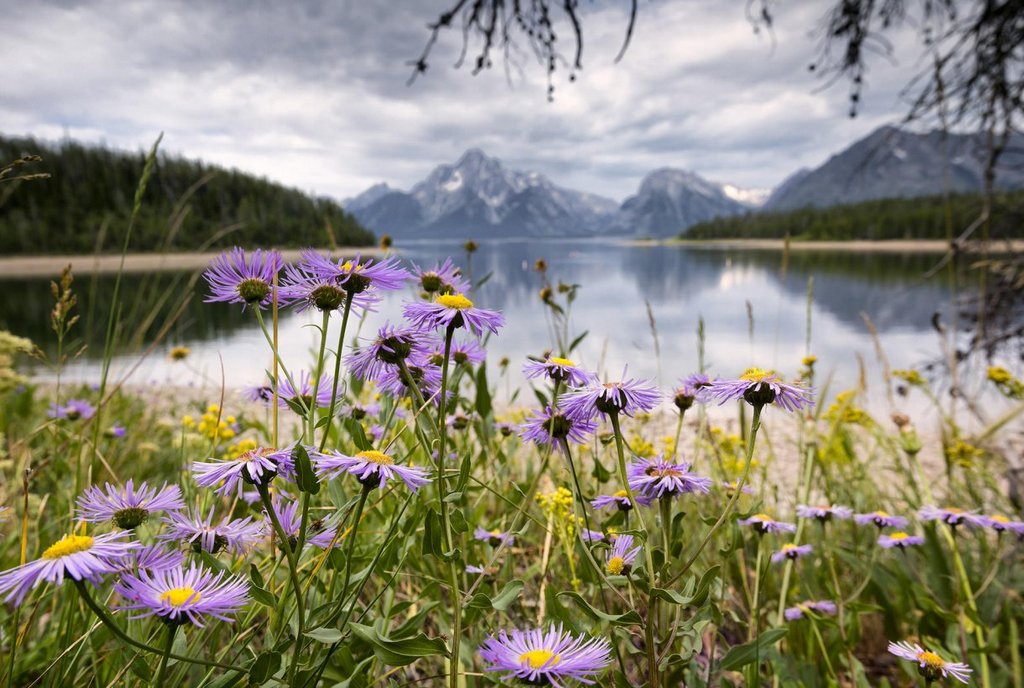
In this article, we will bring you a detailed guide when going to Yellowstone. Let’s start planning your dream Yellowstone adventure right now!
Yellowstone National Park travel guide: Introducing Yellowstone National Park – America’s Famous National Park
Grand Teton National Park & Yellowstone National Park Multi-day Guided Tour
Yellowstone National Park is the world’s first national park (established in 1872), located in Wyoming and stretching to Montana, Idaho (USA). This is a world-famous destination with majestic landscapes and rich ecosystems.
Characteristics that make Yellowstone famous:
- More than 10,000 geothermal phenomena: hot springs, boiling mud pools, geysers.
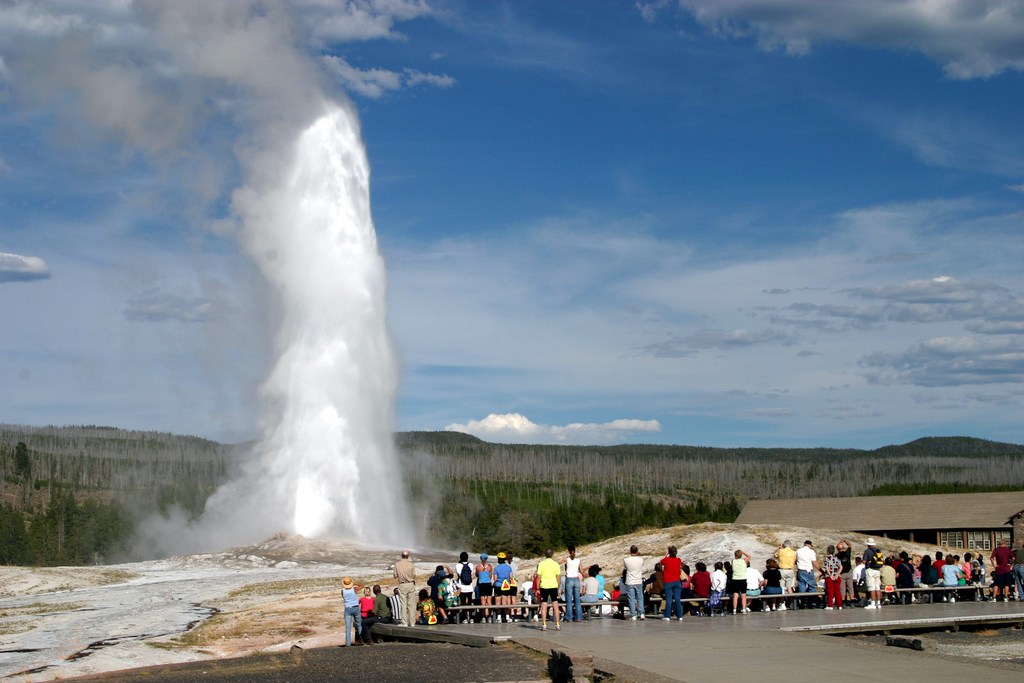
- Old Faithful Geyser: iconic geyser, erupting periodically.
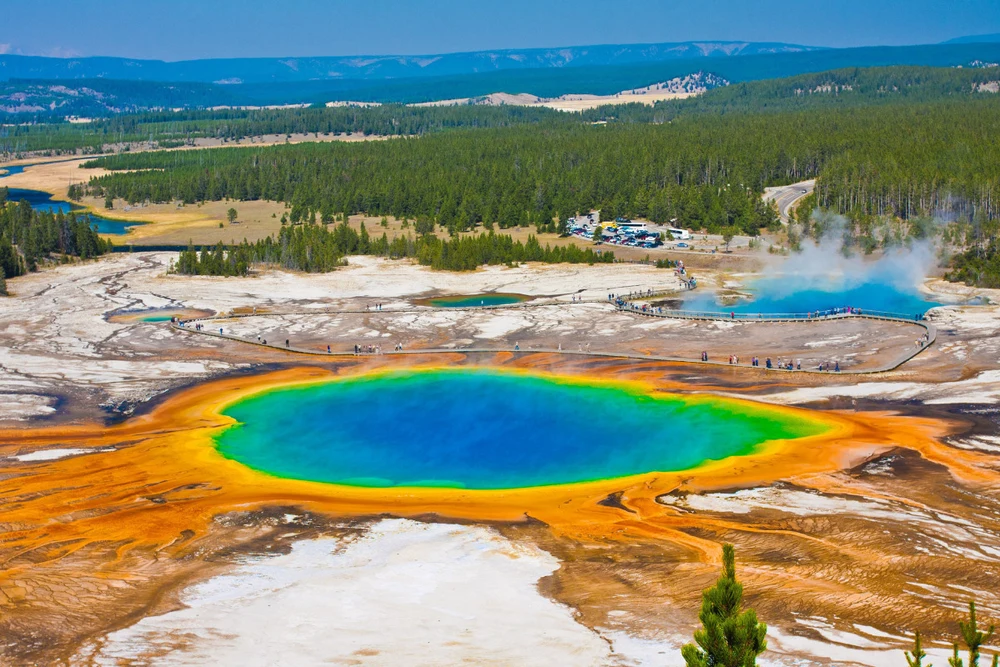
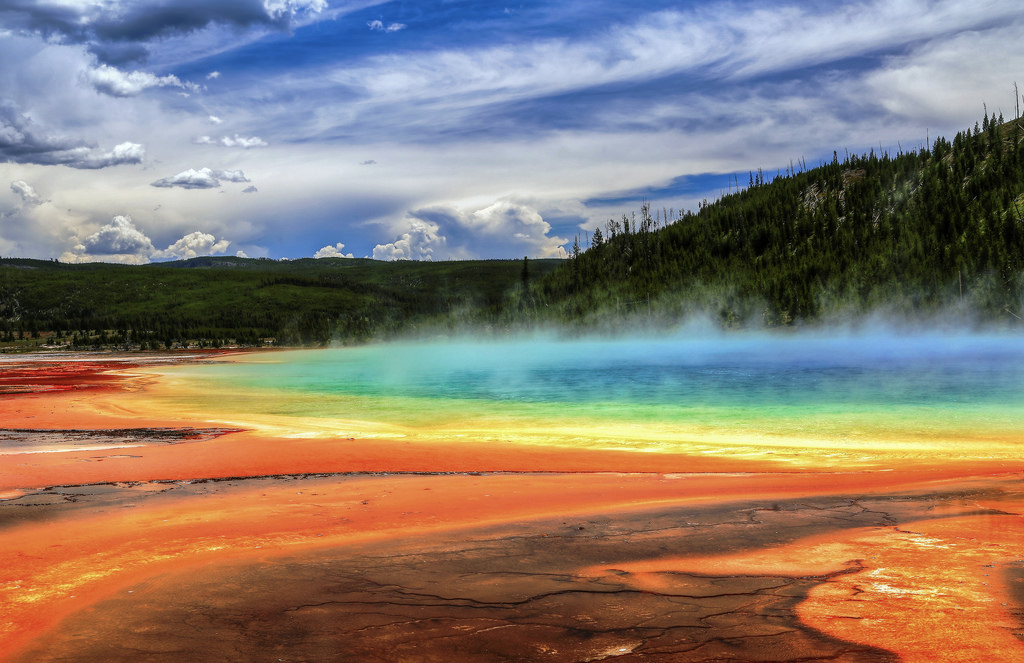
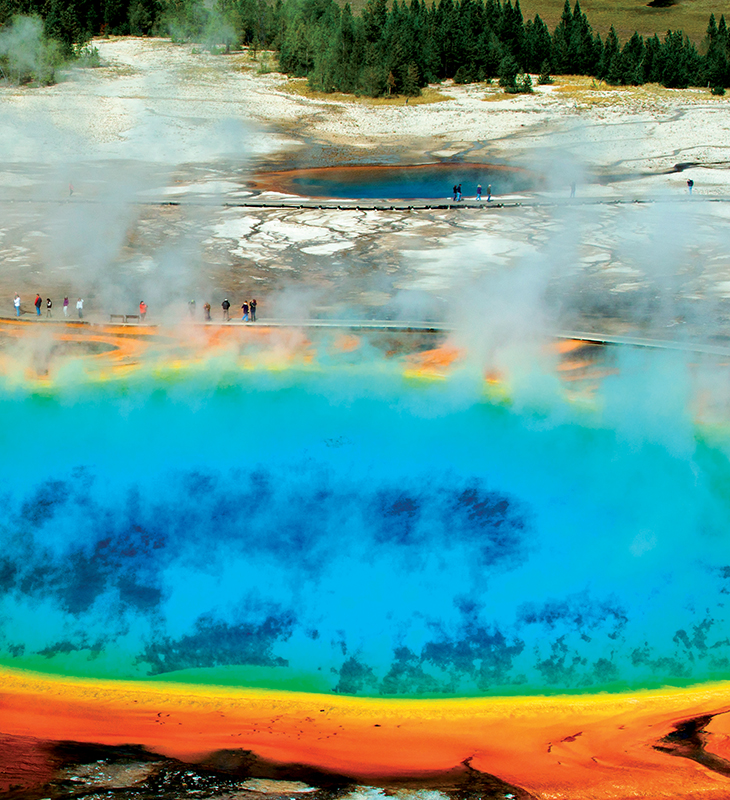
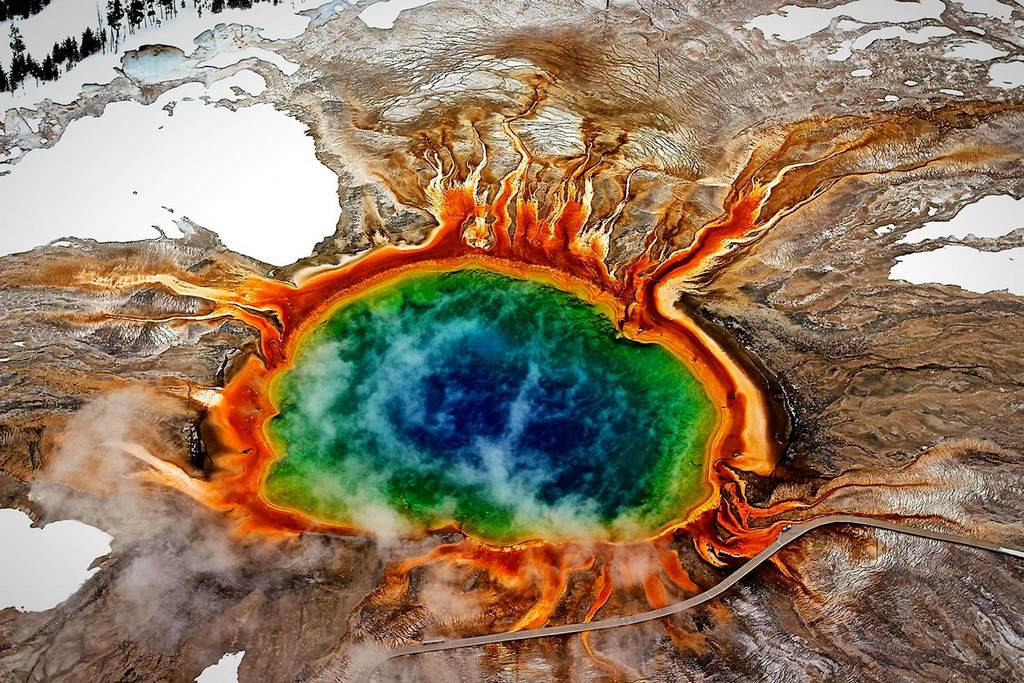
- Grand Prismatic Spring: America’s largest colorful hot spring.
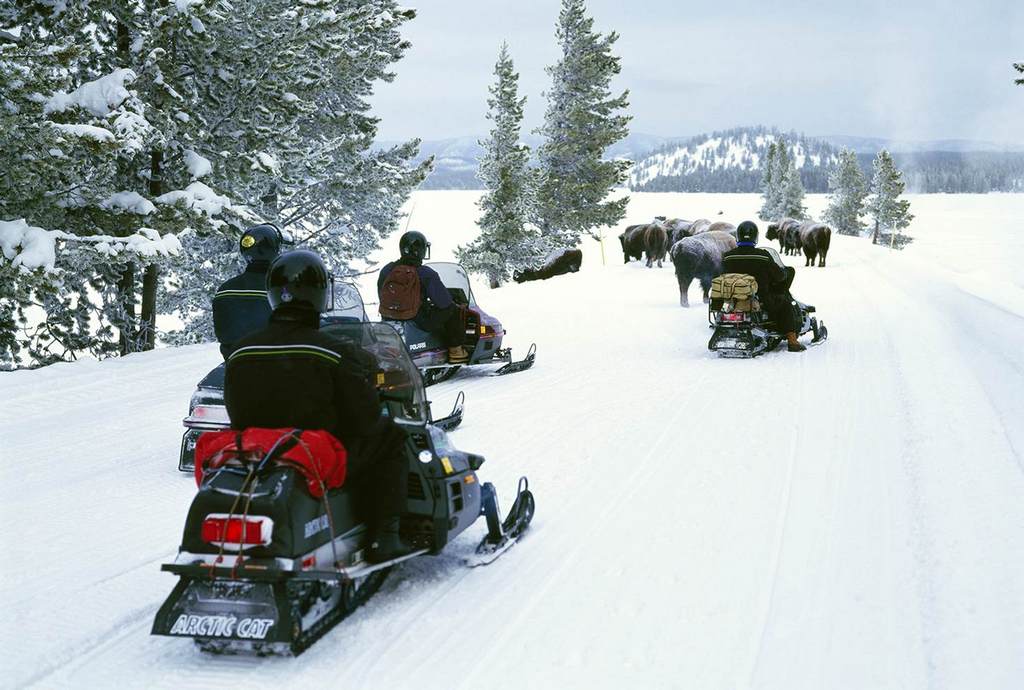
- Diverse wildlife: bison, bears, wolves, elk.
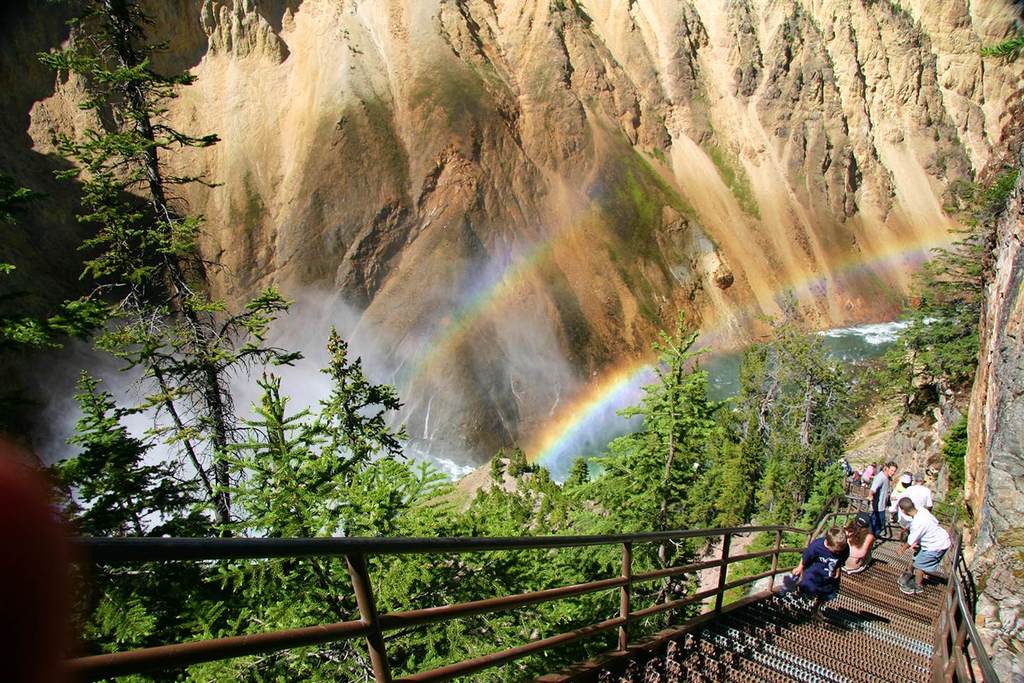
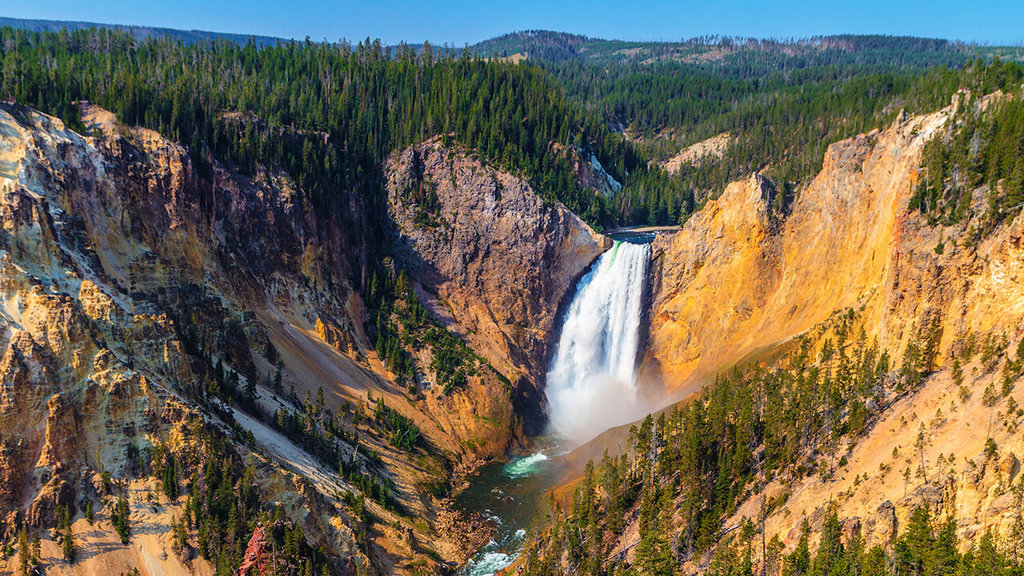
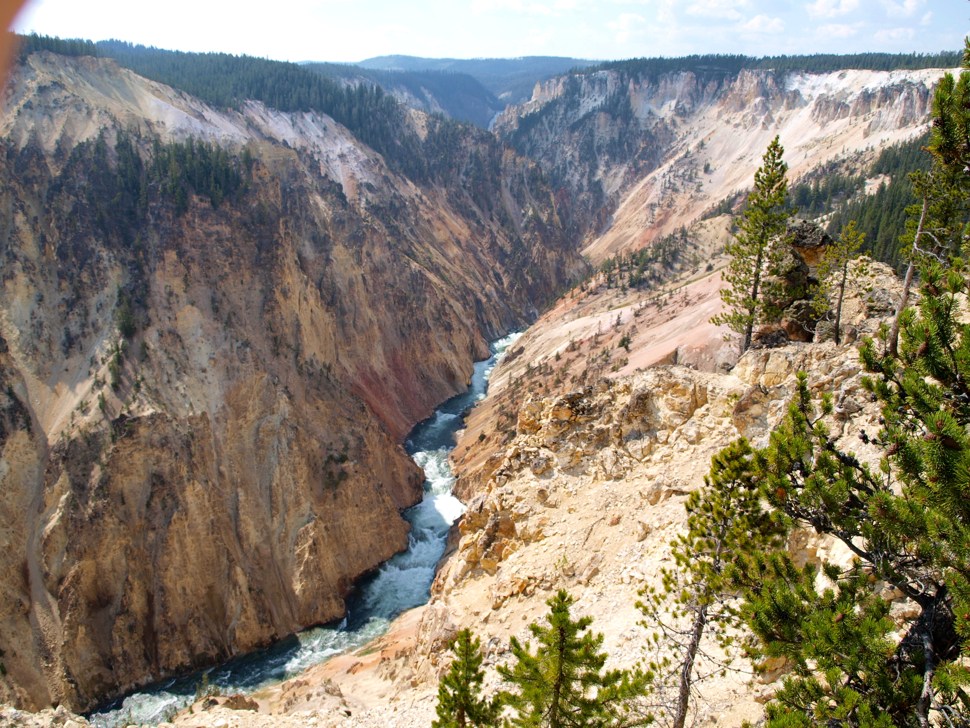
- Majestic landscape: Grand Canyon of the Yellowstone, Yellowstone Lake, large waterfalls.
Yellowstone is both a place to explore nature and a “living laboratory” for scientists, and a dream destination for those who love adventure travel.
What’s Special About Yellowstone? Famous Geysers & Hot Springs

Yellowstone is known as the “hot heart of the Earth” with more than 10,000 geothermal phenomena, accounting for more than half of the active geysers in the world. This is the reason why millions of tourists come to this national park every year.
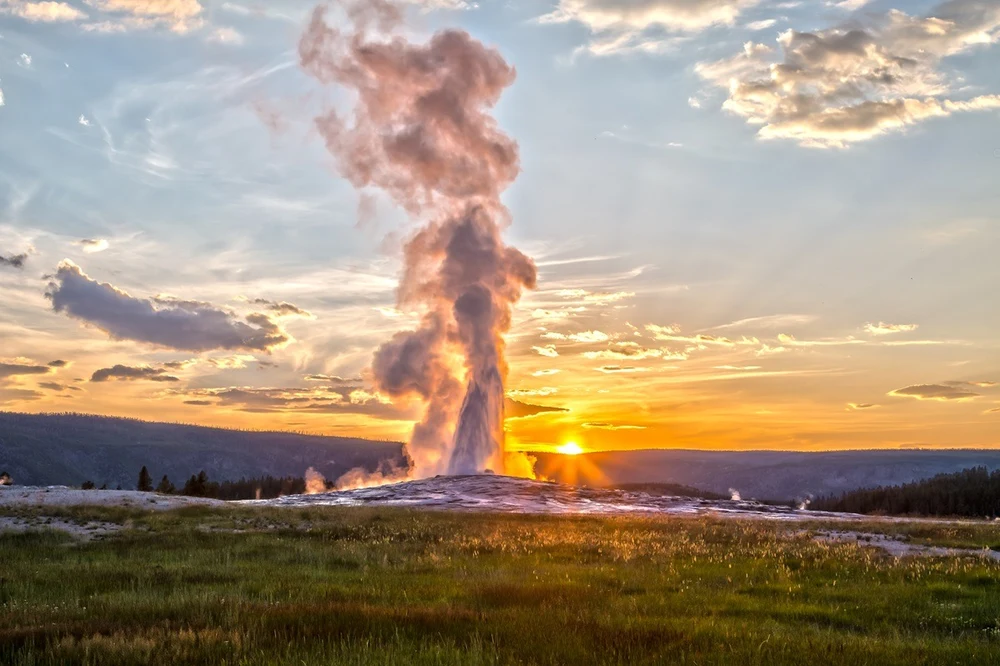
Old Faithful Geyser – Symbol of Yellowstone
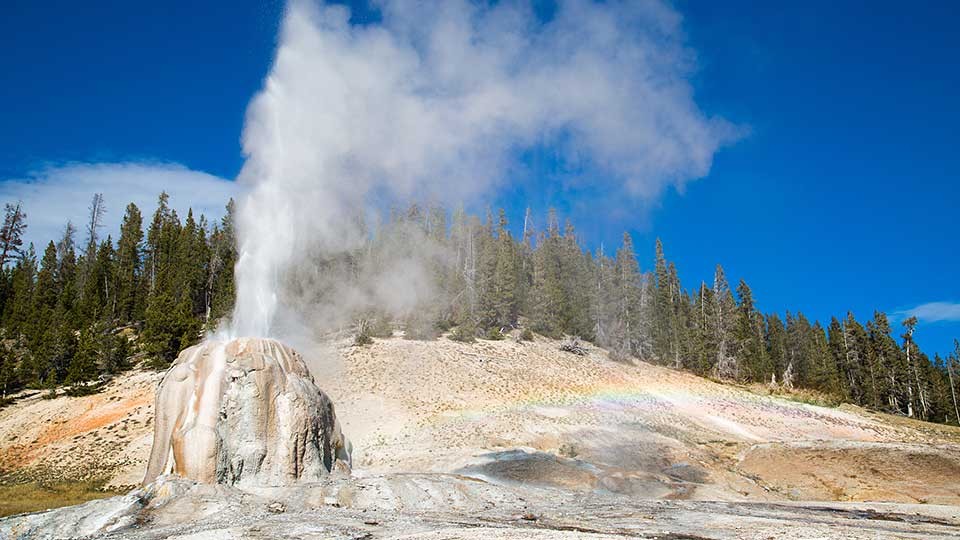
Old Faithful is the most famous geyser in the park, with a periodic eruption cycle of about 90 minutes. Hot water shoots dozens of meters high, combined with white steam to create a majestic scene. You can refer to the eruption forecast at the information center, or simply wait to witness this magical moment with your own eyes.
Yellowstone and Mount Rushmore 4D3N Tour from Salt Lake City
Grand Prismatic Spring – Colorful Hot Water Pool
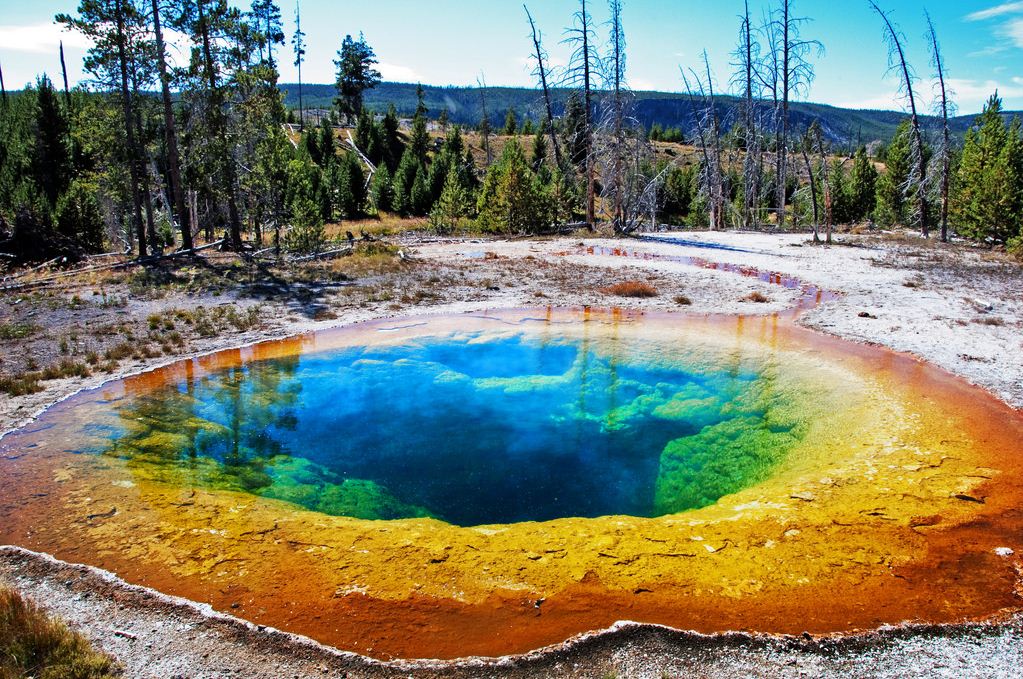
The largest hot spring in the US and famous all over the world, Grand Prismatic Spring impresses with its brilliant blue center, surrounded by yellow, orange and red circles. Walk along the boardwalk or go up to the observation point from above, you will see the whole natural picture as beautiful as a giant rainbow.
4D3N Grand Teton National Park+ Yellowstone National Park Tour
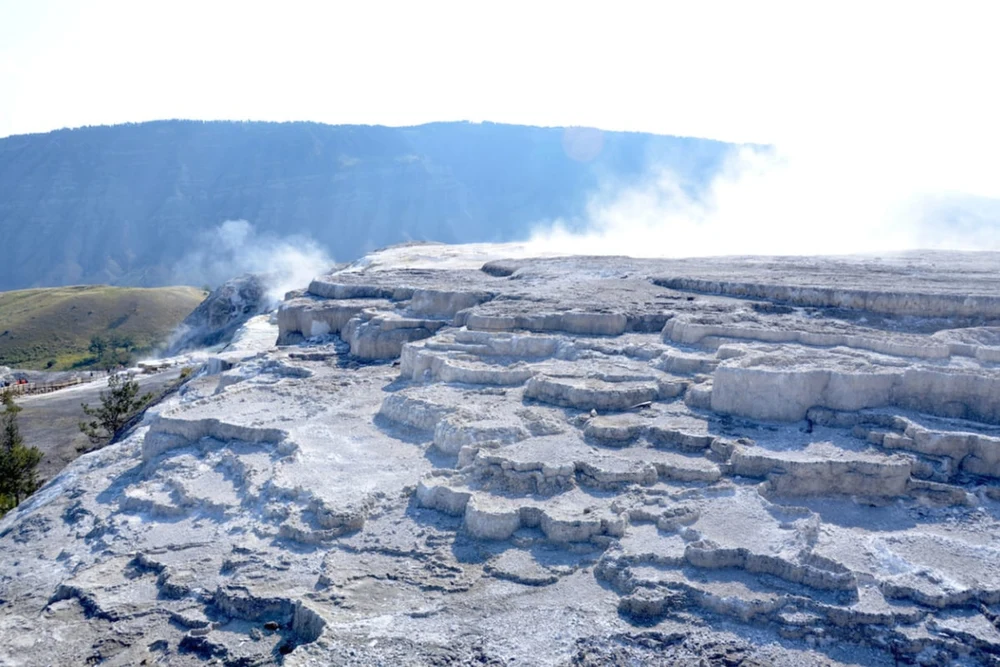
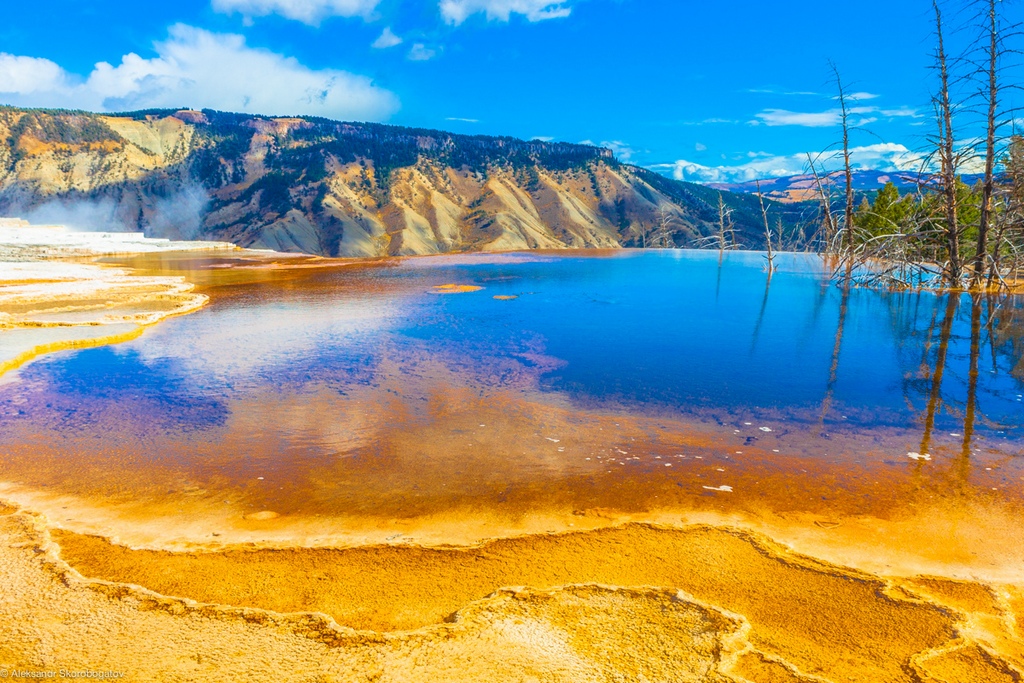
Mammoth Hot Springs – White Limestone Terraces
Yellowstone and Grand Teton 4-Day Tour from Salt Lake City
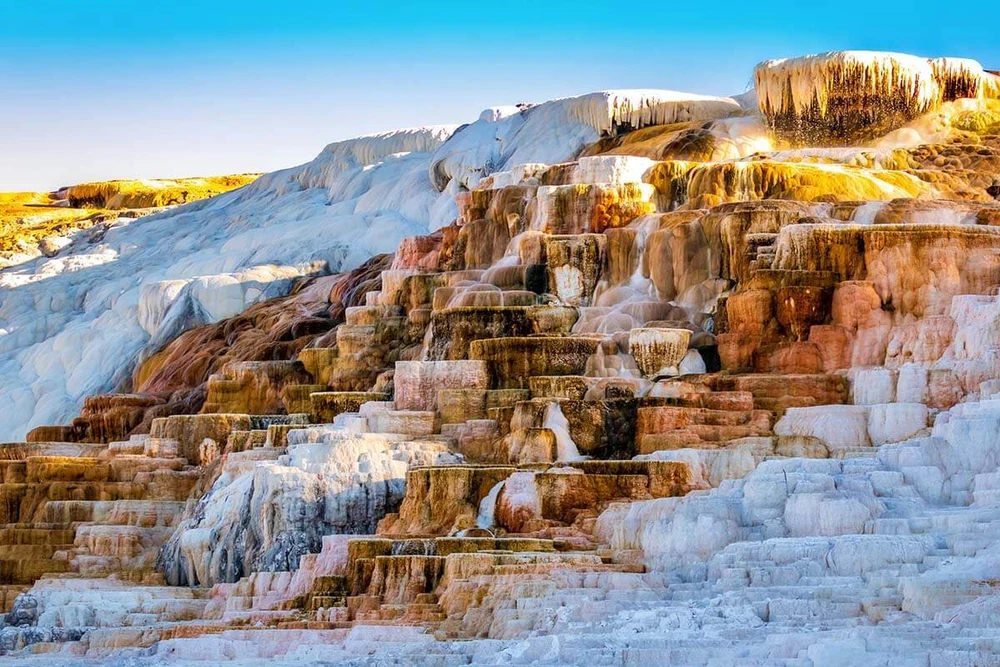
This hot spring area is different thanks to its terraced limestone terraces, formed from calcium carbonate minerals. Each year, the shape and color here change according to the flow of hot water, making the landscape always new.
Norris Geyser Basin – The Most Dynamic Area
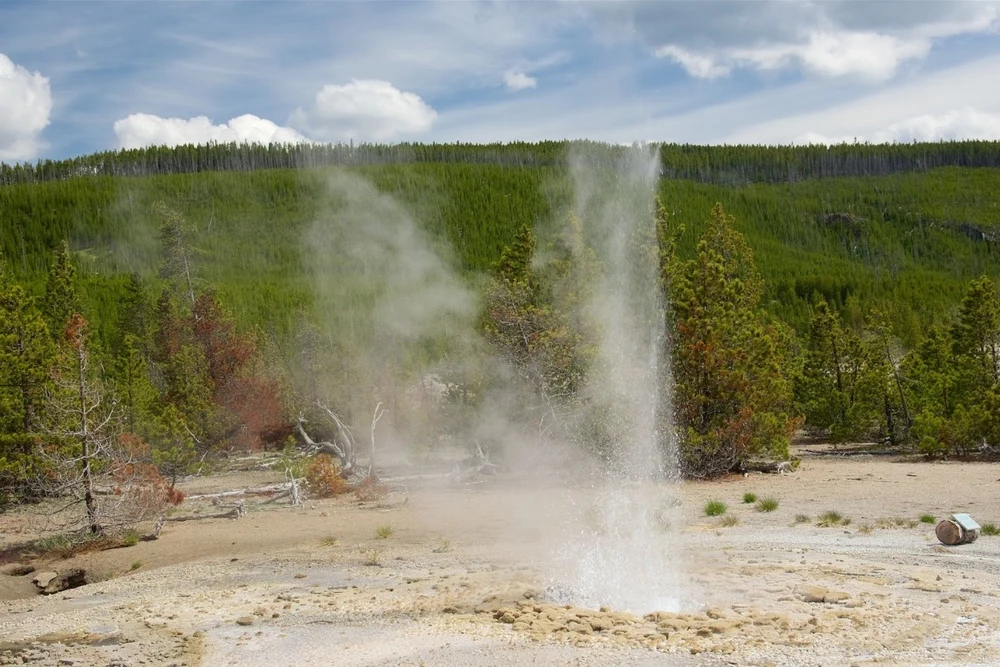
Norris is considered the hottest and most volatile area in Yellowstone. Here, you can see many boiling springs, steaming springs and even Steamboat Geyser – the world’s tallest geyser when active.
Fountain Paint Pot & Firehole Lake Drive – Colors of Smoke
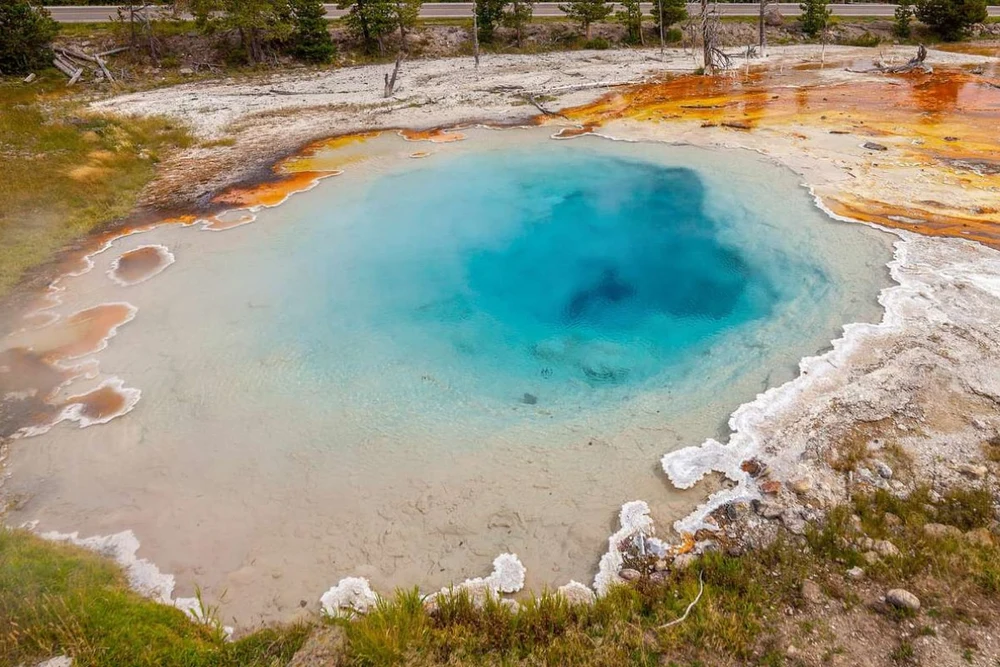
Fountain Paint Pot is famous for its colorful boiling mud pools, while Firehole Lake Drive takes you past many small geysers and hot springs. Especially at sunset, the sunlight shining through the steam creates an unforgettable magical scene.
Safety tips when visiting geothermal areas in Yellowstone National Park
Geyser and hot spring areas are potentially dangerous. Always walk on a walking board, keep your distance, do not touch the hot water, and pay special attention to children. There have been many serious accidents when visitors got too close or went over the fence. Pay attention!
Where to Hike in Yellowstone? Best Hiking Trails
Yellowstone is a hiking paradise with more than 1,100 miles of trails. You can choose from short, easy walks to multi-day backcountry explorations.
Grand Canyon

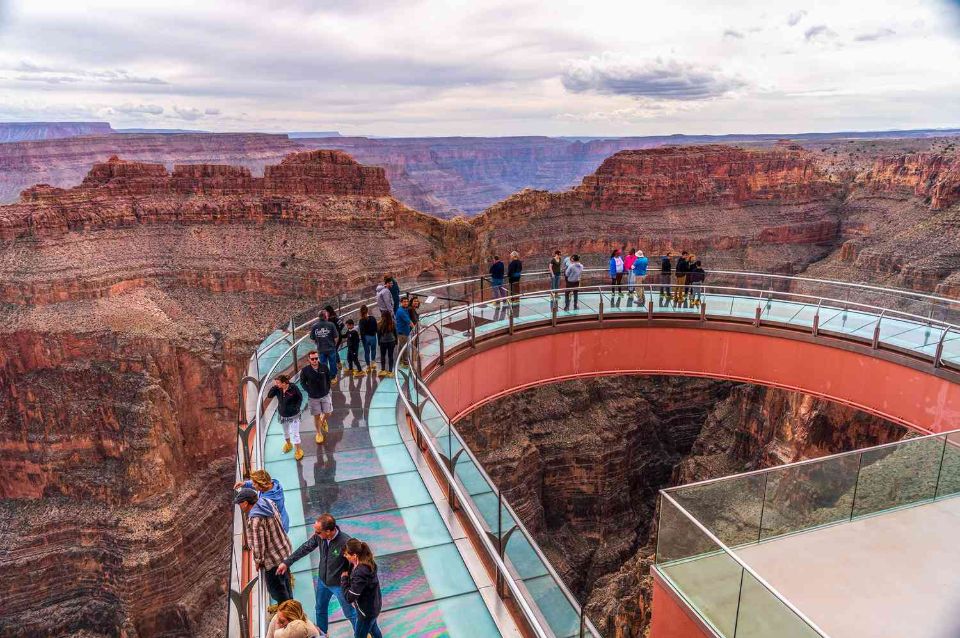
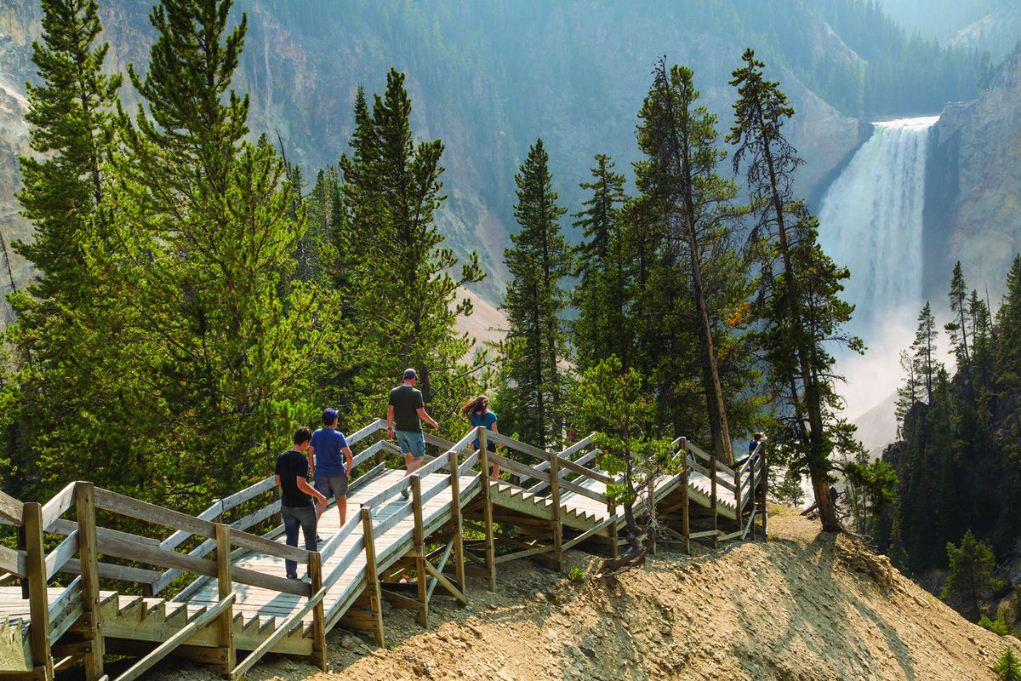
This majestic canyon area allows you to admire spectacular waterfalls and majestic mountain views. Among them, Mount Washburn Trail is one of the most popular routes, taking you to the ideal height to see the endless Yellowstone panorama.
The Museum of Modern Art Ticket in New York
Yellowstone Lake
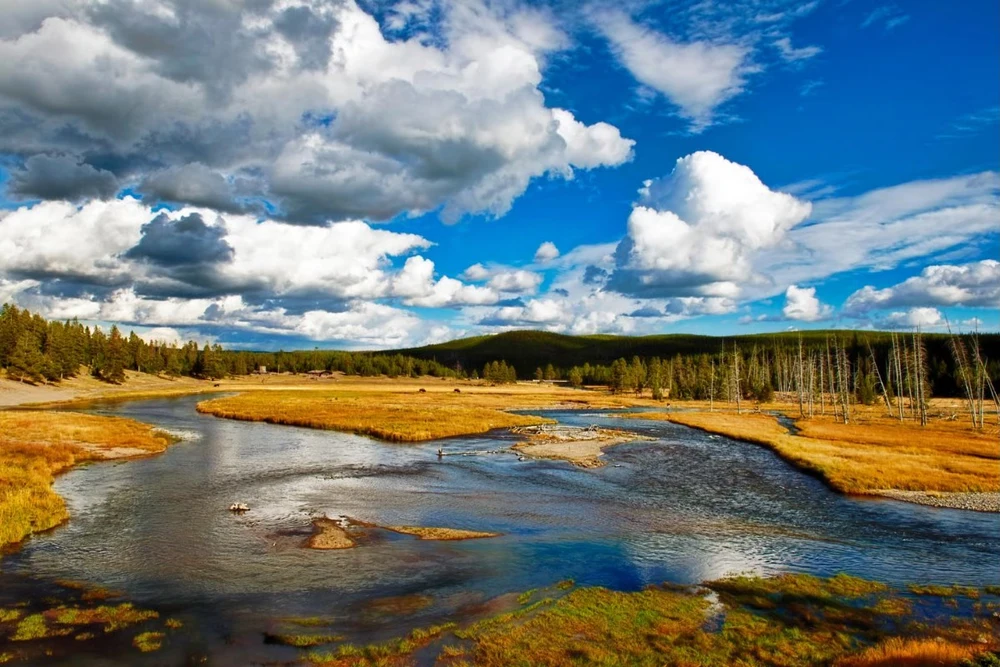
Walk along the vast lake shore, you will feel the freshness of nature. Avalanche Peak Trail is a challenging and conquerable challenge with views of the lake and majestic mountains, while Elephant Back Mountain Trail is gentler, suitable for families with young children or beginners.
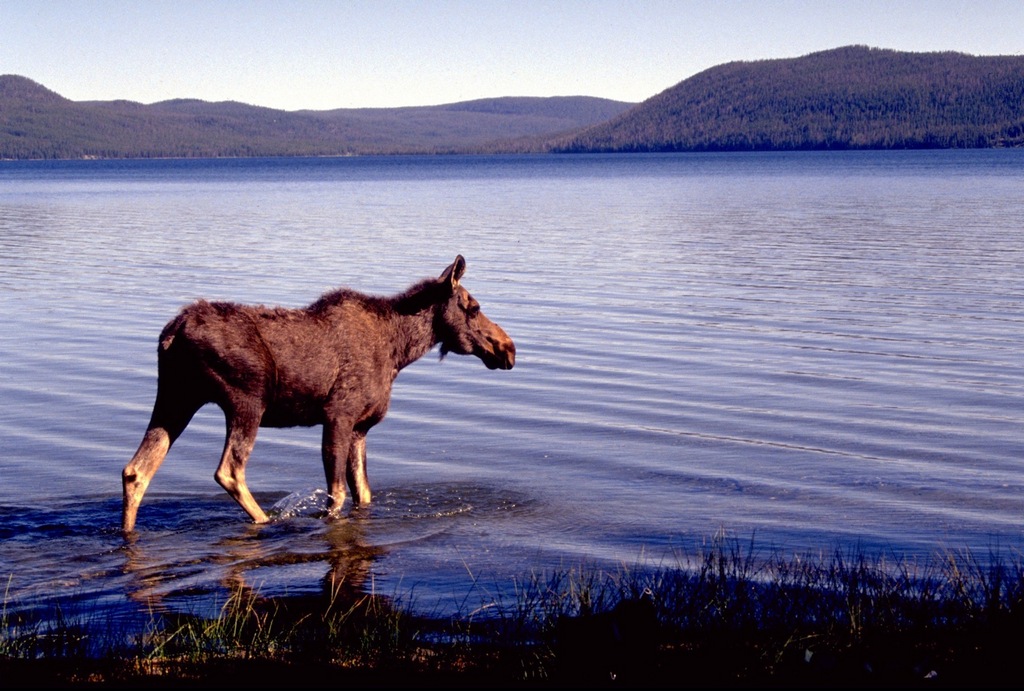
Yellowstone Camps O2 Zone Khao Kho
Old Faithful Area
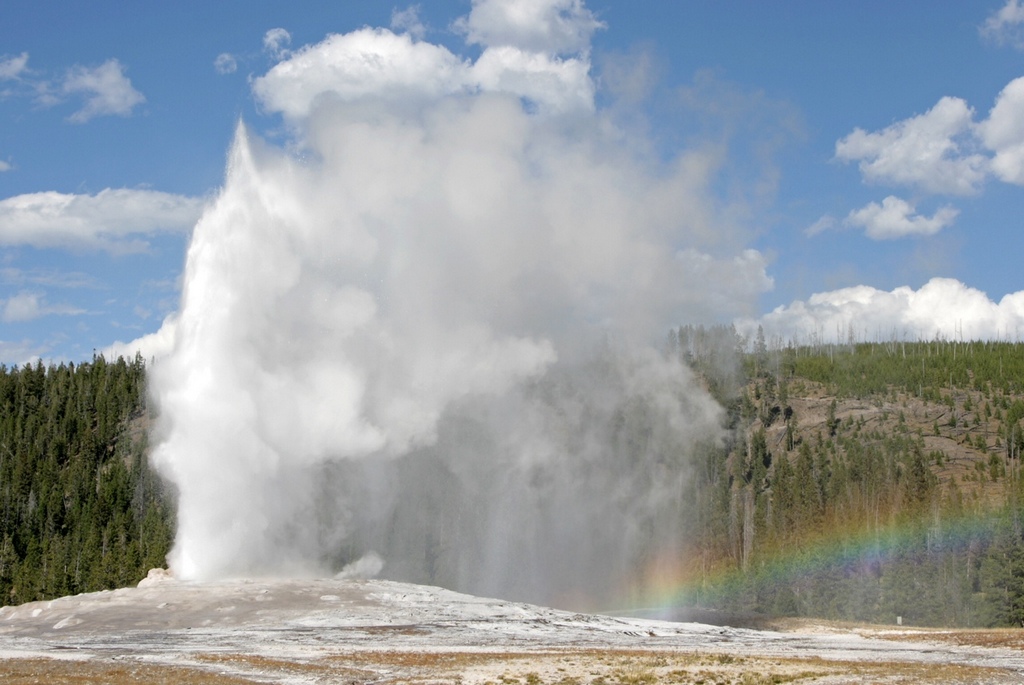
Yellowstone Camps Resort Khao Yai
Not only famous for its geysers, this area also has many trails for you to walk through unique geothermal clusters. Lone Star Geyser Trail takes you to a little-known erupting geyser, while Observation Point Trail offers panoramic views of the entire area.
Mammoth Hot Springs Area
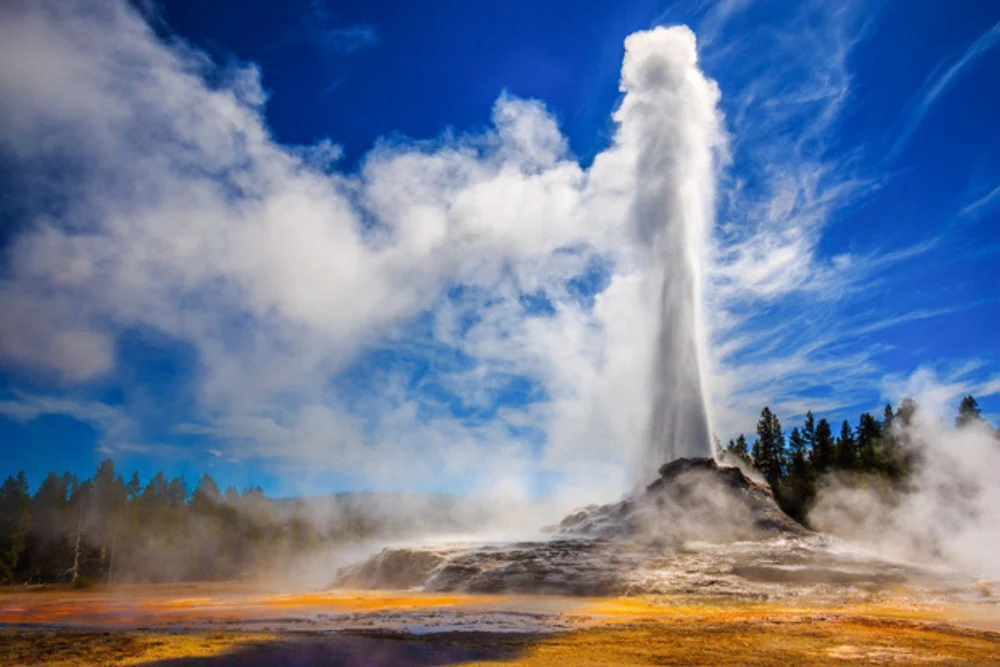
This is an interesting combination of white limestone landscape and dense forests. Bunsen Peak Trail offers wide-open views with a moderate challenge, while Beaver Ponds Trail offers tranquility, suitable for those looking for a peaceful corner to immerse themselves in nature.
Tower Area & Northeast Area
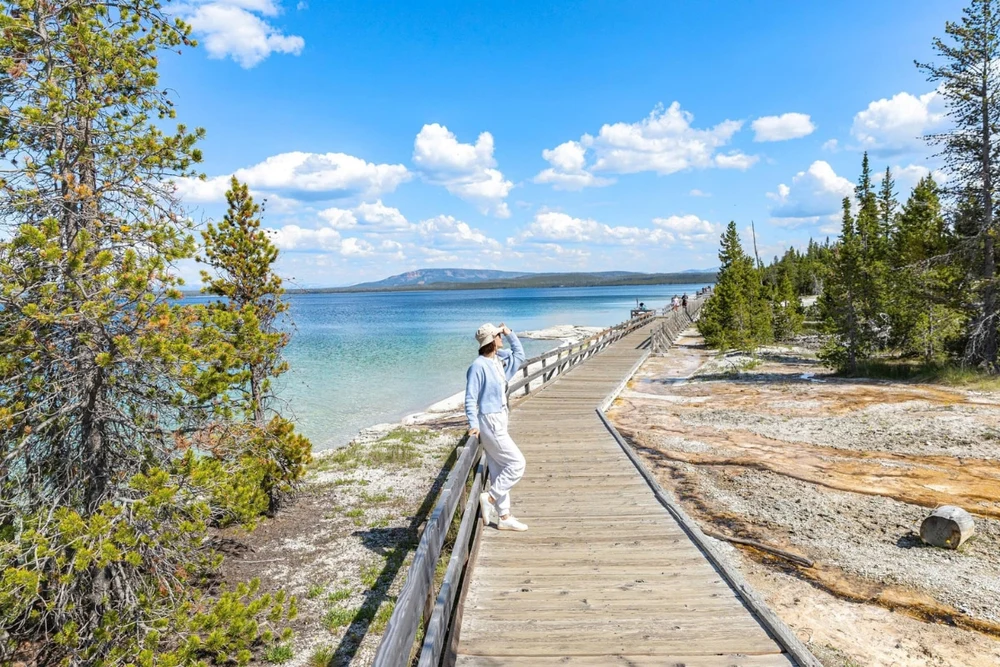
Less crowded but extremely diverse landscapes: deep valleys, high mountains, and especially fossil forests. The Lost Lake Trail is a highlight, where you can see fossilized tree trunks that are millions of years old – a vivid testament to the natural history of this land.
Safety tips when hiking in Yellowstone: Always carry bear spray and know how to use it, go in groups to reduce risks, hang food high or use bear canisters when camping, and remember to check trail conditions as many places still have snow until July.
Wildlife World in Yellowstone Park – USA

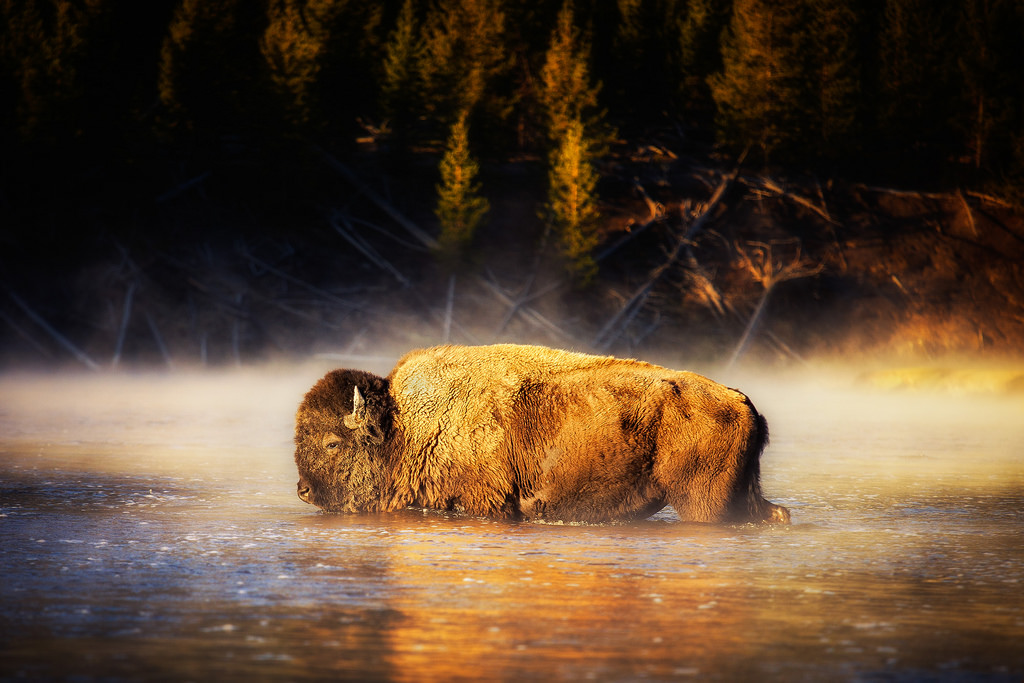
Yellowstone is not only famous for its Geysers and Hot Springs but also a paradise for observing Wildlife. This is the only place in the US where you can see giant herds of Bison, Elk, Grizzly Bear, Black Bear or even Gray Wolf living naturally.
Lamar Valley – Valley of Bison and Wolves
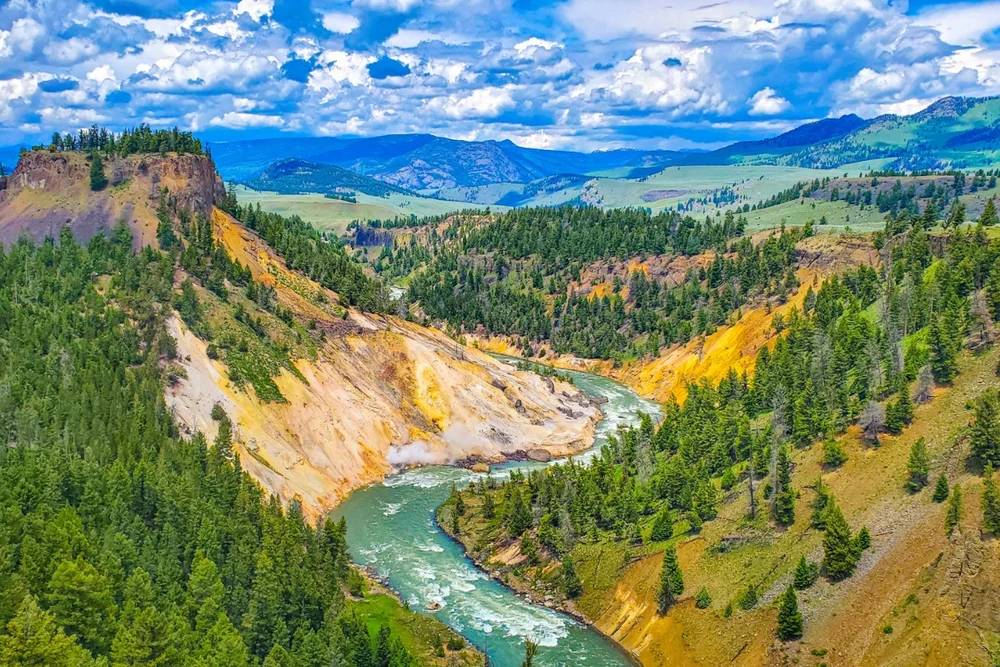
Lamar Valley is often called “The Serengeti of North America” because of its rich fauna. In the early morning and late afternoon, herds of Bison move across the grasslands, creating a spectacular scene. This is also the most famous Gray Wolf viewing spot in the park. If you are lucky, you can also see Black Bears or Grizzly Bears looking for food.

Hayden Valley – Where Elk and Birds of Prey Converge
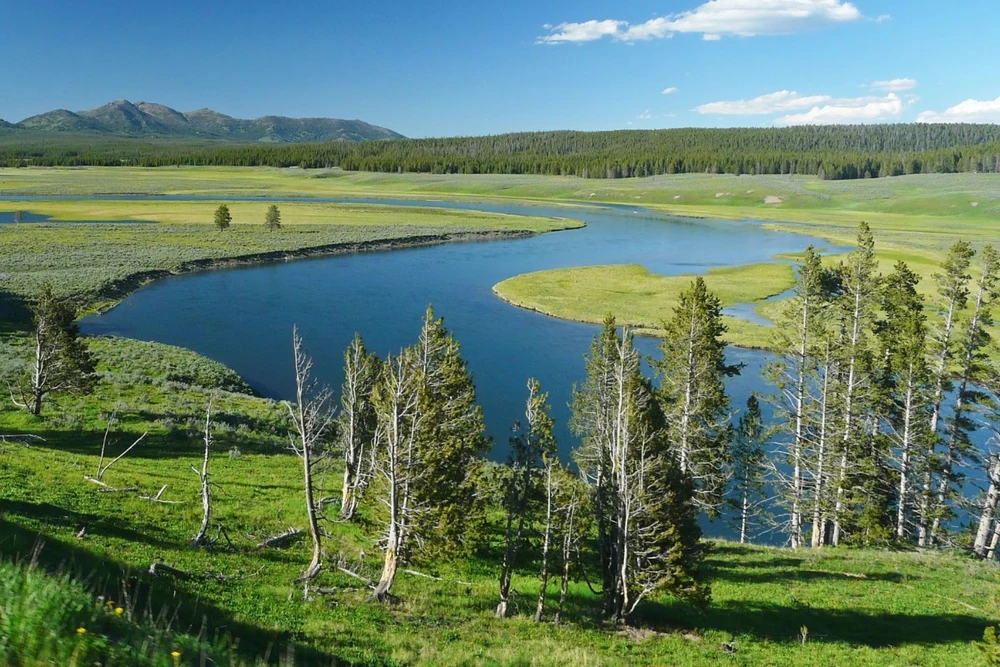
Near Yellowstone Lake, this valley is the territory of giant Elk. In the summer, you can also see birds of prey such as Bald Eagles or hawks soaring in the sky. This is also one of the most beautiful natural photography spots in Yellowstone.
Tower-Roosevelt – Home of Bears and Antelopes
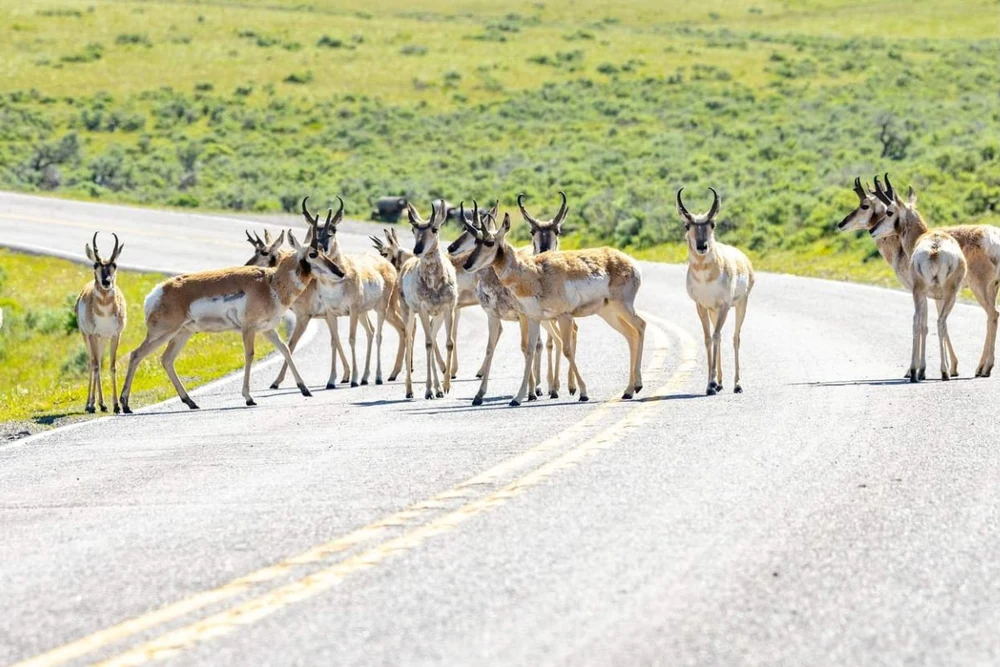
This less crowded area is an ideal place to observe bears in the wild. In addition, this is also the habitat of the Pronghorn Antelope – the fastest animal in North America.
Mammoth Hot Springs – See Elk All Year Round
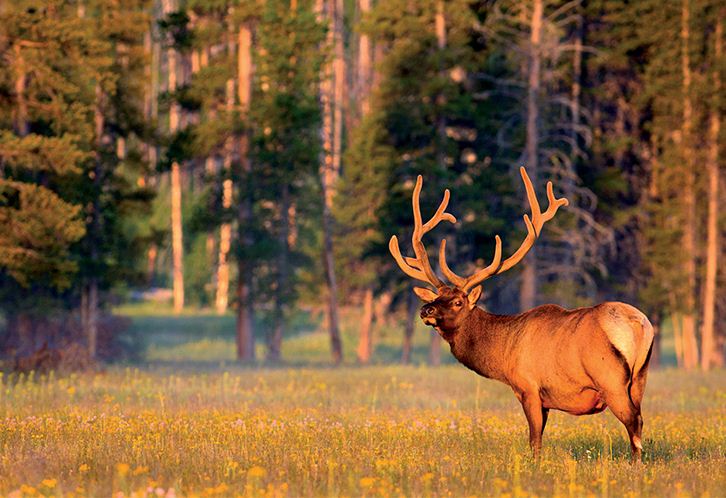
Unlike many species that move seasonally, Elk can be seen all year round in Mammoth Hot Springs. Sometimes you will see them leisurely walking near the resort area, very close but still need to keep a safe distance.
Lake and River – World of Waterfowl and Small Animals
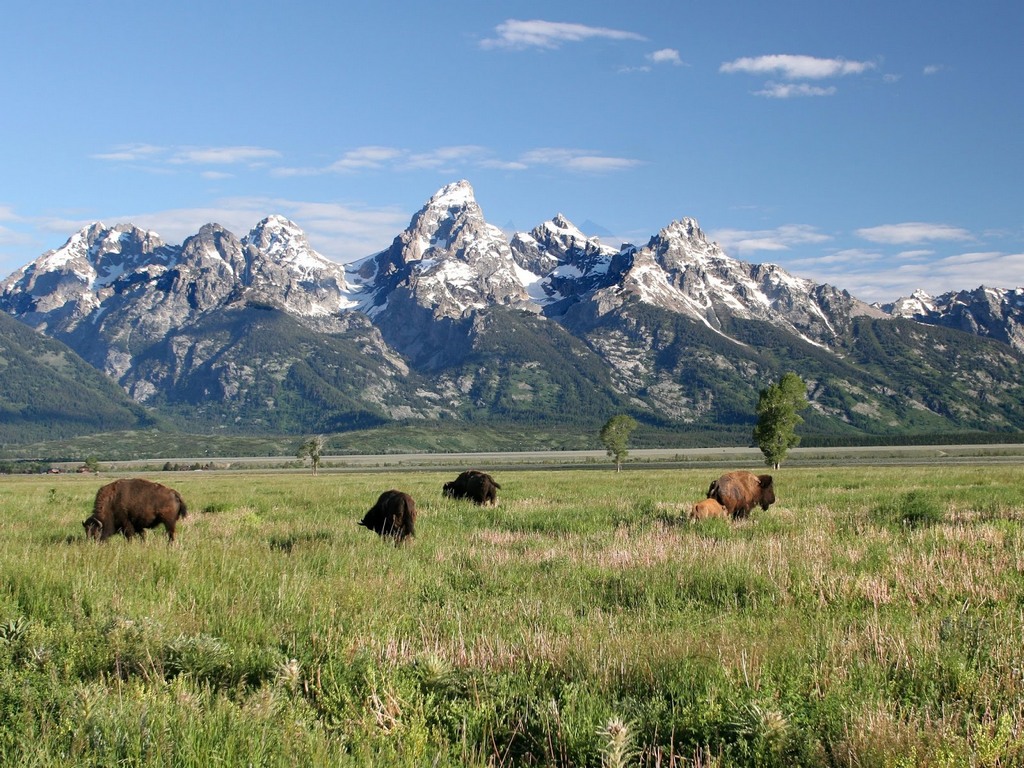
Walking along Yellowstone Lake or Yellowstone River, you can see Beavers building dams, Red Foxes hunting, or many species of waterfowl. This is also an ideal place for a picnic combined with sightseeing.
Safety Rules When Watching Animals in Yellowstone Park – USA
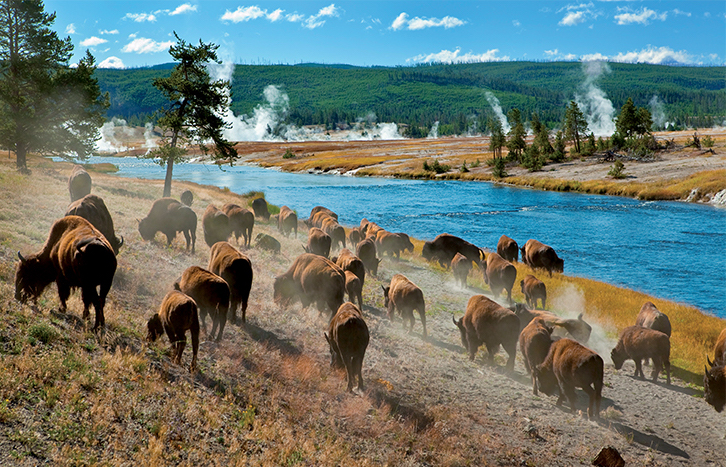
- Keep a minimum distance of 100m from Bears and Wolves, 25m from Bison, Elk and other species.
- Always use binoculars or a telephoto lens to observe and take photos.
- Do not feed animals or leave food behind.
- If animals approach your vehicle, honk your horn and leave to avoid habituated animals to humans.
What to Eat & Where to Stay in Yellowstone?
Yellowstone explorations often take several days, so choosing your accommodation and meal arrangements is extremely important. The park offers a wide range of options from comfortable lodges to camping in the wild.
Lodges and Hotels in the Park
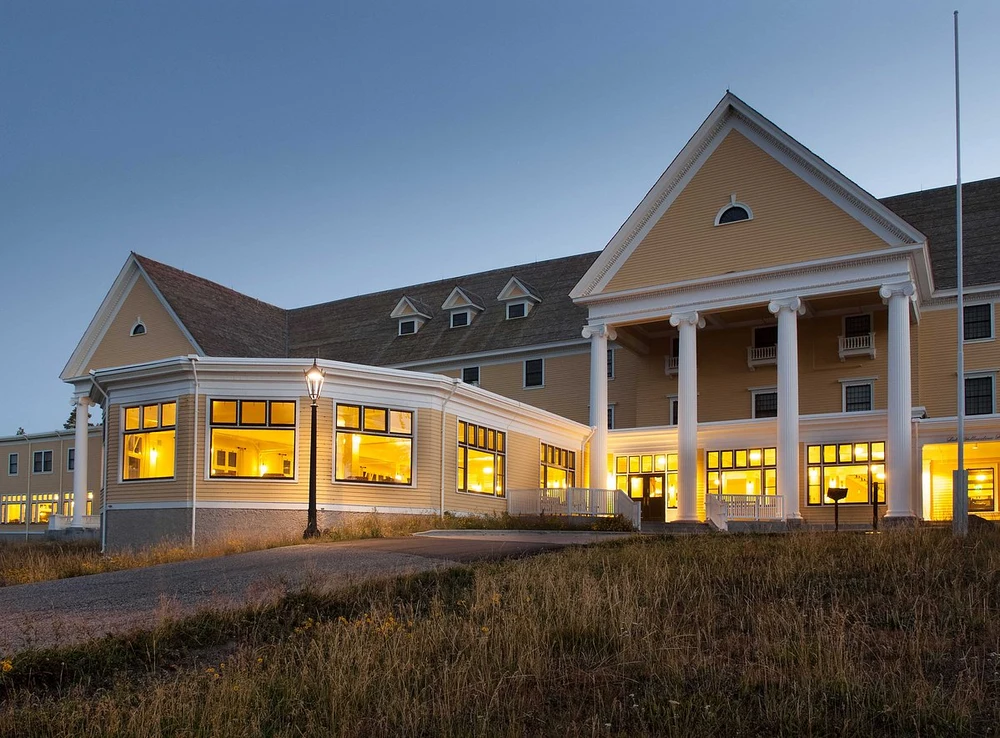
Yellowstone has a total of 9 lodges operated by Yellowstone National Park Lodges. Some popular lodges include Old Faithful Inn, Lake Yellowstone Hotel, and Mammoth Hot Springs Hotel. This is the ideal place if you want to rest comfortably with modern amenities, and at the same time be right in the heart of the park for easy sightseeing.
Note: Rooms often fill up very early, especially during the peak summer season. You should book at least 6–9 months in advance.
Camping at Campgrounds
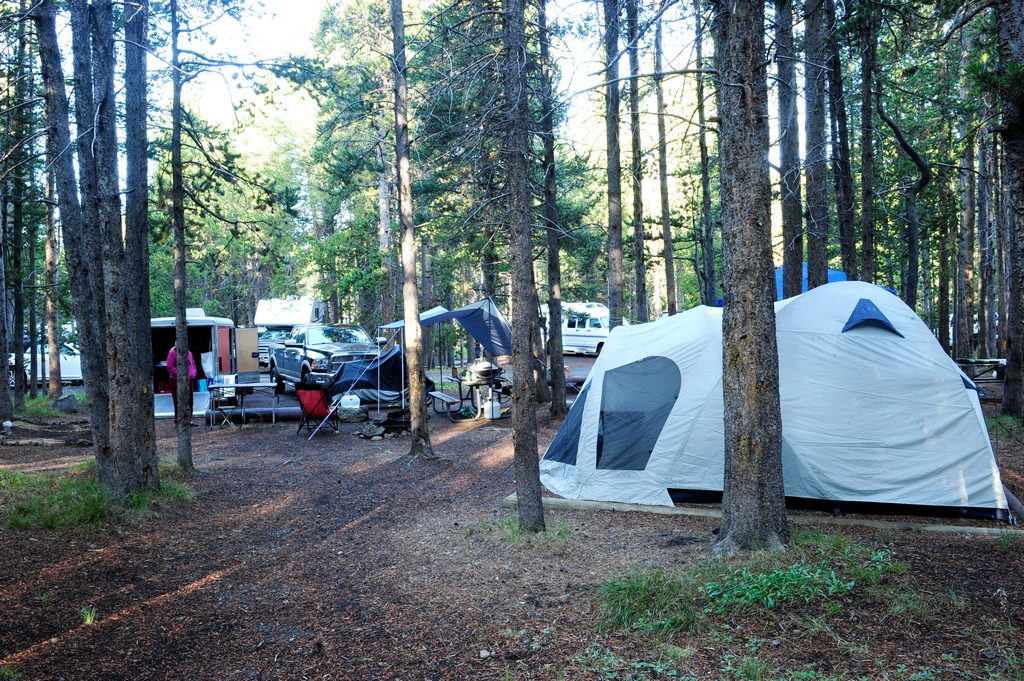
The park has 11 campgrounds with more than 2,000 spots, suitable for visitors who want to be close to nature. Check out some popular campgrounds you should know!
- Madison Campground: convenient for traveling between Old Faithful and Canyon.
- Canyon Campground: near the Grand Canyon of the Yellowstone.
- Mammoth Campground: open year-round, with some spots first-come-first-served from October 15 to April 1.
Most campgrounds require reservations on Recreation.gov, especially in the summer.
RV and Camper Areas
United States, Canada and Mexico 4G eSIM | Unlimited traffic
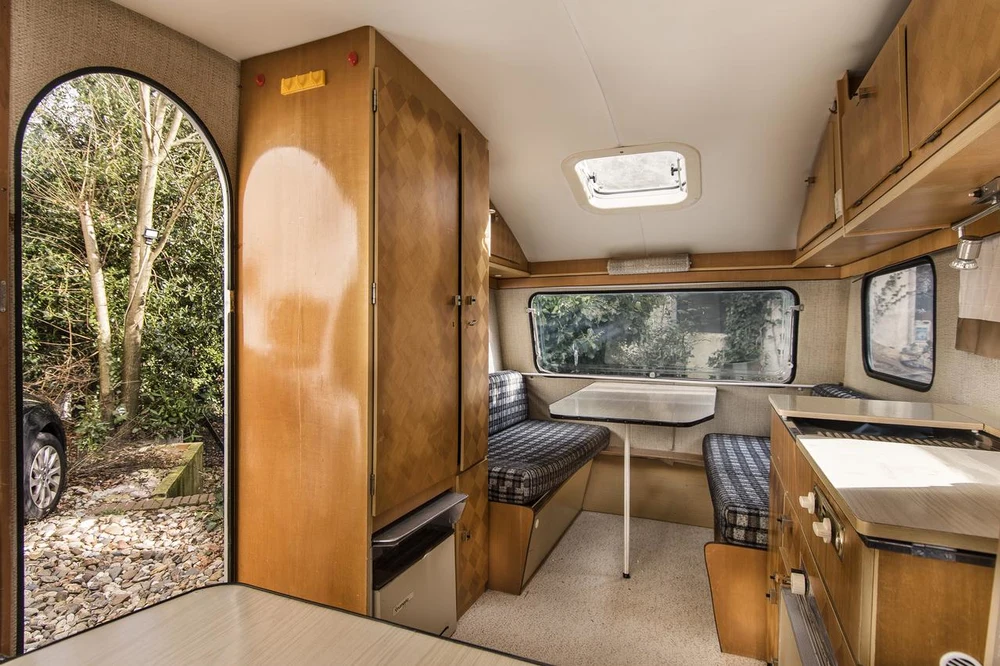
For those traveling by RV (Recreational Vehicle), Fishing Bridge RV Park is the only place in the park with full utilities: electricity, water, and sewer. This is a good choice if you want to feel like home but still be in the heart of the park.
Yellowstone Dining Guide

- Most lodges have restaurants or cafeterias that serve breakfast through dinner.
- There are also many General Stores that sell fast food, groceries, and souvenirs.
- The park also has over 50 picnic areas scattered throughout – perfect for packing your own food and enjoying the natural scenery.
Tip: Always store food carefully to avoid attracting bears and other wildlife. If you picnic, clean up and dispose of trash properly.
Ranger Experience & Visitor Center
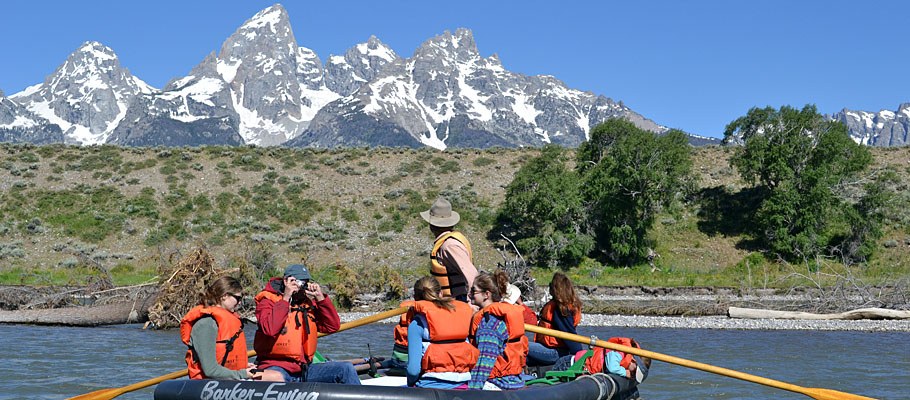
One of the best ways to learn more about Yellowstone is to participate in Ranger-led activities and visit the Visitor Centers. These are not only places to learn about the park, but also to experience the natural world.
Ranger-led Adventure Program
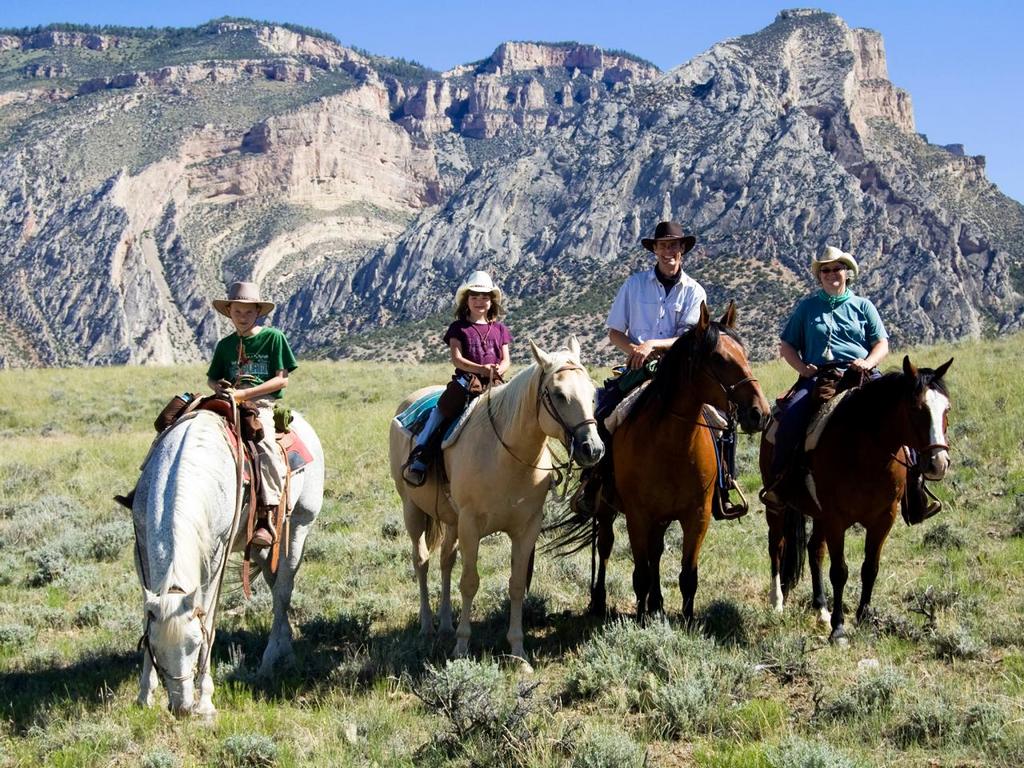
- In the summer (late May to early September), there are daily Ranger-led programs, from short hikes, outdoor presentations to nighttime nature observations.
- Children can join the Junior Ranger or Young Scientist program to learn while having fun, and receive a souvenir badge.
- Adult visitors can also sign up for a themed tour, such as one about wildlife or geothermal phenomena.
Visitor Center – Where the Journey of Discovery Begins
Yellowstone has 10 large and small Visitor Centers and information stations, each offering a different experience:
- Canyon Visitor Education Center: featuring exhibits about the Yellowstone “supervolcano”, with models and live documentaries.
- Old Faithful Visitor Center: great for learning about geysers, where you can also see Old Faithful’s next eruption forecast.
- Albright Visitor Center (Mammoth Hot Springs): In addition to the exhibition, there is free Wi-Fi and wheelchair rental service.
NPS App – Your Pocket Travel Assistant
Before coming to Yellowstone, you should download the National Park Service (NPS App) to your phone and save data for offline use (as the phone signal in the park is quite weak). The app has interactive maps, information about attractions, geyser forecasts and self-guided tours.
Tip: Stop by the Visitor Center first when you enter the park to get a paper map, ask for a suggested itinerary for the day, or ask for advice directly from a Ranger – this will make your trip much more convenient and enjoyable.
How to Get to Yellowstone?
Yellowstone is a large area, spanning three states: Wyoming, Montana and Idaho, so there is no train station or airport within the park. To get here, you will need to combine several means of transport:
Plane – Nearest Airports
- Yellowstone Airport (West Yellowstone, Montana): about 5 km from the West Gate, open seasonally (May–October).
- Jackson Hole Airport (Wyoming): about 70 km from the South Gate, with many flights from Salt Lake City, Denver, Seattle.
- Bozeman Yellowstone International Airport (Montana): about 130 km from the North Gate, operating year-round and with many domestic flights.
=> After landing, you will need to rent a car or take a shuttle bus to enter the park.
Self-Driving Car
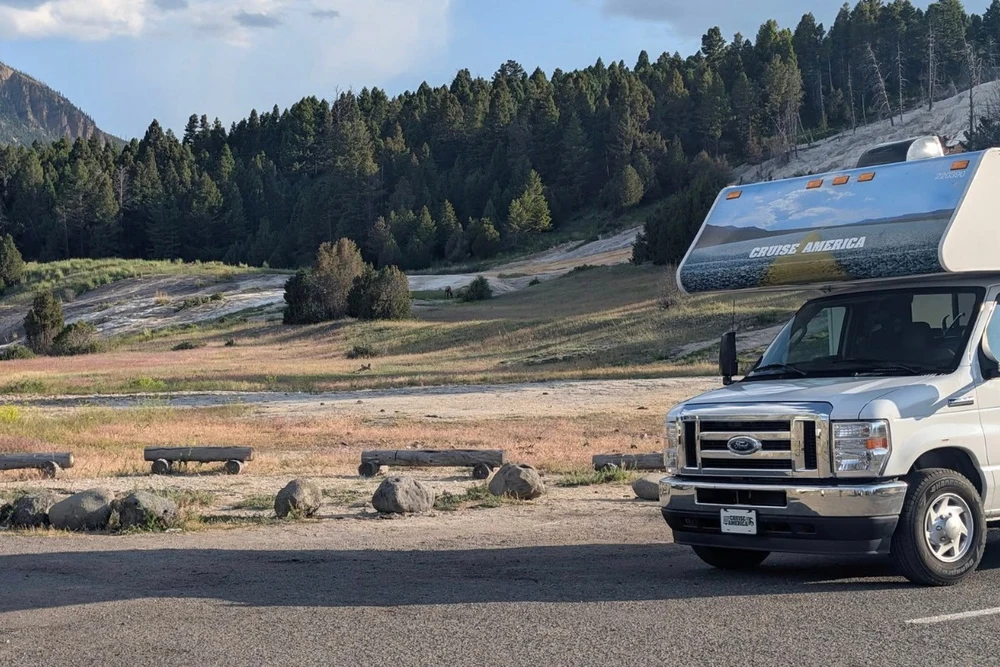
This is the most popular option, because Yellowstone is huge and the attractions are far apart. You can rent a car from Jackson, Bozeman or West Yellowstone, then drive through the park gates. In the summer, the roads can be crowded, so you should leave early to avoid traffic jams at famous spots like Old Faithful or Grand Prismatic Spring.
Bus & Package Tours
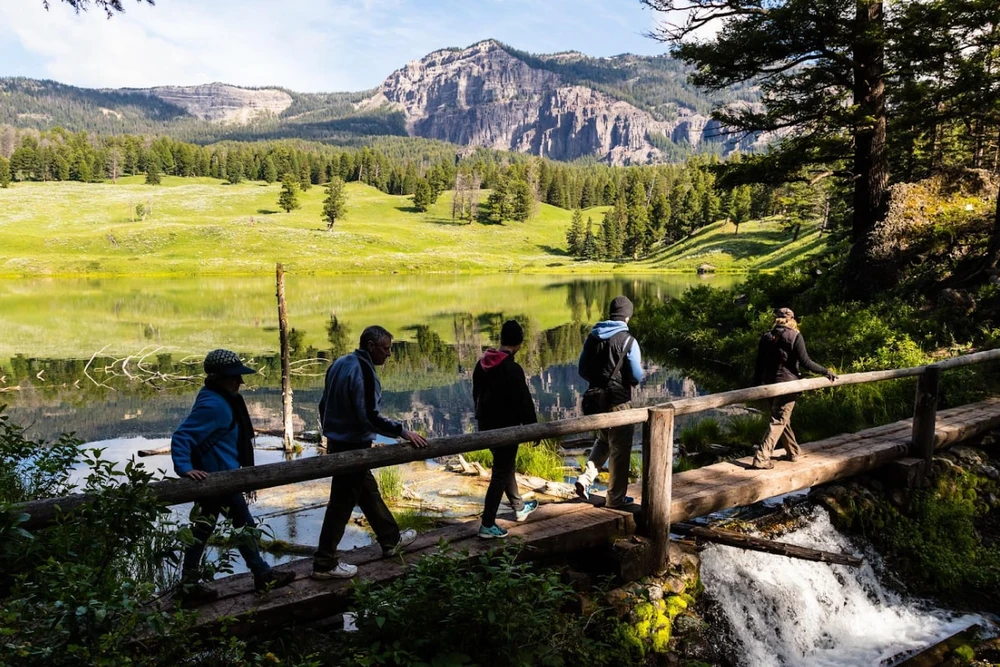
Some tour companies in Jackson, Bozeman or Salt Lake City offer package tours by bus or minivan. This is a suitable option for those who do not want to drive themselves or want a tour guide.
Bicycles & Motorcycles
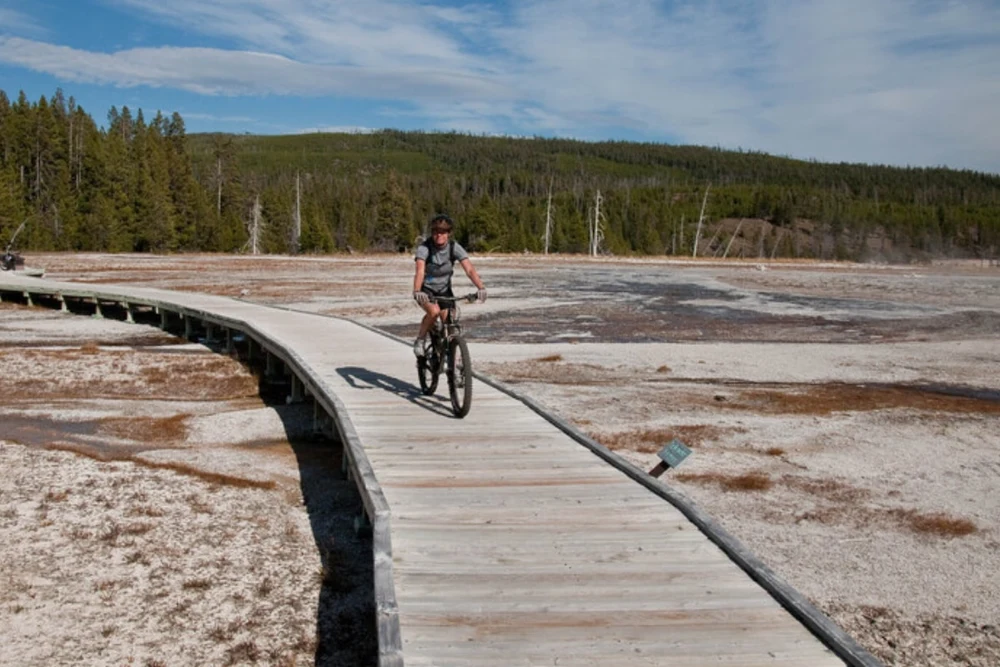
Visitors can bring their own bicycles or rent them in towns near the park to ride on the permitted routes. Motorcycles are also allowed in the park, but be aware of speed limits and wildlife often crossing the roads.
Some notes when traveling in Yellowstone National Park:
- The park has 5 main entrances (North, South, East, West, Northeast). Depending on where you are going, choose the nearest entrance.
- There is no public transportation within the park, so renting a car is still the most convenient way to move around.
Frequently Asked Questions When Visiting Yellowstone National Park
When is the best time to visit Yellowstone?
Summer (June-August) is the most popular time, with warm weather and most trails and areas open. However, this is also the peak tourist season. Spring and fall are quieter, ideal for those who want to avoid the crowds, while winter offers unique snow, skiing and sightseeing experiences.
Do I need to book tickets to enter Yellowstone?
No advance tickets are required, but you must purchase a park pass (about $35 per vehicle, valid for 7 days). However, if you plan to stay at a lodge or campground, you need to book your room/campsite very early, usually 6–9 months in advance.
Can you drive in Yellowstone?
Yes. The park has a loop road system (Grand Loop Road) that connects most of the main attractions. However, the distances between the attractions are quite long (maybe more than 50 km), so renting a car is the most convenient way to get around.
Is Yellowstone dangerous?
Yellowstone is safe if you follow the rules. The danger usually comes from getting too close to wildlife (like bison, bears) or violating regulations in the geothermal area. Just keep your distance, stay on the trails, and have bear spray when hiking and you will be safe.
Can you bring food into Yellowstone?
Absolutely. There are more than 50 picnic areas in the park, and you can also bring your own food to save money. However, you need to store it properly: do not leave food outside, always clean up trash, and avoid letting animals approach.
Is there a cell phone signal and internet in Yellowstone?
Cell phone signal is very limited, only available in a few areas near the lodge or Visitor Center. Therefore, you should download offline maps and the NPS App in advance for easy information lookup.
How many days should you spend exploring Yellowstone?
Ideal is 3-5 days so you can visit famous spots (Old Faithful, Grand Prismatic Spring, Grand Canyon of the Yellowstone), experience hiking or see wildlife. If you only have 1-2 days, prioritize spots near the main entrance.
Yellowstone is the world’s first national park and is also a rare place that has all the natural wonders: Old Faithful geyser, Grand Prismatic Spring, vast valleys with bison herds, and rich wildlife ecosystems.
Whether you like trekking, photography, exploring animals or simply enjoying the breathtaking landscape, Yellowstone will definitely bring you unforgettable experiences. Plan early to make your trip to Yellowstone National Park the most complete and memorable.
Some best day tours, trips, activities and transfer services, tickets in, from and to New York you can refer to
- Klook Pass New York City
- Aladdin Broadway Show Ticket in New York
- Summit One Vanderbilt Ticket
- LEGOLAND® New York Ticket
- The Lion King Broadway Show Ticket in New York
- 60 Minute Statue of Liberty and Ellis Island Cruise in New York
- Empire State Building Ticket in New York
- New York Big Bus Hop-On Hop-Off Tours (Open-Top)
- The Edge Observation Deck Ticket in New York
- Top of the Rock Ticket in New York
- The Museum of Modern Art Ticket in New York
- One World Observatory Ticket in New York
- The National 9/11 Memorial Museum Ticket in New York
- Go City – New York Explorer Pass
- American Museum of Natural History Ticket in New York
- Spyscape Spy Museum Ticket in New York
Check out more US guide here.