




































Shangri La is a small city in China, which rose to fame after being named after the fictional place of the same name that appeared in the novel “Lost Horizon” by James Hilton. So, what to do in Shangri La? Let’s check out our Shangri La travel blog below!
- Where to go in Hunan? 15 most beautiful & best Hunan places to visit
- Guilin itinerary 4 days: What to do, see & how to spend 4 days in Guilin, China
- Where to go in Guilin: 15 best places to visit in Guilin as Beautiful as Ink Paintings
- The ULTIMATE Yunnan Travel Guide for Independent Travelers
- Sunac Land Guangzhou review: A Four-Season Entertainment Experience

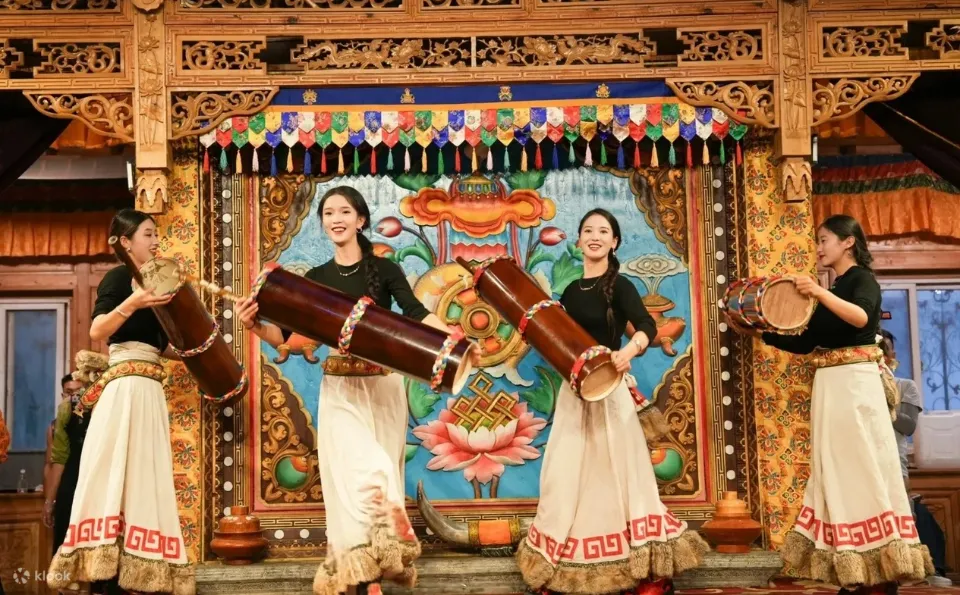
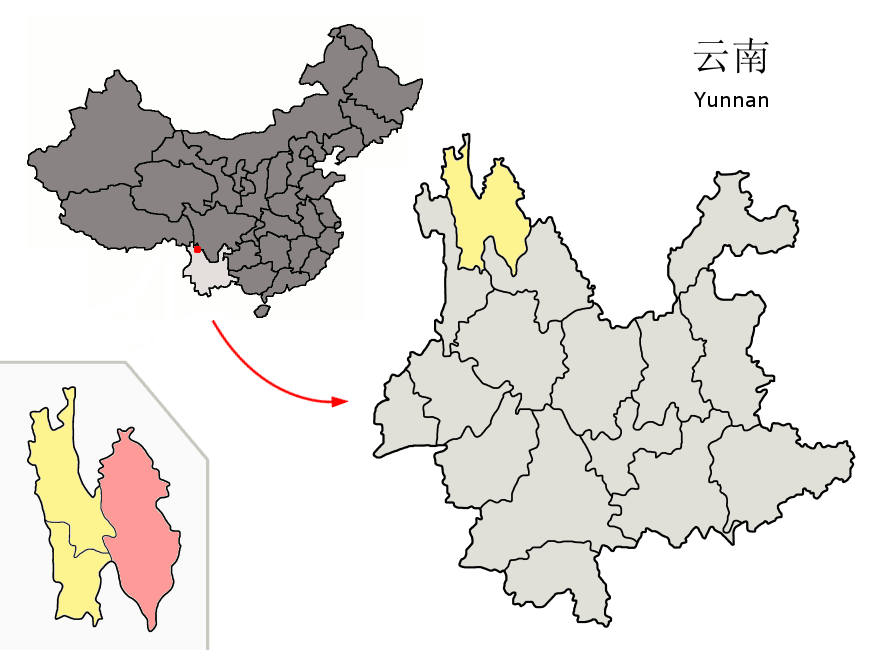
Shangri La blog: “Immortal Land” Shangri La
- Population: 186,000
- Area: 11,613 km2
- Location: in the northwest of Yunnan, southwest China
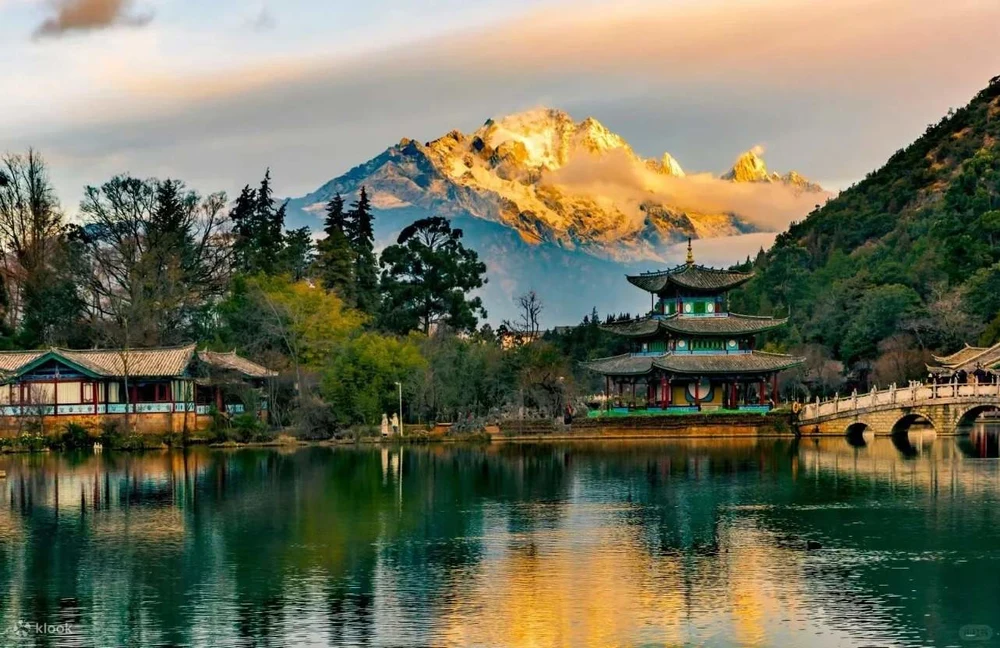
Shangri La is located in the northwest region of Yunnan Province, in the Diqing Tibetan Autonomous Prefecture. Originally called Zhongdian, in 2001 the local government changed the name to Shangri La to better promote tourism, as the surrounding landscape was said to have many similarities to the Shangri La land in the work of British writer James Hilton in 1933.
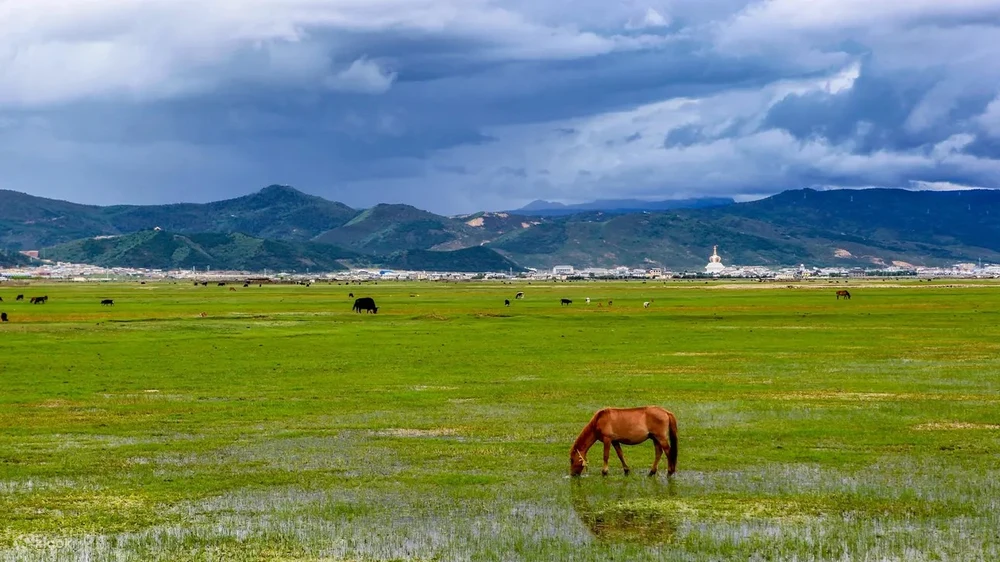
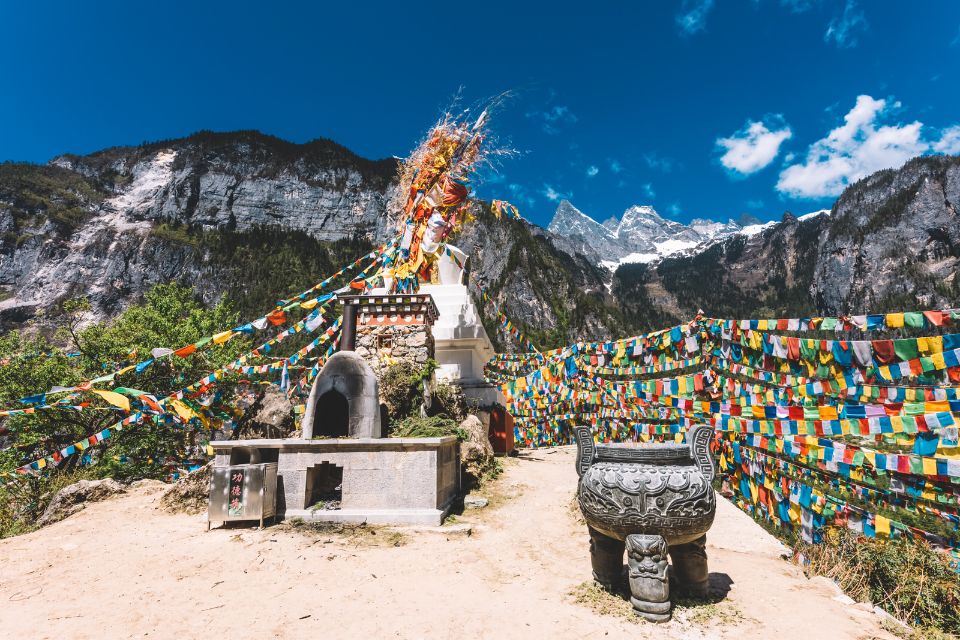
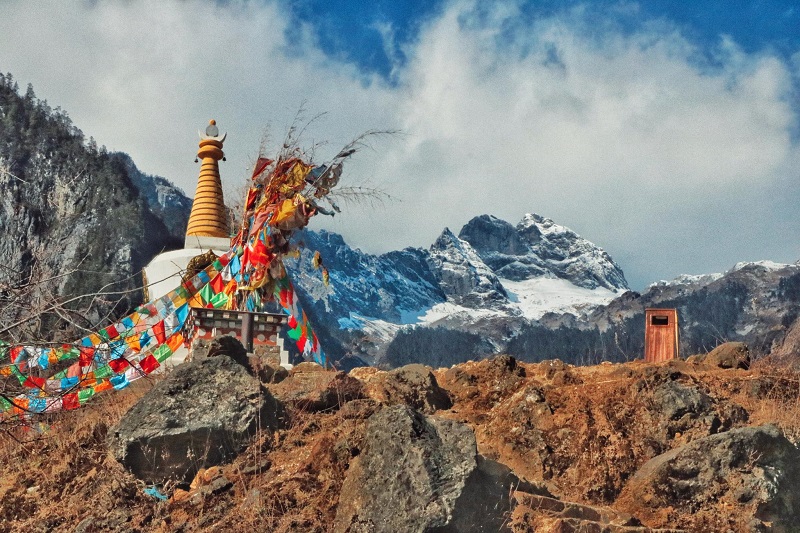
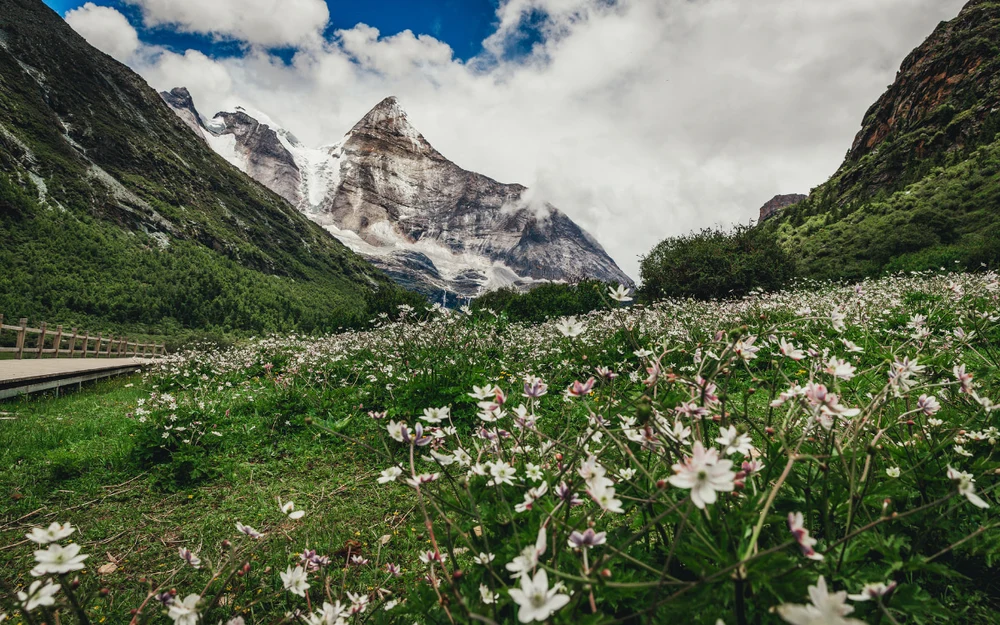
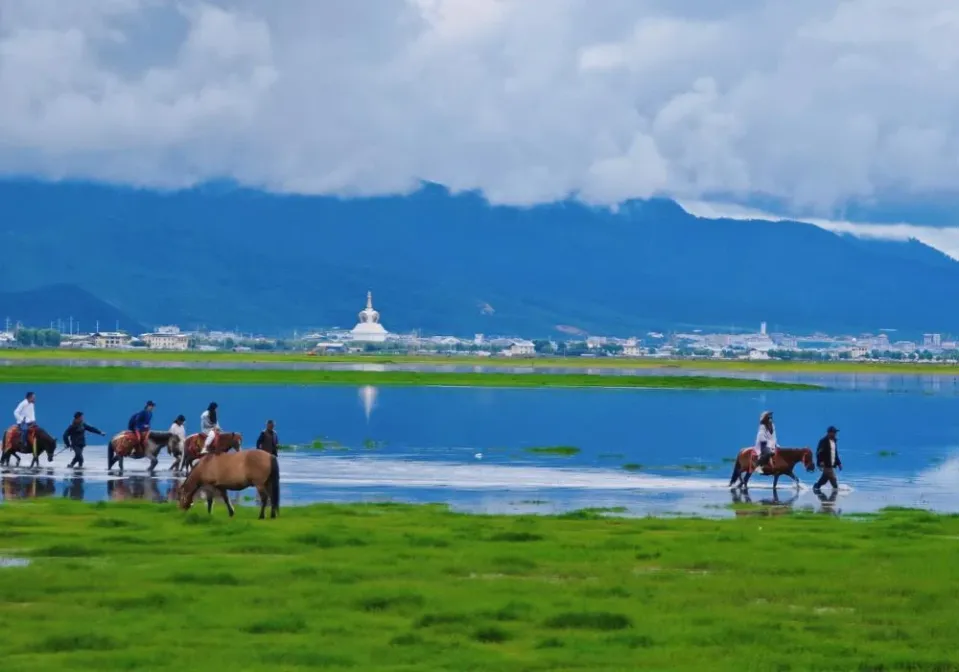
The fictional land in the novel is a legendary valley, leading from the Lamaist monastery in the Kunlun Mountains. Yunnan’s Shangri La is located on a plateau 3,300m above sea level, surrounded by lakes, hills, snow-capped mountains and fresh air. According to travel experience, each season here has a different characteristic beauty. The most favorite time to explore is probably spring, when the pleasant temperature only fluctuates from 19 – 20 degrees Celsius, hundreds of flowers bloom and visitors can experience spiritual and cultural exploration all day.


How to get to Shangri La

The fastest and most convenient means of transportation to Shangri La is by plane. You can fly directly to Lijiang via China Southern Airlines or transit 1 leg in Guangzhou or Kunming. After arriving in Lijiang, we will travel to Shangri La by long-distance bus. The estimated distance is about 175km, on the way we will see the legendary Tiger Leaping Gorge.
Famous destinations in Shangri La
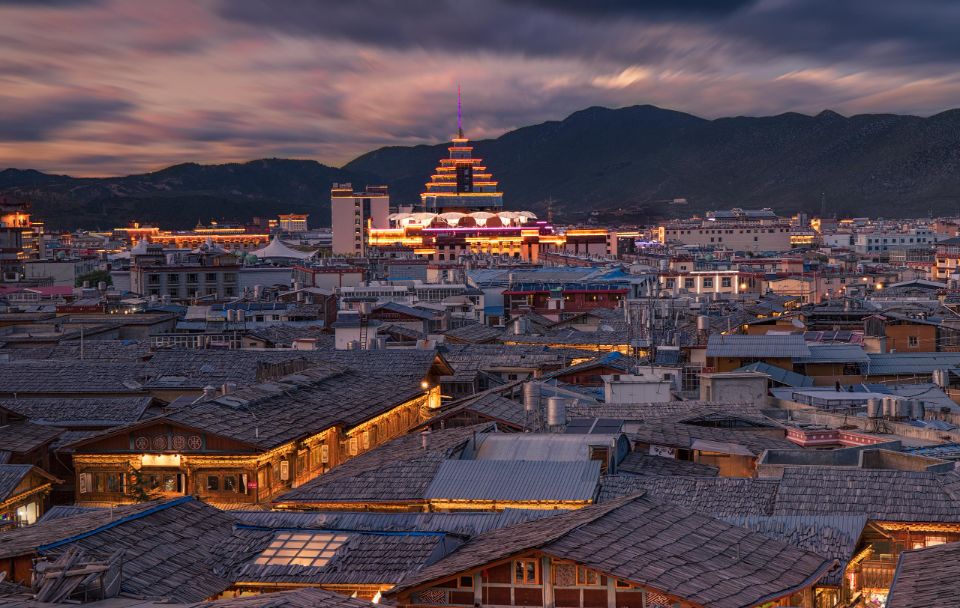
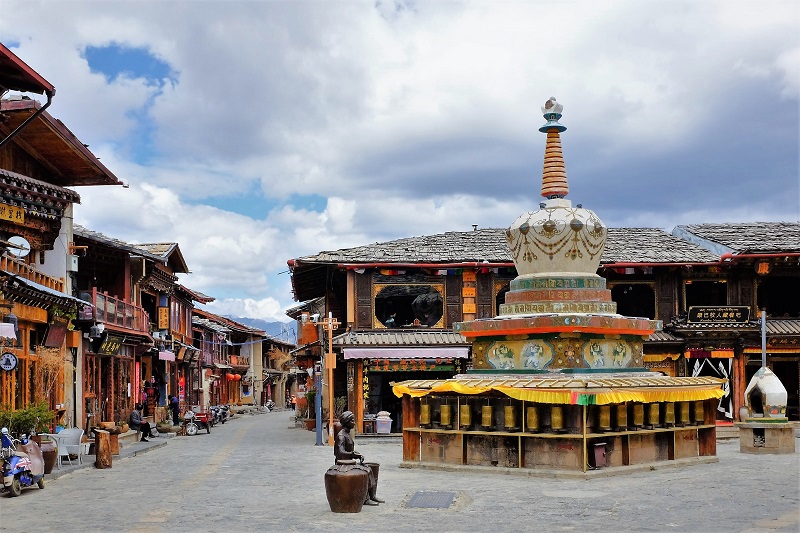
Dukezong Old Town
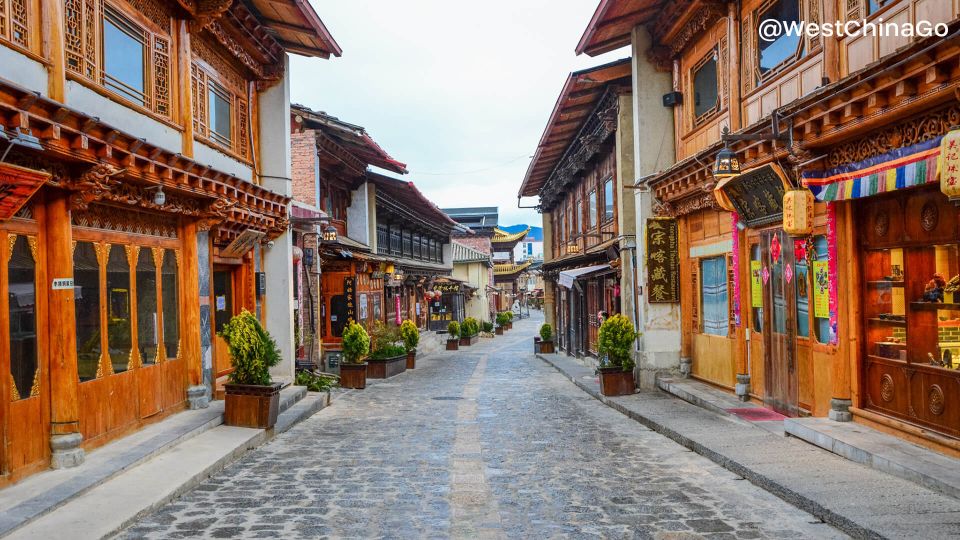
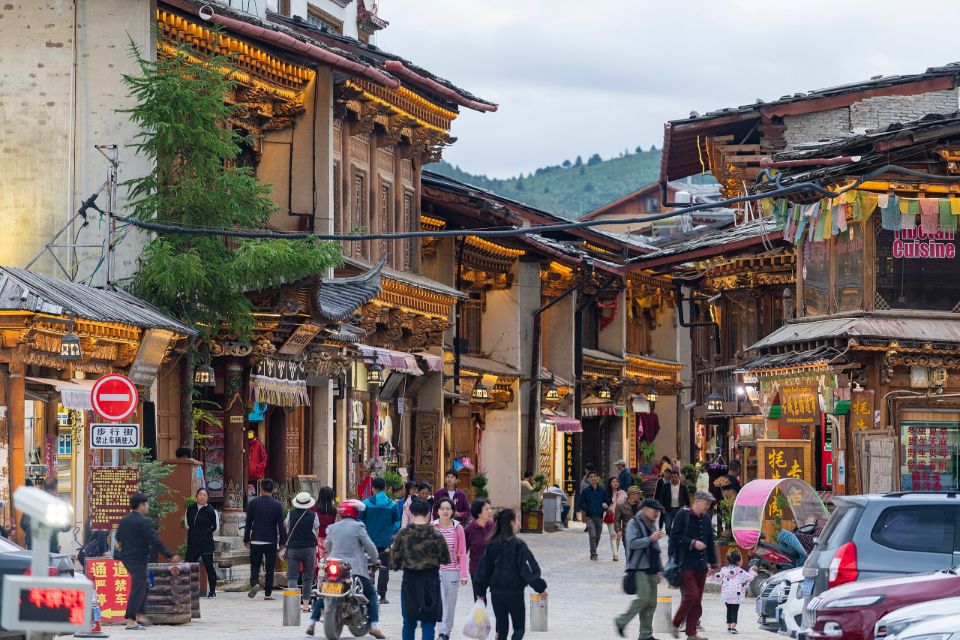
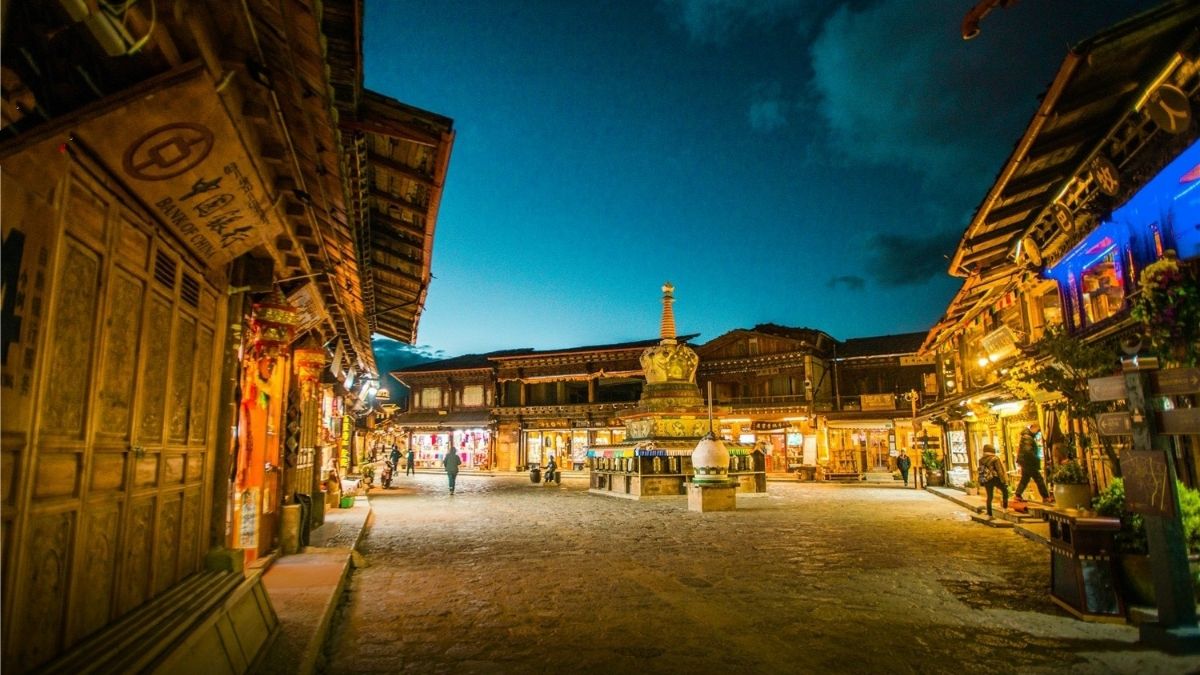
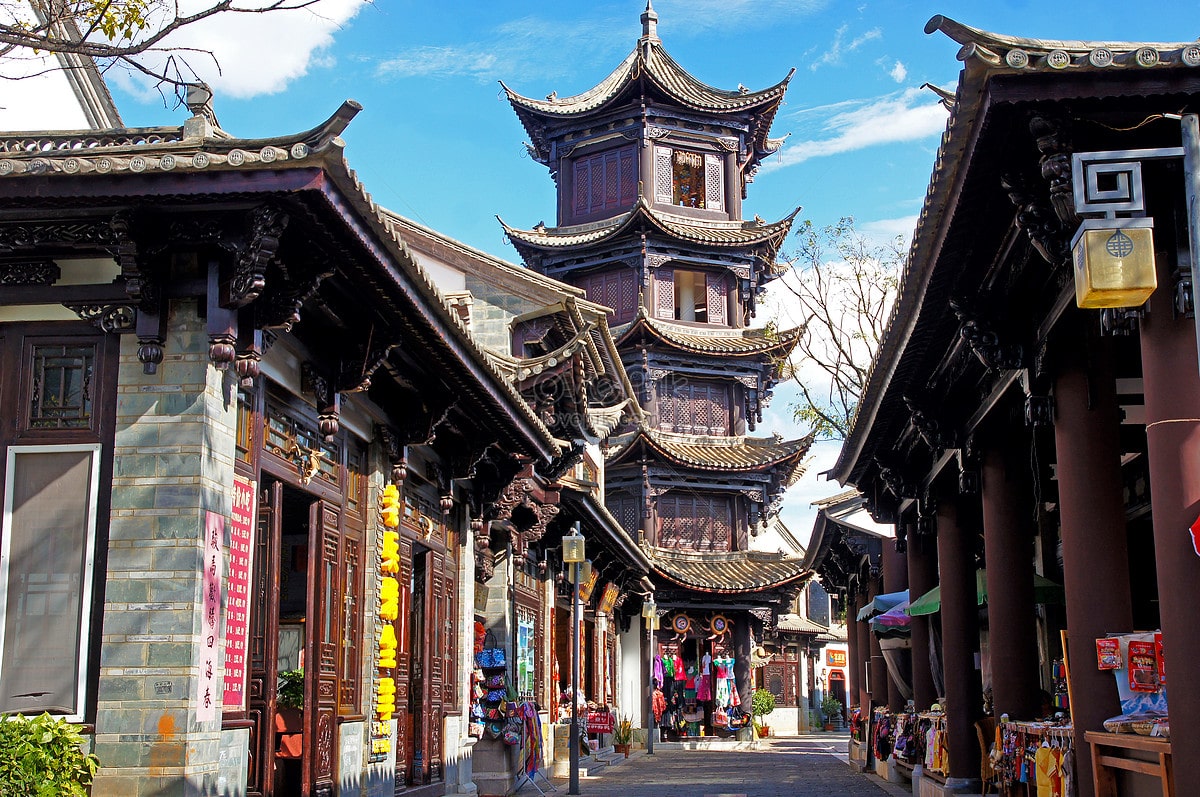
Dukezong Old Town (獨克宗古城) is over 1,300 years old in Shangri La and is a place that preserves many unique traditional cultural features. Shangri La is also home to many Tibetans. If you look at the map, you will see that the neighborhood is circular and right in the middle is the central square marked by a small white tower according to Tibetan beliefs.
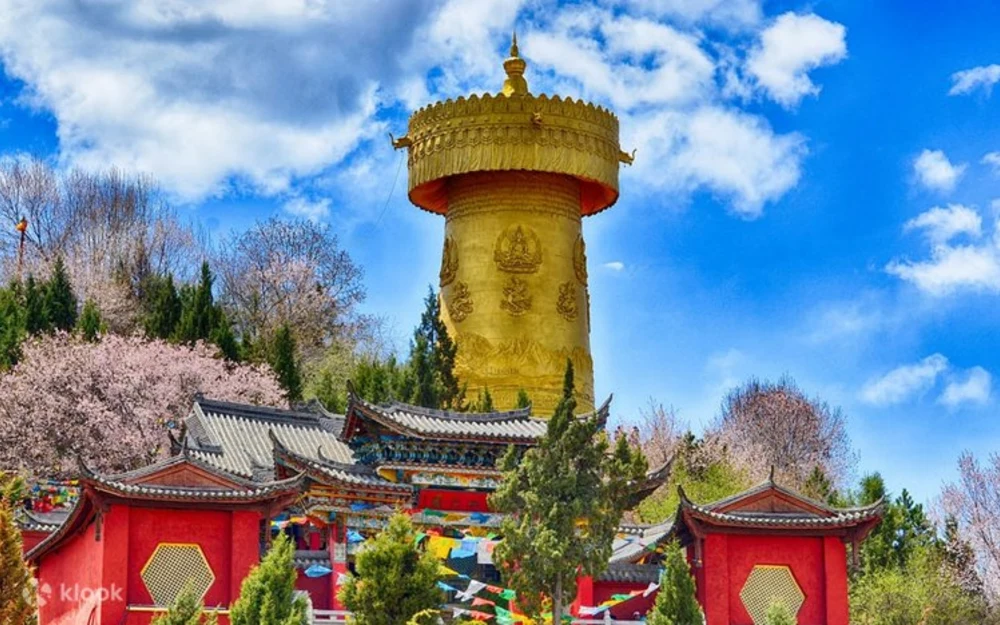

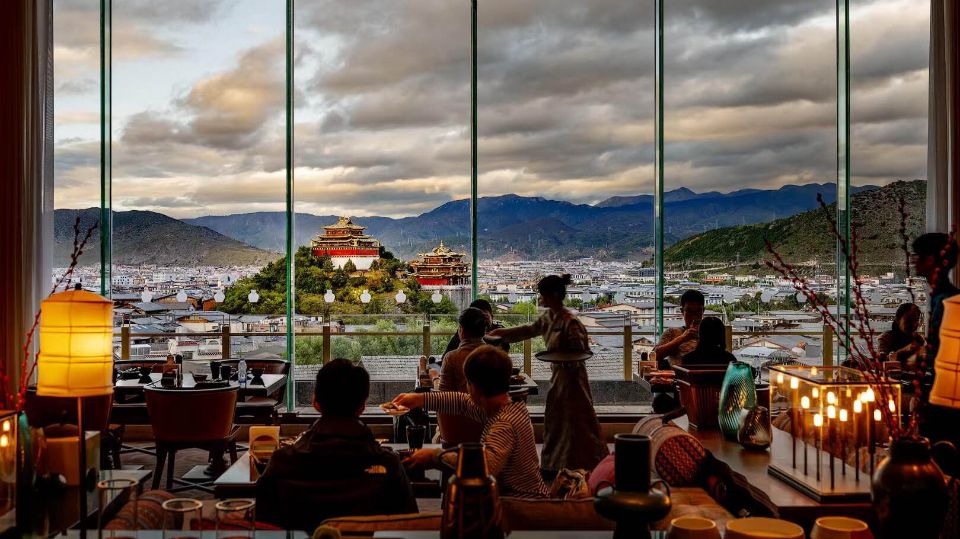
The houses on the old town have red tiled roofs and are built of granite, and the houses are solidly built to avoid natural disasters. Also because Dukezong is located on a plateau, the roads will be uneven and go up and down many slopes. The street is the center of trade between Yunnan and Tibet on the ancient “tea and horse road”. Along the street are shops and stores selling handicrafts and Shangri La specialties, but the most prominent of them are tea and dairy products.
Haba Snow Mountain in Shangri La
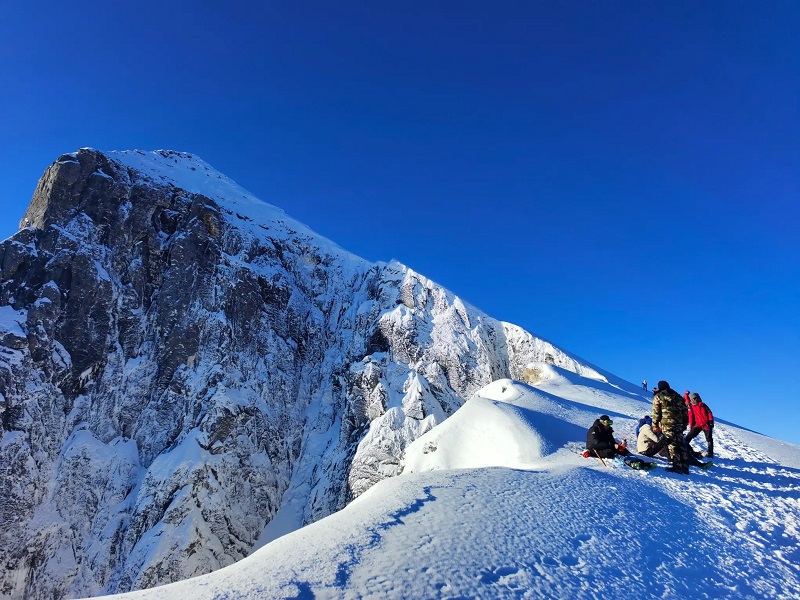
Haba Snow Mountain Nature Reserve (哈巴雪山, Haba Snow Mountain) is located in the southeast of Shangri La, part of the Sanjiang Jingliu Nature Reserve. The peak of the mountain is over 3,500m high and is famous for amateur climbers thanks to the low slopes that intersect the Tiger Leaping Gorge trail.
Pudacuo National Park
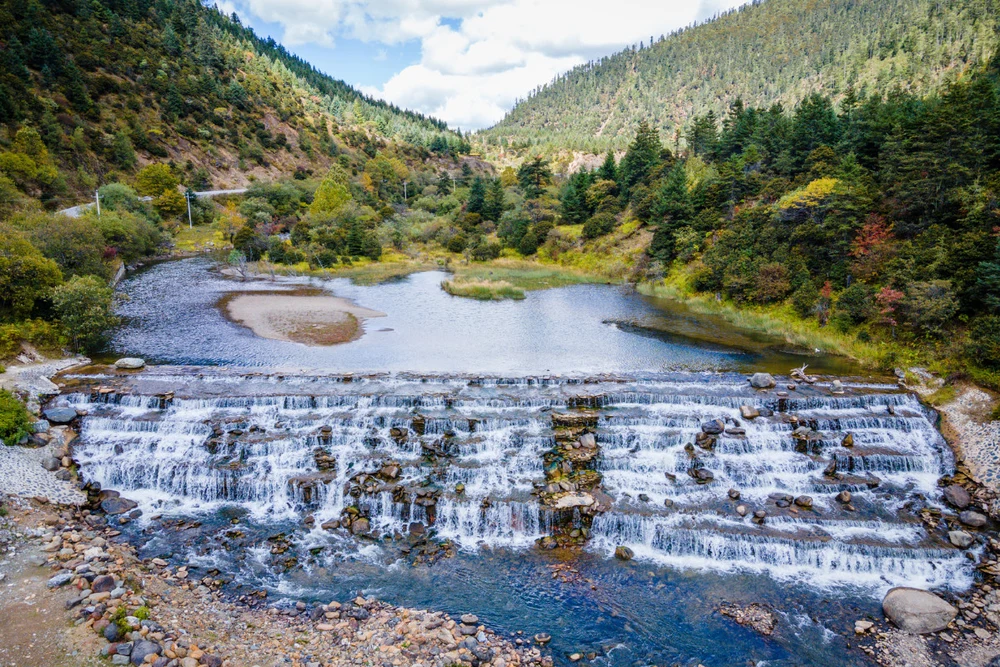
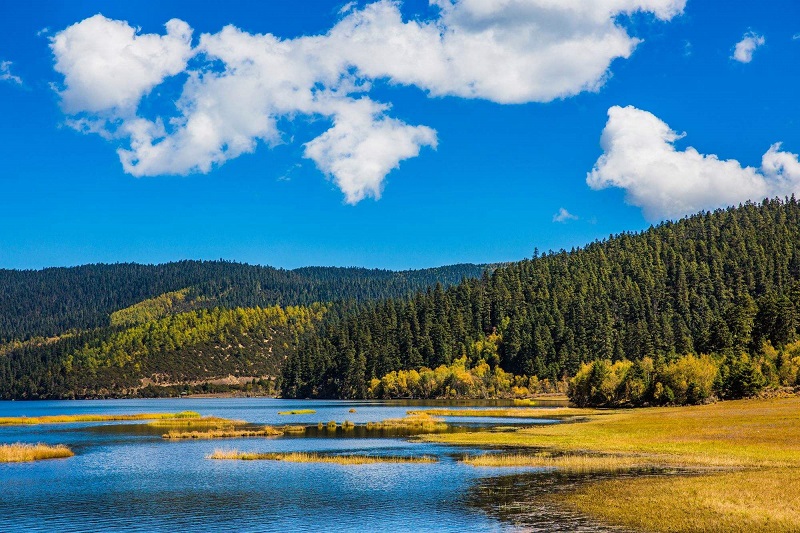
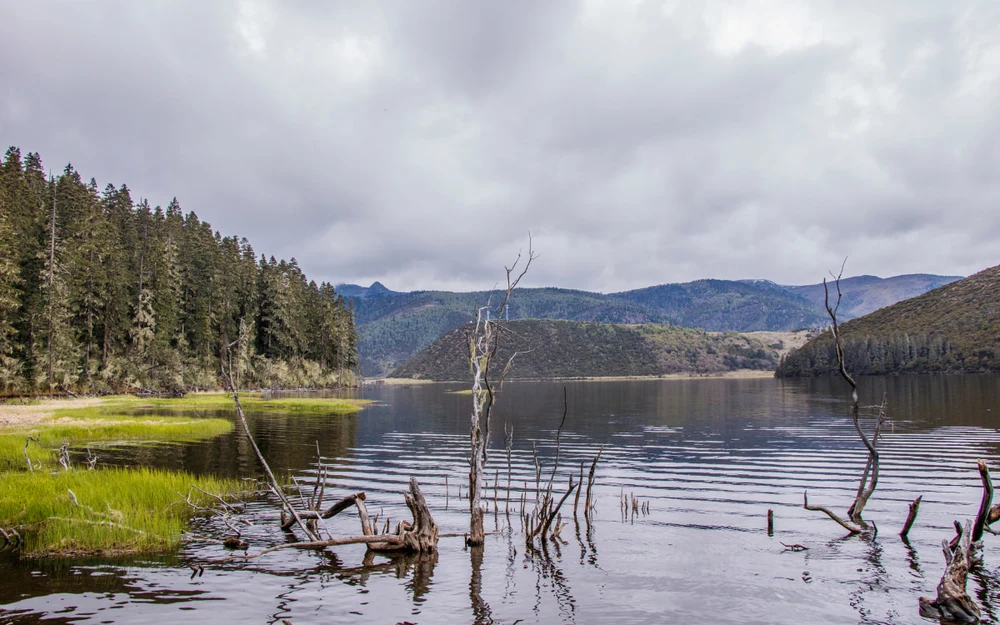
Pudacuo (普达措, Pudacuo National Park) is China’s first national park. In Tibetan, “Pudacuo” means the help of the gods to reach the other side of the lake by boat. The park covers an area of nearly 1,300 square kilometers with a magnificent landscape decorated with lakes, forests, streams, canals, grasslands, etc.
Meili Snow Mountain
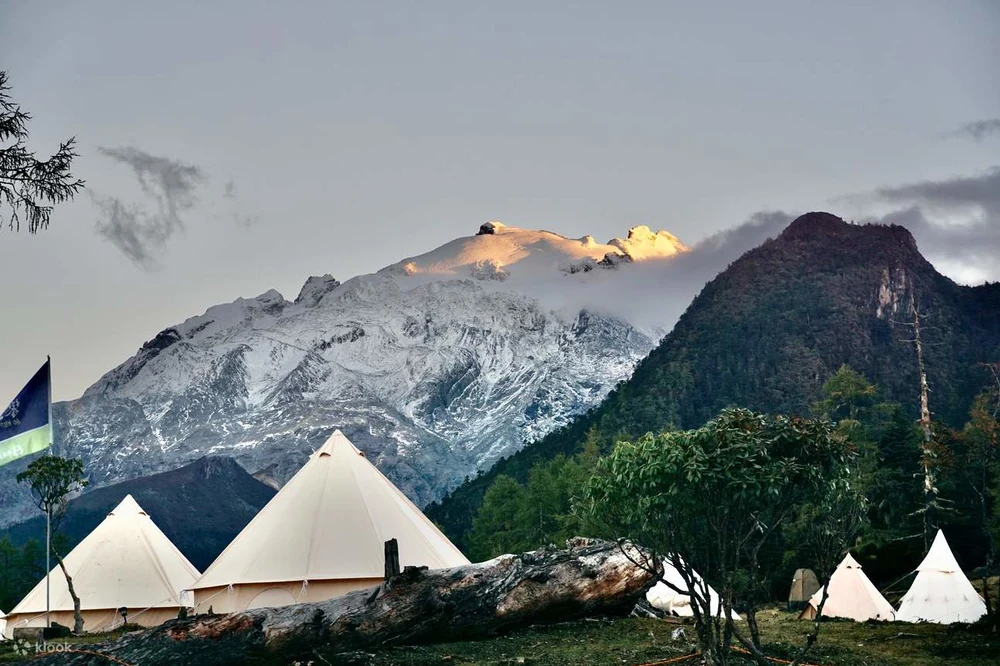
Coming to Meili Snow Mountain (梅里雪山, Meili Snow Mountain) is a popular pilgrimage site for Chinese people. The highest peak here is Kawagebo Peak at 6,740 meters, which has not been climbed yet. Kawagebo is also considered one of the most sacred mountains in Tibetan Buddhism, attracting 20,000 pilgrims each year.


Songzanlin Monastery

Songzanlin Monastery, or Songzanlin Monastery (噶丹松赞林) is an attractive Shangri La tourist destination, known as the “little Potala”. The monastery covers an area of 30 hectares, located on a separate hillside and only about 5km from the center of Shangri La. It was built in 1679 and has gone through many historical ups and downs and destruction over time, being destroyed and restored many times.
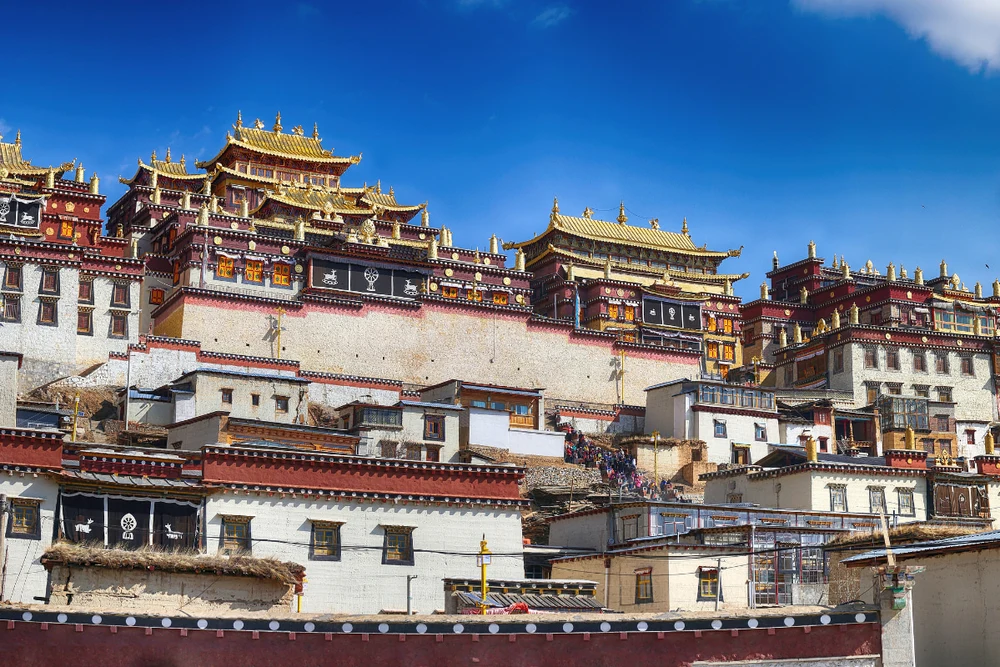
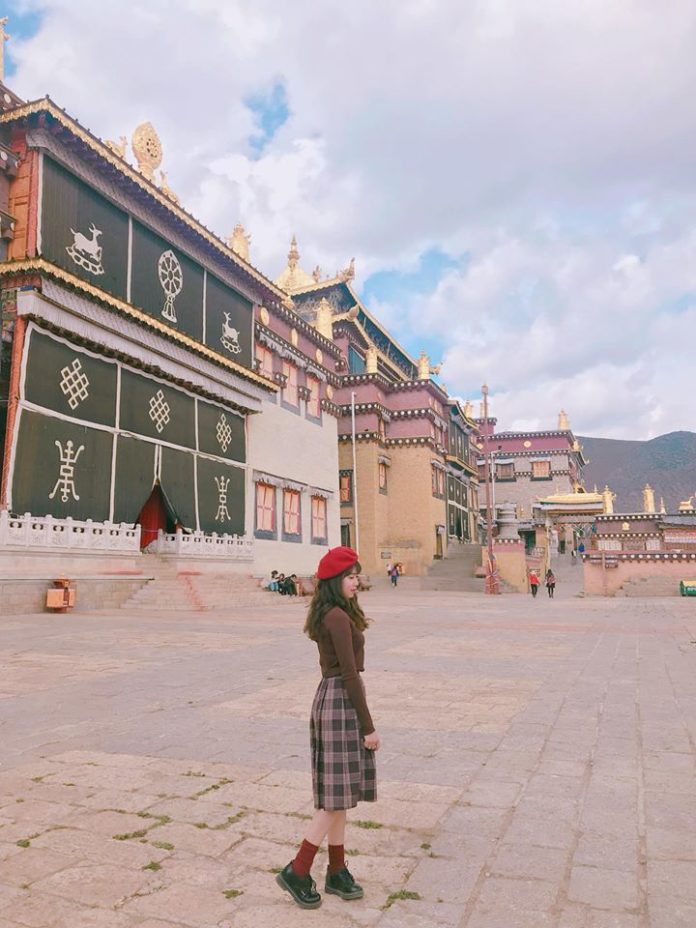

Looking back from afar, you will be extremely impressed with the gilded curved roof. The architecture is modeled after the Potala Palace in Lhasa with the shape of a Tibetan watchtower. The two main temples, Zhacang and Jikang, are built at the highest and central positions, with Chinese temple architecture. Songtzanlin Monastery has eight gold-plated Buddha statues from the time of the Fifth Dalai Lama and the Seventh Dalai Lama, colorful thangka paintings, and various types of golden lamps…
Tiger Leaping Gorge
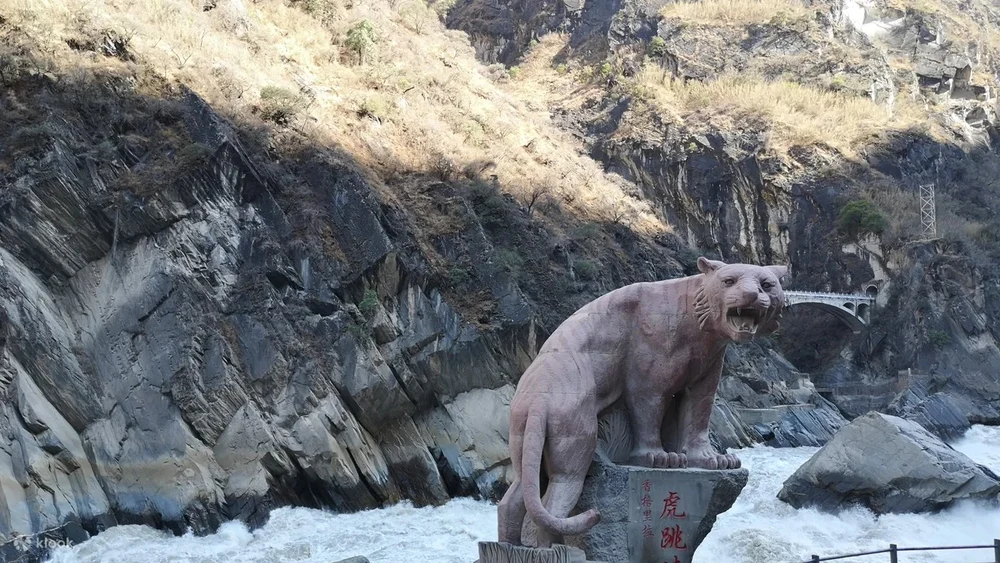
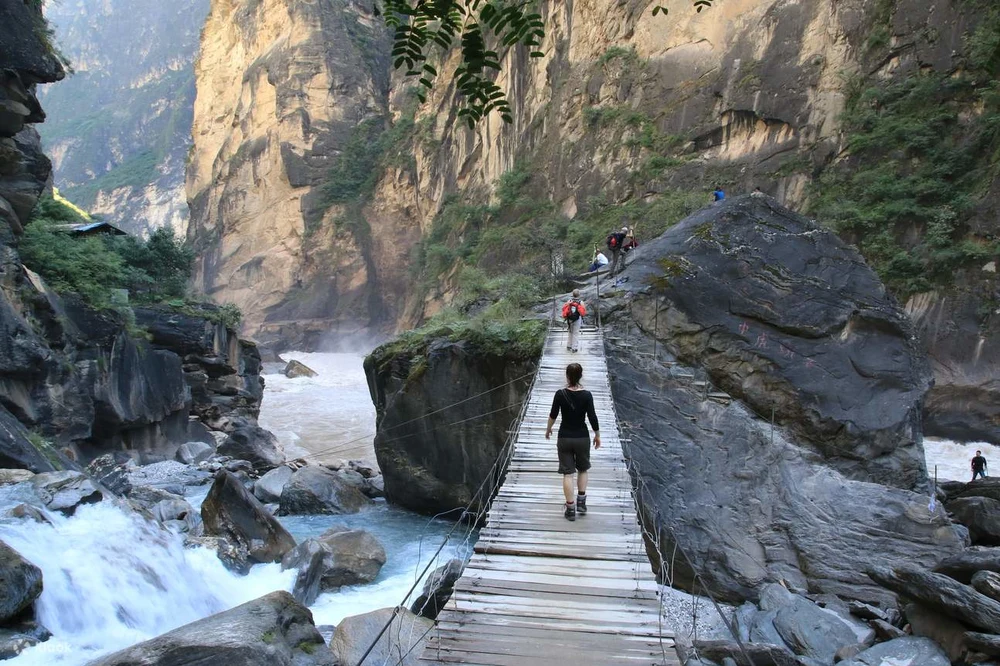
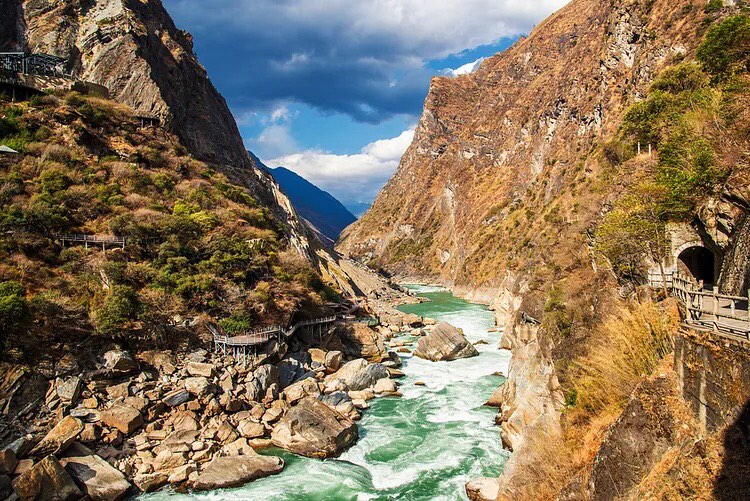
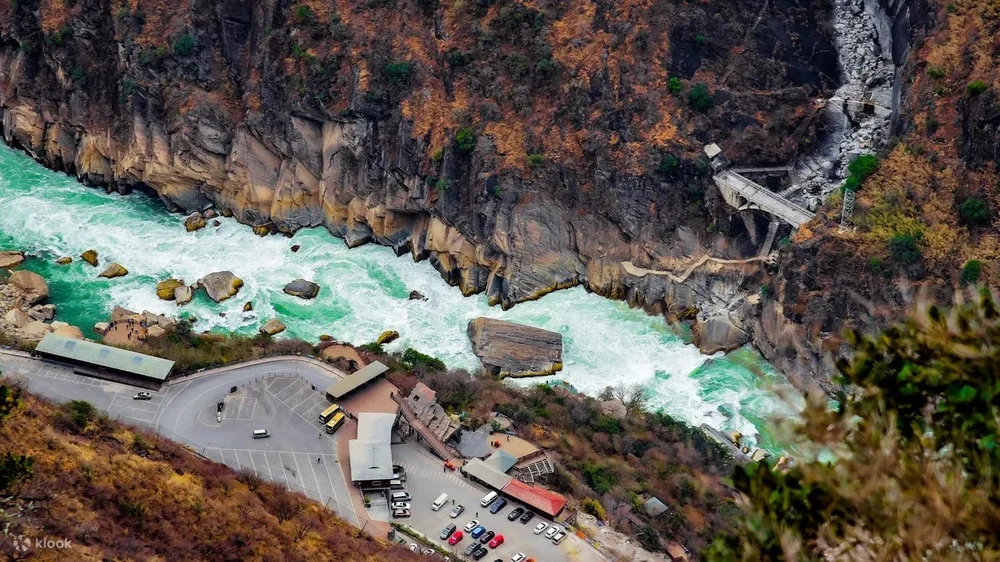
Tiger Leaping Gorge (虎跳峡, Tiger Leaping Gorge) is a tourist destination near Shangri La and is located north of Lijiang. It is also part of the Three Rivers and Streams World Heritage Site recognized by UNESCO. Coming to one of the deepest and most spectacular gorges in the world at an altitude of 3,790m, we will admire the extremely impressive natural scenery, surrounded by the houses of the Naxi people.
Baishui Tableland
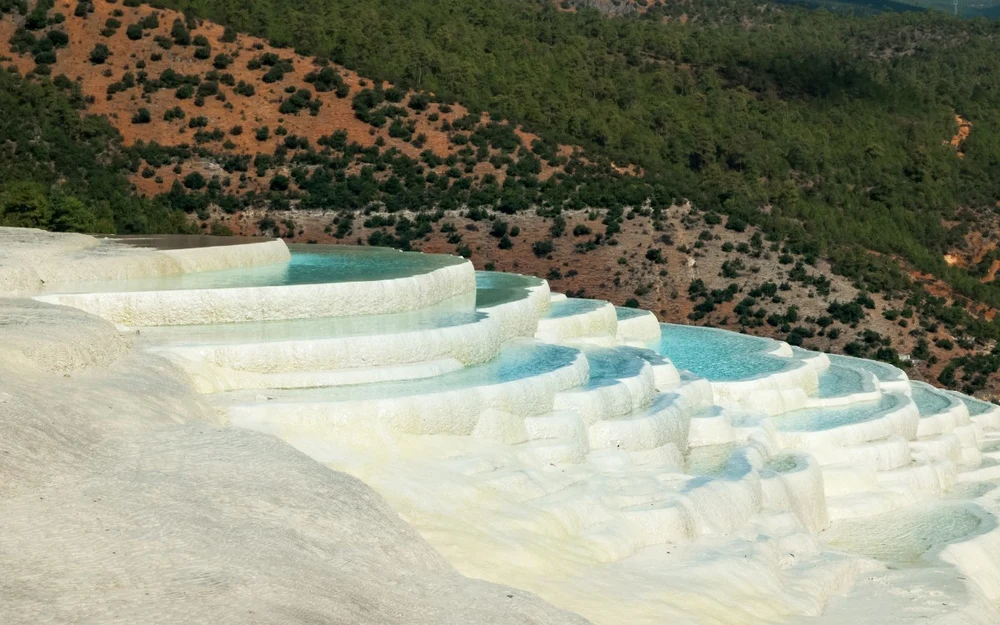
Baishui Tableland (White Water Terraces, 白水台) China impresses with its long stretch of pure white. This tourist destination is 101 km from Shangri La and at an altitude of 2,380m above sea level. Baishui Tableland is located in the middle of a lush green hill like unique terraced fields. Visitors can try putting their bare feet on the white stone steps to feel an indescribable coolness.
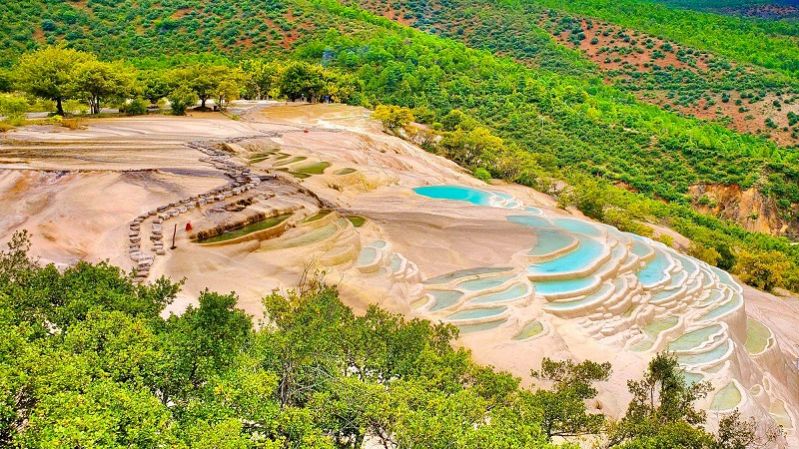
The limestone terraces at Baishui Tableland are made up of sediments with a high calcium carbonate content in spring water. Not only is it a mysterious Shangri La tourist destination, it is also an ancient landform of China with a history of 200,000 to 300,000 years.
Enjoy unique cuisine at Shangri La
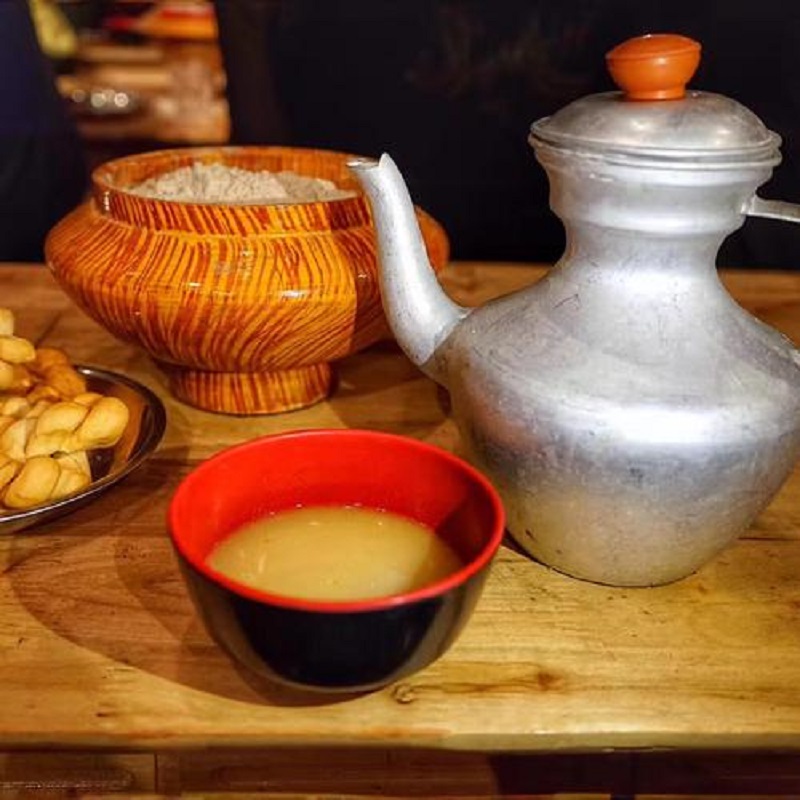
Shangri La cuisine is a perfect combination of Tibetan and Yunnan cuisine, so it has its own unique features. In addition, there are other Western, Korean and Sichuan dishes here. Although Tibetan food is spicy and strong, different from our country’s taste, according to Living Nomads, you should still try these dishes once if you have the opportunity to travel to Shangri La. Some relatively easy-to-eat dishes that everyone can consider are: yogurt, boiled eggs in tea, dried ribs…
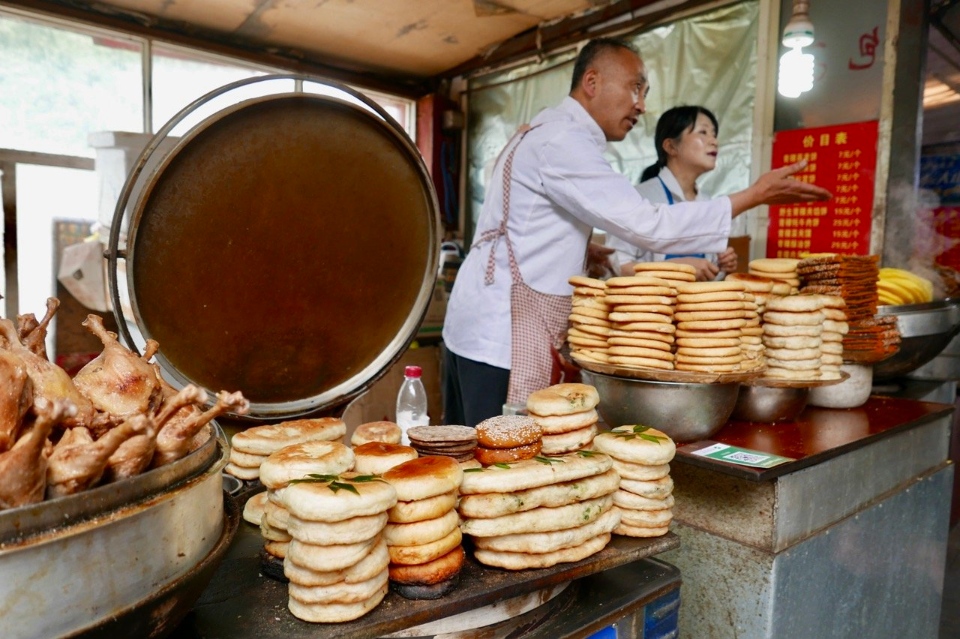
Walking around the ancient town of Doc Khac Tong, you can enjoy dishes made from highland vegetables and unique animal butter. The most special one is butter tea, which is used to warm and replenish fat for the body. The ingredients to make butter tea include Pu’er black tea, butter made from yak milk and Himalayan salt, which is good for health, so it will be a bit salty.
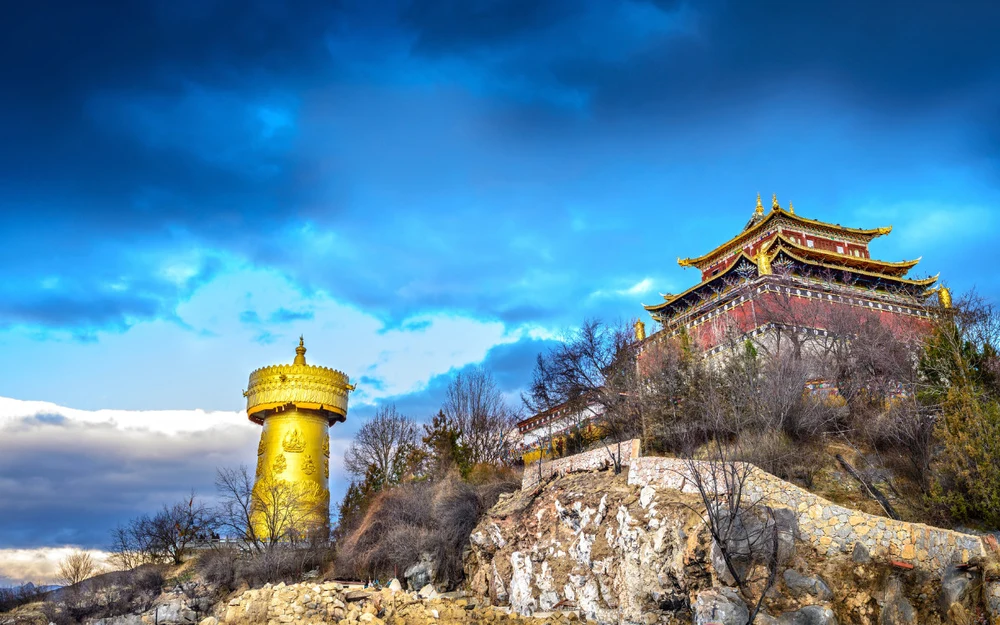
Coming to the “valley of immortality” Shangri La, we will experience a harmonious and peaceful life, with captivating scenery. Surely no Chinese tourist will want to miss the colorful fairy tale picture here.
Some best day tours, trips, activities and transfer services, tickets in, from and to Yunnan you can refer to
- Private Kunming Downtown Day Tour
- Kunming Changshui International Airport Transfers
- Stone Forest Admission Ticket in Kunming
- Private Kunming Downtown Day Tour
- Kunming Private Car Charter
- Jiuxiang Scenic Region Admission Ticket & Chairlift in Kunming
- 6-day luxury trip to Shangri-La in Dali, Lijiang, Yunnan
- Roaming in Yunnan for 6 days
- Dreamy Yunnan·Cool Northwest Yunnan 6 days and 5 nights
- [Dream Yunnan·Essence of Northwest Yunnan] In-depth pure play in Yun
- Yunnan Nationalities Village Ticket
Read more Yunnan guide here.