


























How to visit Sistine Chapel, What makes millions of visitors speechless before the surreal beauty of the Sistine Chapel? Join Living Nomads to discover this Renaissance masterpiece in the heart of the Vatican through the ULTIMATE Sistine chapel guide: Explore A Renaissance Masterpiece in the Vatican below.
- 13 Best Things to Do in Vang Vieng & Tips for Independent Travelers
- A Relaxing Uji Itinerary 1-Day: Escaping the Kyoto Crowds
- 16 Tourist Spots Near Tokyo to Make Your Trip Even More Exciting
- Conquering Shimokitazawa: Tokyo’s Haven for Thrift Shopping & Indie Culture
- Gotokuji Temple (Cat Temple): Tokyo’s Land of a Thousand Lucky Waving Cats
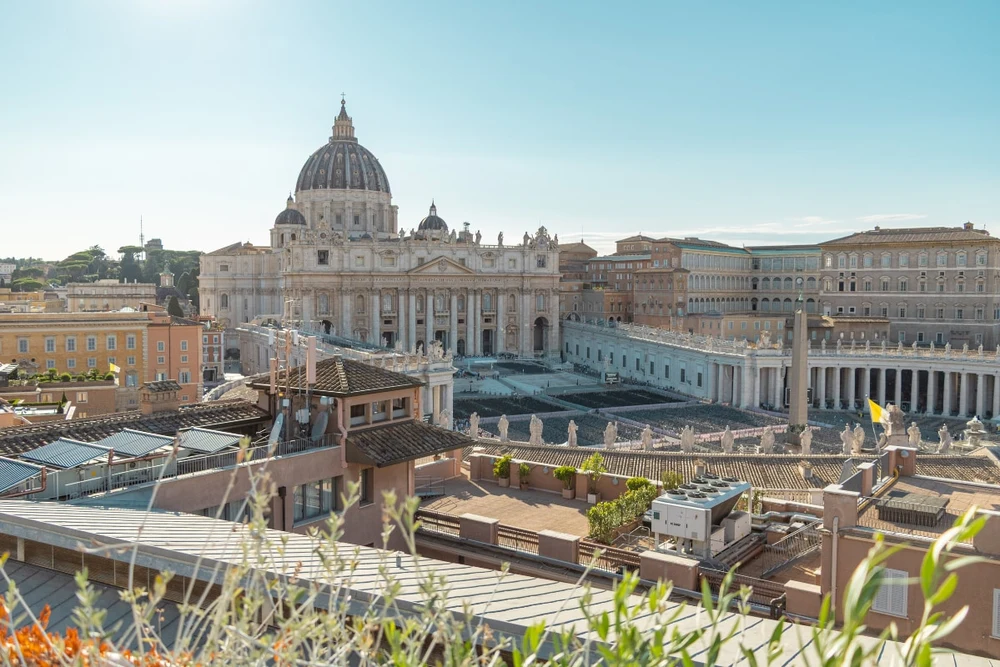
In the heart of the sacred Vatican, the Sistine Chapel appears like a symphony of hymns of art and faith. With a ceiling hand-painted by Michelangelo over 4 years and the classic fresco “The Last Judgment”, this religious building is considered a living museum of the Renaissance period. Whether you are an art lover or simply want to get lost in the most sacred space in Europe, Sistine is definitely a destination not to be missed.
Join Living Nomads to discover an inspiring artistic and spiritual journey at the Sistine Chapel!
Sistine chapel guide: What’s Attractive About the Sistine Chapel in the Vatican?
Vatican Museums and Sistine Chapel Ticket in Rome
Located in the Vatican Museums, right near St. Peter’s Square – the pilgrimage heart of many believers, the Sistine Chapel appears as a magnificent symphony of art and faith. The building was built in the late 15th century by order of Pope Sixtus IV, bearing the ancient appearance of the Temple of Solomon, both majestic as a fortress and containing incredible inner beauty.
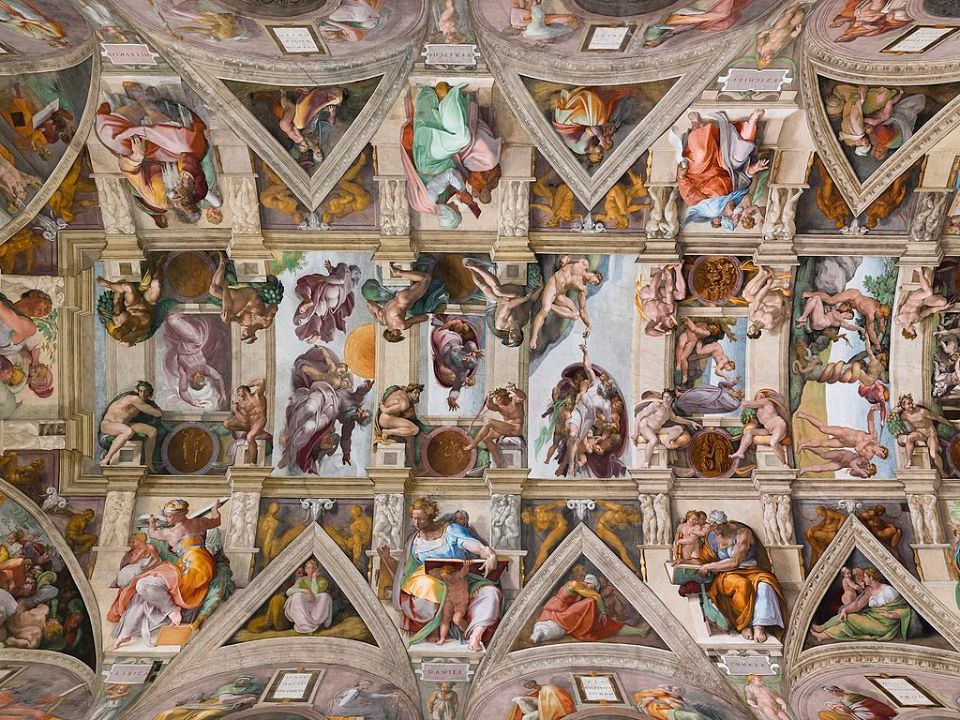
The Sistine is famous worldwide for its classic fresco masterpieces, especially the ceiling and the last wall painted by the genius Michelangelo. The paintings “The Creation of Adam” and “The Last Judgment” not only demonstrate his timeless talent but also deeply depict his religious spirit and philosophy of life.
Borghese Gallery Tickets and Tour Options in Rome
This place is also the sacred space where the Cardinal Conclave, a solemn ceremony in the Catholic Church, takes place. Whether you are an art lover or simply looking for a unique experience, you will not be able to take your eyes off the Sistine Chapel, a vivid symbol of the brilliant Renaissance period.
History of the Sistine Chapel
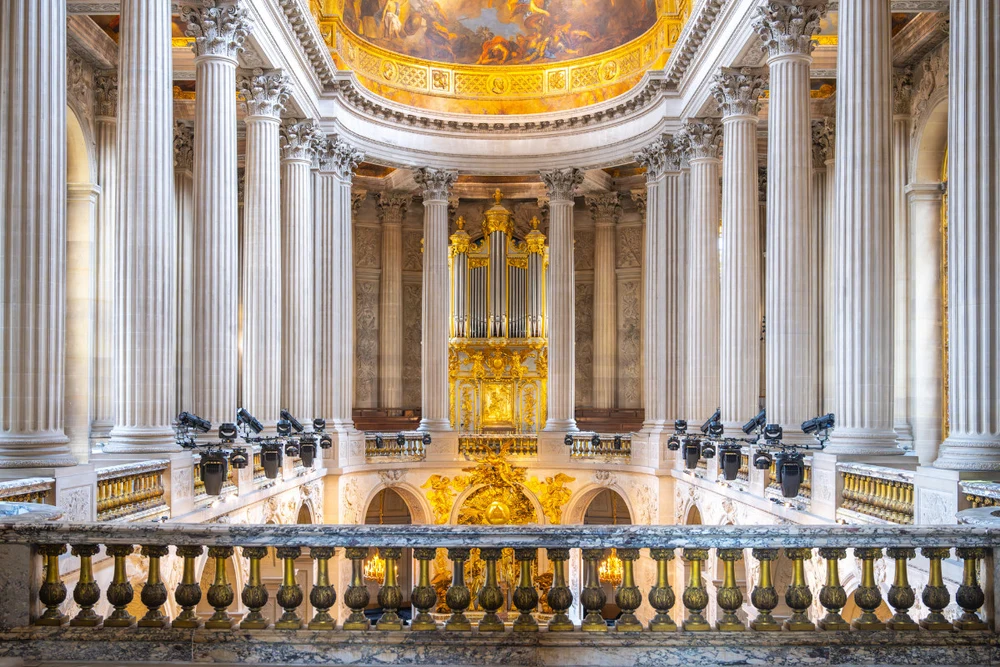
The Sistine Chapel, located within the Vatican, was begun in 1473 under Pope Sixtus IV. It replaced the Cappella Maggiore, an old chapel that had fallen into disrepair with its leaning walls and collapsing dome. The reconstruction was carried out on the old foundations, retaining the characteristic asymmetrical structure, and lasted until 1481.
Leonardo da Vinci Experience Museum Ticket in Rome
Soon after its completion, the Sistine became the place where important papal ceremonies were held. The first frescoes appeared in 1481, painted by Renaissance masters such as Sandro Botticelli, Pietro Perugino, Domenico Ghirlandaio and Cosimo Rosselli – giving this sacred space a solemn and symbolic appearance.
The chapel’s most prominent period came in the early 16th century, when Pope Julius II commissioned Michelangelo to create the decorative masterpieces. He was responsible for the entire ceiling (1508–1512) with impressive biblical scenes, and continued to work on the “Last Judgment” on the main wall (1536–1541). These two great works have turned the Sistine Chapel into the greatest artistic sanctuary of all time, attracting millions of visitors every year.
Sistine Chapel Architecture
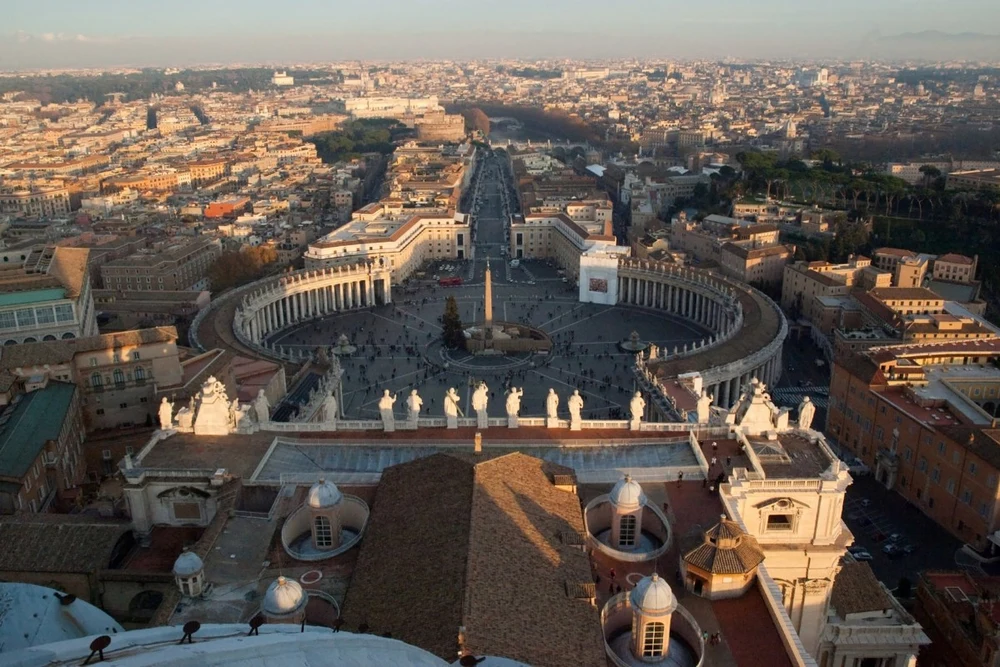
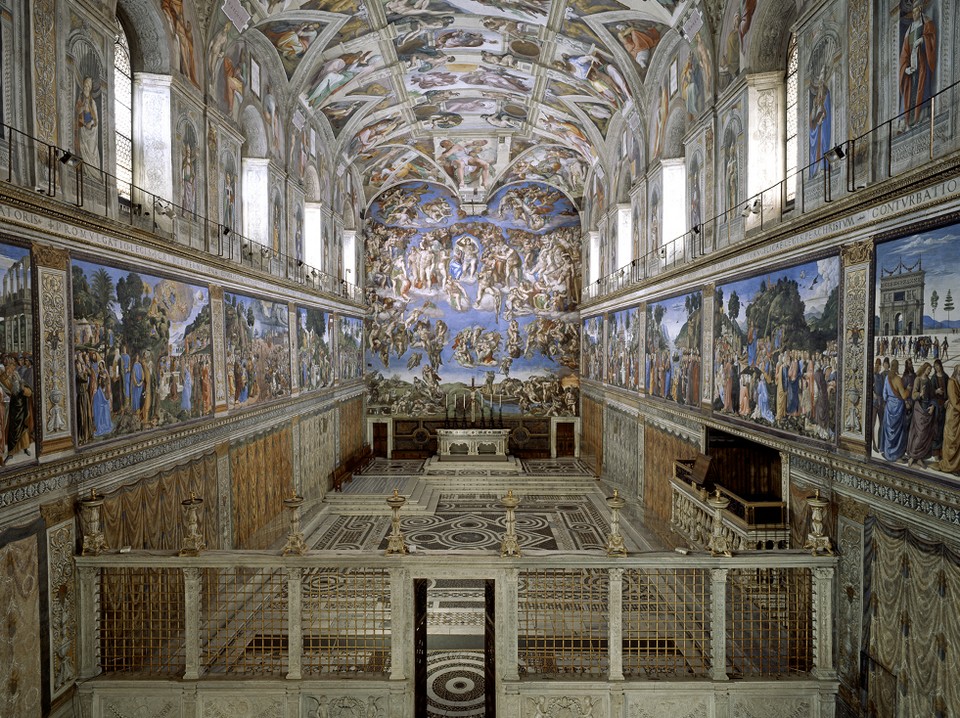
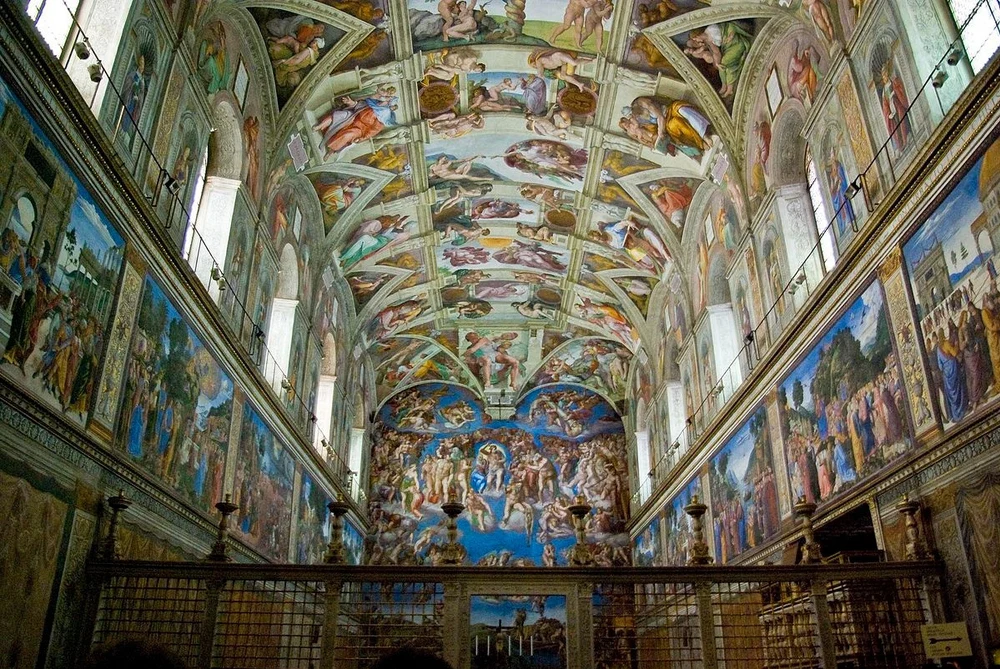
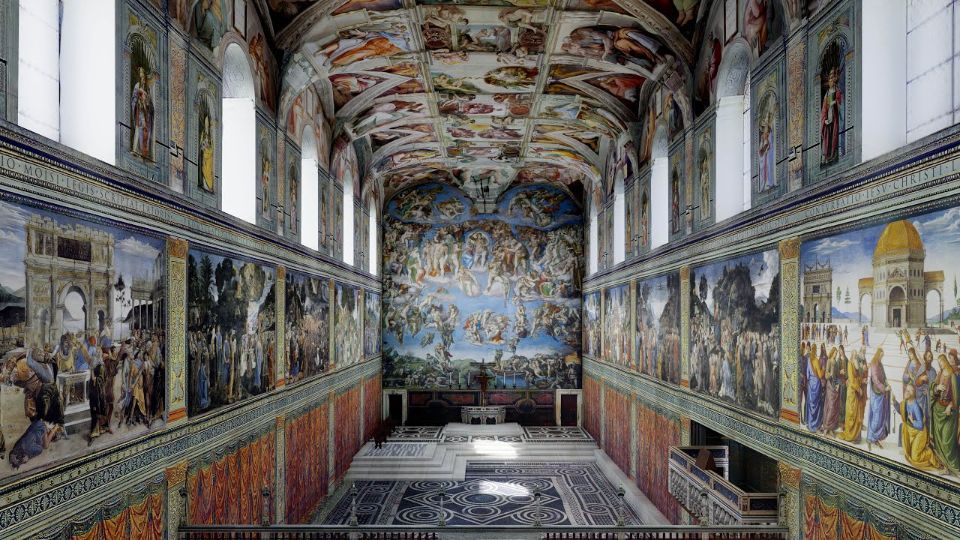
Although not as massive as many other religious buildings, the Sistine Chapel makes a strong impression thanks to its balanced and symbolic architecture. The building has a rectangular shape with dimensions of 40.9 meters long, 13.4 meters wide and 20.7 meters high. This ratio was designed based on the model of the sacred Temple of Solomon in the Bible, reflecting the standard architectural thinking of the Renaissance.
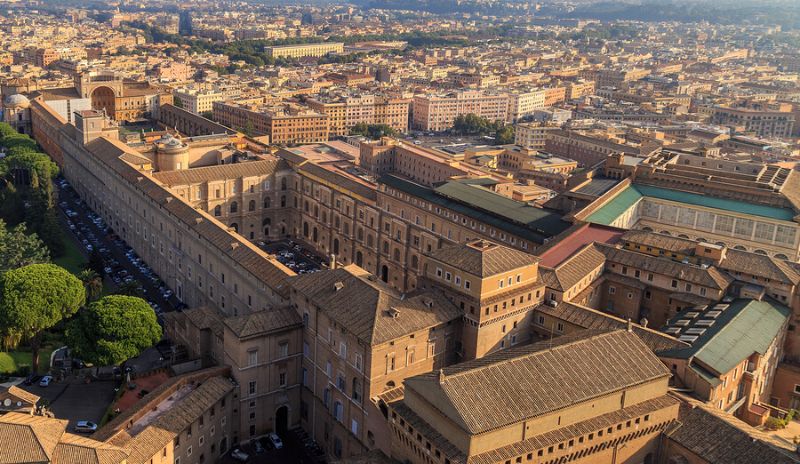
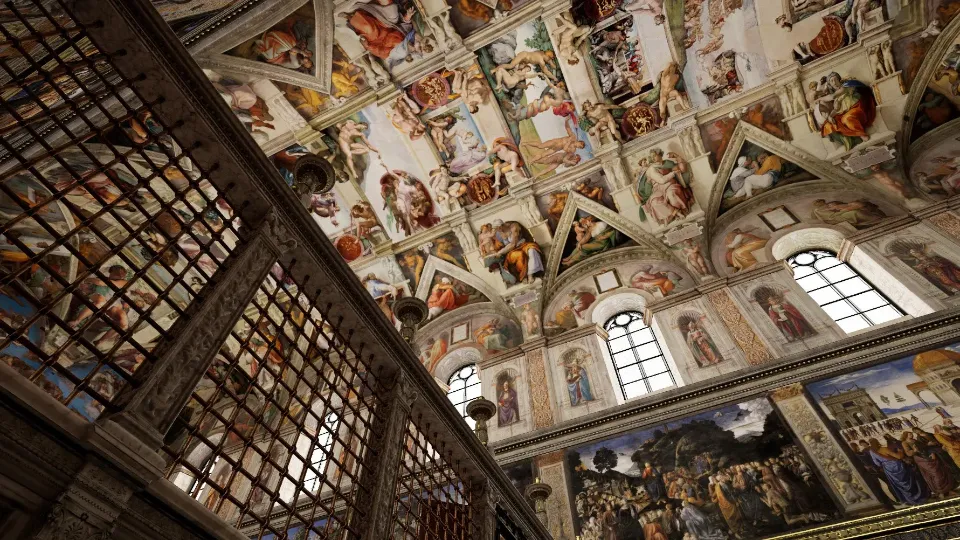
The gently curved dome not only helps to expand the space vertically, but is also the perfect solution for the fresco painting technique on the ceiling. This is also where Michelangelo created the famous nine-scene fresco ceiling. The gently intersecting vaulted ceiling design, supported by a series of pilasters between the windows, creates a rhythmic rhythm for the entire space above.
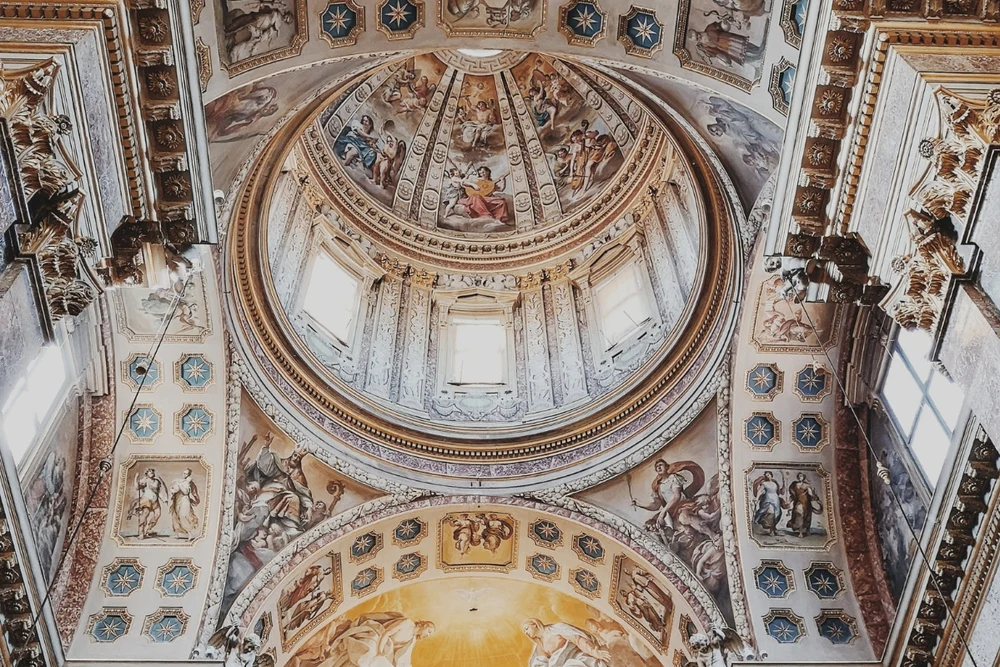
Inside the chapel, the interior is divided into two separate parts by an elaborate marble fence, called the transenna. The area near the altar is reserved for the clergy and Cardinals, while the remaining area is for the laity attending special occasions. This division of space both meets the liturgical requirements and expands the view for visitors to enjoy the art.
In addition, natural light plays a particularly important role in the Sistine Chapel. The high windows on both sides of the wall provide a soft light source, helping to highlight every detail of the famous frescoes. Thanks to that, from the surreal gaze of the characters to the vivid colors, it still retains its brilliance after more than 500 years.
Cultural and Religious Significance of the Sistine Chapel
Colosseum, Roman Forum and Palatine Hill Experience
In addition to being a famous artistic masterpiece, the Sistine Chapel is also considered the spiritual heart of the Vatican and the Catholic Church. This is where the most important ceremonies are held, including the Conclave of Cardinals to elect the Pope, an event that demonstrates the sacred role and symbolic spiritual power of this building.
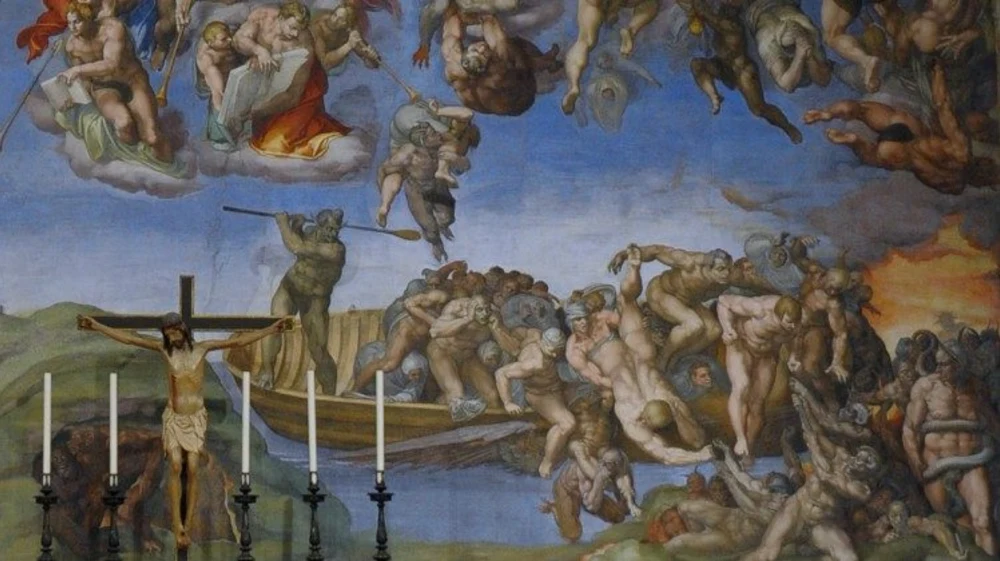
Each fresco in the chapel carries a profound theological message, especially “The Last Judgment” behind the altar, which Michelangelo painted between 1536 and 1541. The painting is a vivid visual summary of the end of the world, where the stern gaze of Christ confronts the souls of humanity, one saved, the other damned.
The Sistine Chapel is a perfect intersection of faith, knowledge and Renaissance art. Every detail in this space contributes to a profound sense of God’s presence. For Cardinals, it was the starting point of many historic decisions; for visitors, it is a place to contemplate and reflect on the sacred link between humanity and eternity.
Must-See Works at the Sistine Chapel
Ceiling – Michelangelo’s Masterpiece of Creation
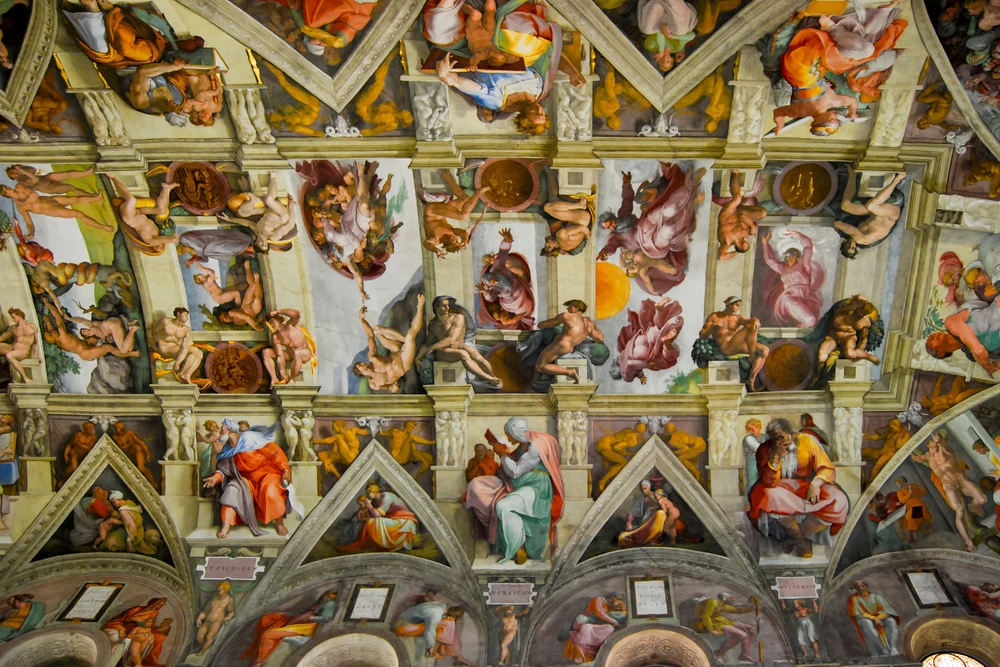
The ceiling at the Sistine Chapel is the pinnacle of Renaissance art, reflecting Michelangelo’s outstanding talent. Between 1508 and 1512, he carried out this work at the request of Pope Julius II, who wanted this sacred place to have a completely different appearance.
The original idea was quite simple, focusing only on the Apostles. However, Michelangelo proposed a bolder approach: to retell the entire journey of the world from its beginning according to the Old Testament. From there, nearly 500 square meters of ceiling were covered with classic scenes such as “God’s Creation”, “Adam and Eve being expelled from the Garden of Eden”, “The Great Flood”, and ancient prophets and prophetesses.
Florence and Pisa Day Tour from Rome
The striking focal point is “The Creation of Adam”. The scene of Christ reaching out to give life to Adam with a close touch has become an icon of Western art. Emotion, movement, tension in the gaze and form of the figures are all expressed in the masterful fresco technique.
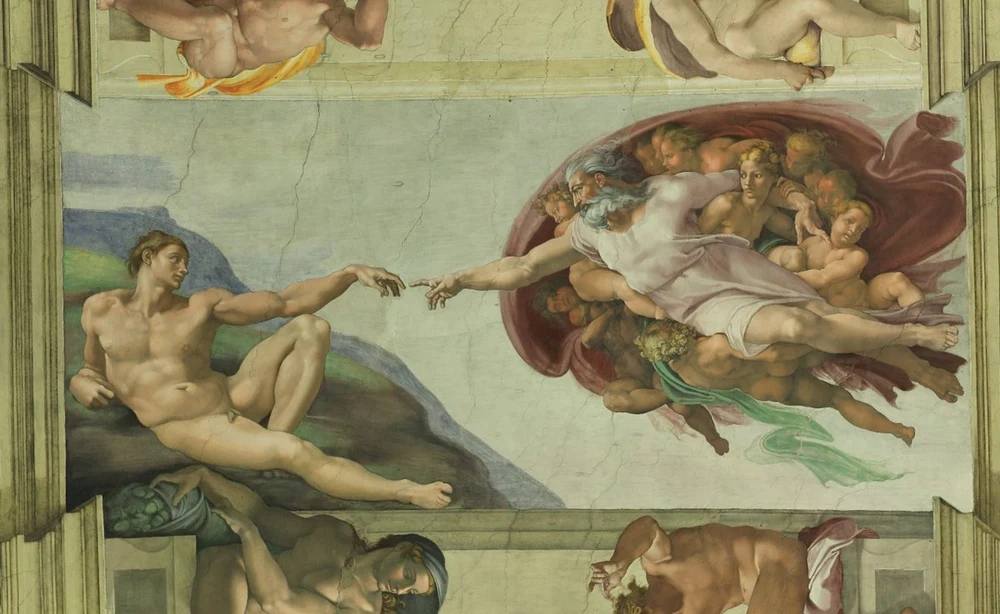
What is amazing is that Michelangelo, who was not a professional painter, stood firmly on a scaffolding he designed himself to complete the entire ceiling. The three-dimensional composition, vivid colors and powerful lines give an overwhelming sense of realism. This work opens up a deep reflection on man, his origins and the sacred connection between man and the Supreme Being.
The Last Judgement
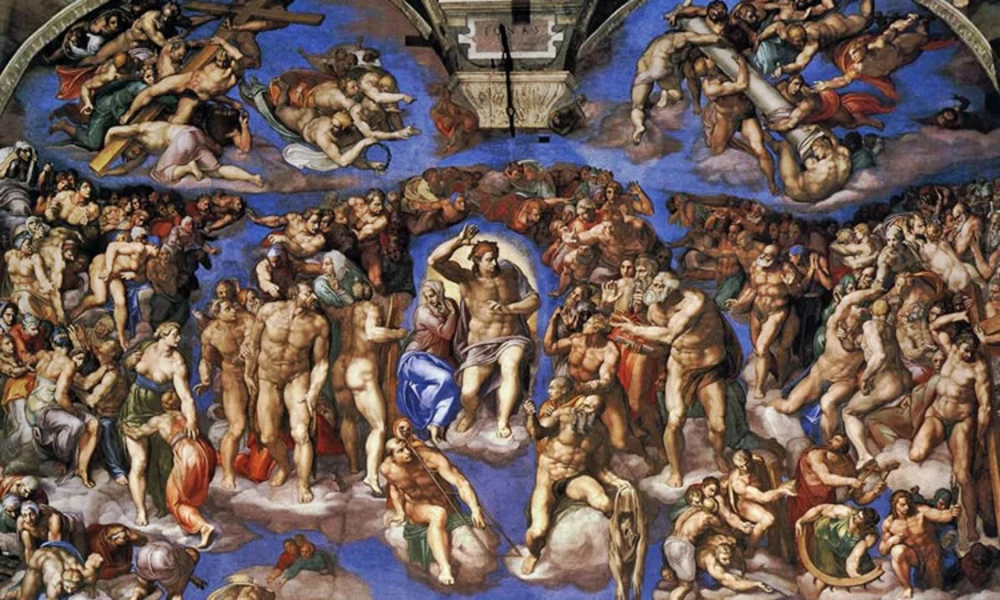
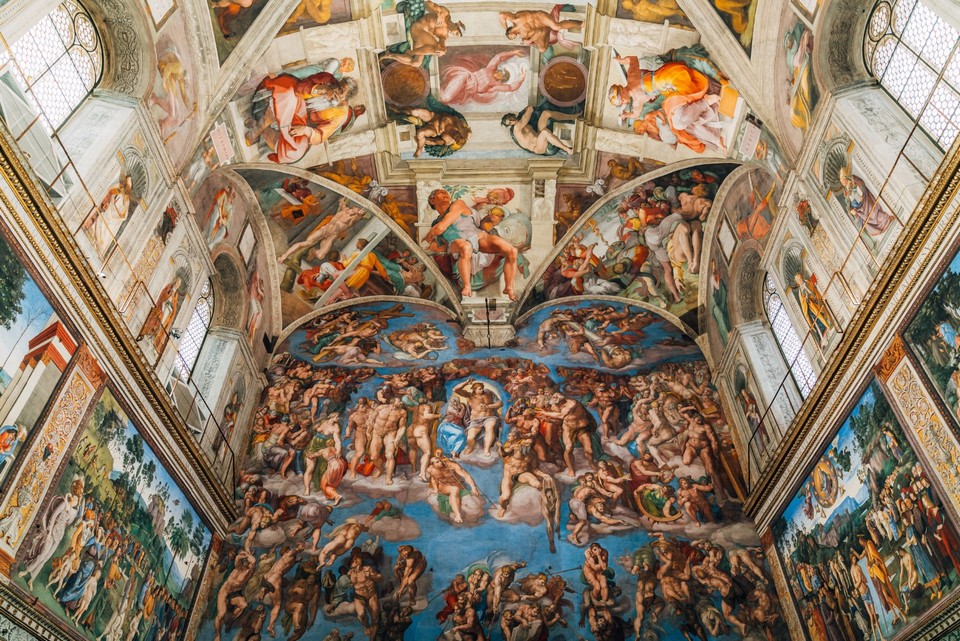
More than two decades after completing the ceiling, Michelangelo was once again commissioned by the Pope to decorate the main wall of the Sistine Chapel. The work “The Last Judgement” was started by him from 1536 to 1541, when he was already 60 years old – a time when many other artists would have stopped creating. However, Michelangelo continued to devote all his strength and faith to this final work.
Unlike the brightness and hope of the ceiling, “The Last Judgement” is a profound warning about judgment and human destiny. On the entire wall, nearly 14 meters high, hundreds of figures move violently in a giant swirling scene. In the center, Jesus appears powerfully as the supreme judge, his hand raised to decide the fate of souls, while the Virgin Mary stands silently beside him.
The martyrs, the angels dragging souls to heaven or throwing them down to hell, the living rising from the grave, all combine into a visual symphony full of melancholy and power. Michelangelo did not hide his inner feelings: he portrayed himself in the flayed skin of St. Bartholomew as a symbol of repentance and human imperfection.
The work breathes the breath of the Counter-Reformation period, when the Church faced many upheavals, and shows the depth of his thoughts on faith, justice and salvation. With “The Last Judgement”, Michelangelo left a mark in the history of art and also in the human consciousness.
The Side Walls – Impressive Masterpieces
The South Wall – The Story of Moses
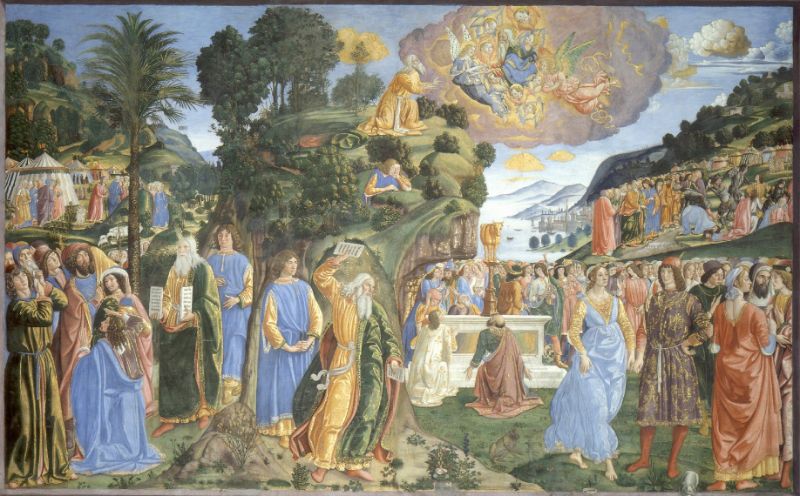
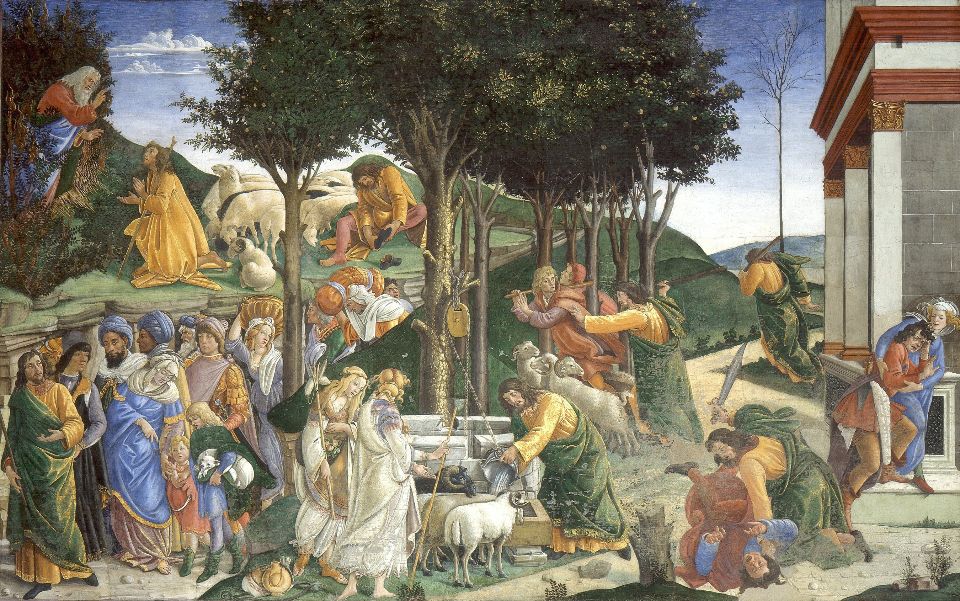
The South Wall of the Sistine Chapel displays a series of frescoes recording important stages in the life of Moses, the great prophet of the Old Testament. Six large paintings were made by leading Renaissance artists such as Sandro Botticelli, Pietro Perugino and Luca Signorelli at the end of the 15th century at the request of Pope Sixtus IV.
Each work has a vivid narrative, emphasizing Moses’ role in leading the Jewish people, conveying God’s Law and protecting the nation from oppression. “Moses Protecting the Daughters of Jethro” depicts him as brave and kind. Meanwhile, “The Giving of the Law” shows the sacred connection between Moses and God, as he receives the Ten Commandments from the hand of the Most High.
Rome Hop-On Hop-Off Bus by Gray Line Rome
The images are arranged harmoniously, with smart perspective and vibrant colors, creating a sense of depth and seamless movement on a flat space. Through this, art not only serves the faith but also becomes a powerful educational tool in the Christian world at that time.
The North Wall – The Life of Jesus
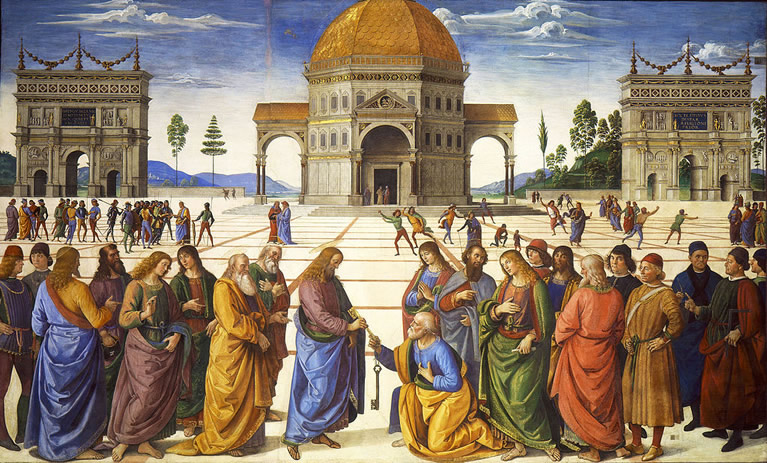
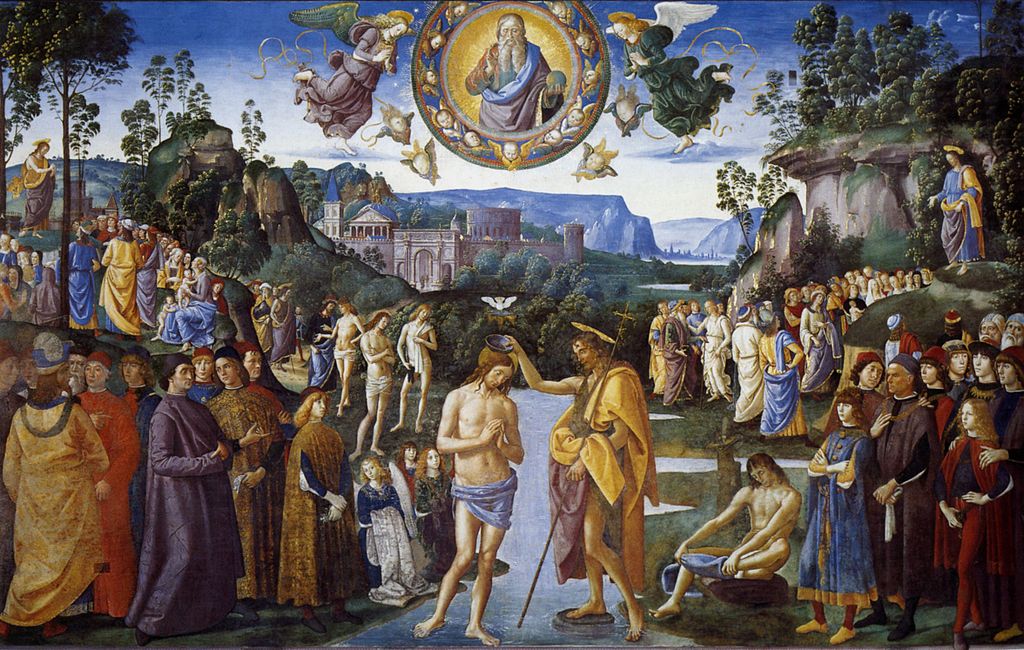
Opposite to the series of paintings about Moses is a series of works recording important milestones in the life of Jesus, from his baptism to the handing over of the leadership of the Church to St. Peter. The paintings are drawn in a similar composition, creating a close symmetry in both content and form, as a way to express the connection between the Old and New Testaments.
The painting “The Baptism of Jesus” by Perugino has a gentle and sacred feeling. The scene of Jesus standing by the Jordan River, bowing before St. John the Baptist, in the midst of the light from above, is a symbol of the beginning of the sacred mission. Next to that, “Giving the Keys of Heaven to St. Peter” has a clear implication of continuity in the power of the Church.
Sistine Chapel and St. Peter’s Basilica tour in Vatican
The common point of all the paintings is the ability to tell a story through images with clear rhythm, deep expression, and the ability to subtly express the psychology of the characters. Thanks to that, each wall becomes a vivid story, extending the space of the chapel into a flow of faith and history.
How to Get to the Sistine Chapel?
Fiumicino Airport – Rome Bus by SIT Bus Shuttle
The Sistine Chapel is located inside the Vatican Museum complex, located in Viale Vaticano, Vatican City, the smallest country in the world located entirely in the heart of the Italian capital Rome. This is the end point of the journey to visit the Vatican Museum, so you will need to go through a series of galleries and historical corridors before admiring Michelangelo’s ceiling masterpiece.
From Vietnam, you can book a flight to Rome (Fiumicino or Ciampino Airport), transiting in a major city such as Doha, Istanbul or Dubai. Round-trip ticket prices range from 39 million to 55 million VND depending on the season and airline. After arriving at Fiumicino Airport, choose the SIT Bus Shuttle service for convenient travel to the center of Rome, for about 7 euros (~215,000 VND) each way.
Rome Hop-On Hop-Off Bus by City Sightseeing
In Rome, public transport is the most reasonable choice to get to the Vatican. Visitors take the metro line A, stop at Ottaviano or Cipro station, then walk about 10 minutes to the entrance of the Vatican Museums. Public buses are also very convenient, of which lines 40, 64 and 62 stop near the Vatican area. If you want to experience Rome flexibly and combine visiting many famous places, you should consider the Rome Hop-On Hop-Off Bus Ticket by the hour, which fits your personal schedule and helps you save time.
The cost of traveling in the city of Rome is generally quite reasonable. A single tram or bus ticket costs 1.5 euros (~45,800 VND), valid for 100 minutes from the first scan. You can also buy a day ticket for 7 euros, suitable if you travel many times in a day.
Note that the Sistine Chapel does not have its own entrance, so visitors are required to purchase tickets to the Vatican Museums. To save time and avoid long lines, you should book tickets online in advance and arrive early in the day for the most comfortable experience.
How Much Does a Ticket to Visit the Sistine Chapel, Vatican?
The Sistine Chapel is open Monday to Saturday, from 8am to 8pm, but visitors should note that the last entrance is 6pm. After this time, the sightseeing areas will be closed. On the last Sunday of the month, the Chapel is open for free from 9am to 2pm, however, it is often very crowded.
The ideal time to visit is early morning or after 1pm on weekdays. Visitors should avoid peak days such as Saturday, Easter or the end of the month when there are often many people coming.
Currently, tickets to visit the Sistine Chapel can be easily booked through the official website of the Vatican Museums, or quickly booked through platforms like Klook. Below is a reference price list:
| Ticket packages | Price from (VND) | Prominent advantages |
|---|---|---|
| Priority admission | 1,228,000 | No queuing, instant confirmation |
| Tickets with audio guide | 1,346,000 | Learn more with audio guide |
| Pantheon Combo Ticket | 1,750,000 | Explore more famous Roman ruins |
| English group tour | 3,040,000 | Accompanied by a professional tour guide |
| Tour guide ticket + audio | 1,351,000 | In-depth guidance, freedom to explore |
Effective Sistine Visit Tips for First-Time Visitors
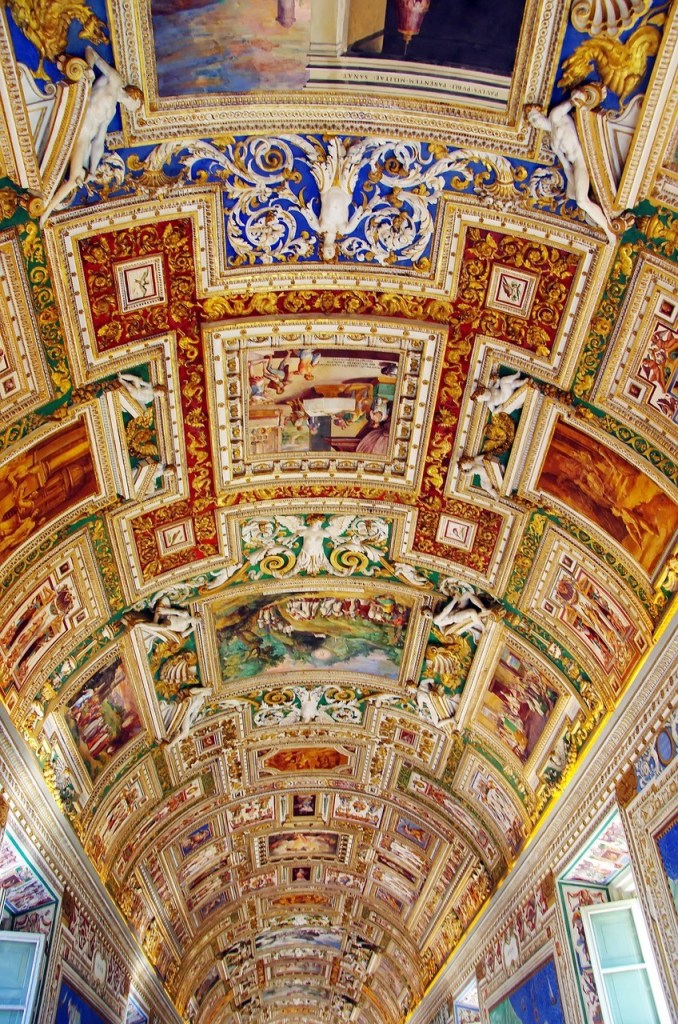
The first visit to the Sistine Chapel is definitely an overwhelming experience for visitors who love art and religious history. However, to make the tour go smoothly, there are a few things you need to keep in mind before departure.
Dress: Sacred spaces like the Sistine Chapel require visitors to dress modestly and politely. Avoid wearing tank tops, short skirts, shorts or off-shoulder outfits. Hats and hats should also be removed when entering the sightseeing area.
Prepare tickets in advance: Buy tickets online on Klook to avoid long lines. Choose early morning or early afternoon during the week to avoid crowds.
Do not bring bulky items: Large bags, suitcases, long umbrellas or tripods will have to be left in the storage room. Sharp objects are also not allowed.
No filming or photography: Inside the Chapel, all forms of filming and photography are strictly prohibited to preserve the masterpieces.
Wear comfortable shoes: You will need to move around the museum grounds a lot, so a pair of comfortable shoes will make the tour easier.
A jewel in the heart of the Vatican, the Sistine Chapel is a masterpiece of Renaissance art, with its exquisite frescoes and profound religious significance. Whether you are an art lover, a culture lover or a curious tourist, you will surely be overwhelmed by its timeless beauty.
Plan your memorable cultural exploration at the Sistine Chapel now!
Some best day tours, trips, activities and transfer services, tickets in and from Rome you can refer to
- Shared Fiumicino Airport Transfers (FCO) for Rome by Terravision
- Colosseum, Roman Forum and Palatine Hill Tour
- [Buy 1 Get 1] Rome Big Bus Hop-On Hop-Off Tours (Open-Top)
- Rome to Florence Day Tour
- Colosseum, Roman Forum and Palatine Hill Skip-the-Line Entrance Ticket in Rome
- 1 Roma Pass for 45+ Attractions
- OMNIA Vatican and Rome Card
- Vatican & Rome Combo Sightseeing Tour
- Eurail Italy Pass
- Eurail Global Pass – 33 European Countries
- Vatican Museums and Sistine Chapel skip-the-line Ticket
- St. Peter’s Basilica Dome access and audio guide ticket
- Pompeii, Amalfi Coast and Sorrento Peninsula Tour from Rome
- Pantheon Ticket in Rome
- Vatican Museums Tour with St. Peter’s Basilica Access
- Vatican Museums and Sistine Chapel Ticket in Rome
- eSIM Europe with high-speed and stable Internet connection
Are you looking for more Italy travel guide: Tours, activities, attractions and other things? Let’s check it out here. And top things to do in Rome here.