





























What makes the Vatican Museum so fascinating to visitors? how to visit Vatican Museums, what are the ticket prices, what to do, opening hours, and outstanding works? Discover the complete experience of visiting the museum through The FULLEST Vatican Museums guide: How to visit, ticket prices, what to do, tips & MORE in this detailed article!
- 11 Amazing Art Exhibitions and Art Gallery Spots in Seoul
- New York best museums: 15 most famous & must visit museums in New York
- The ULTIMATE Sistine chapel guide: Explore A Renaissance Masterpiece in the Vatican
- The ULTIMATE Louvre museum guide: Best things to do, Ticket prices, tips & MORE
- National Museum of Singapore Review: All About It: How to Get There, Top Things to Do & MORE
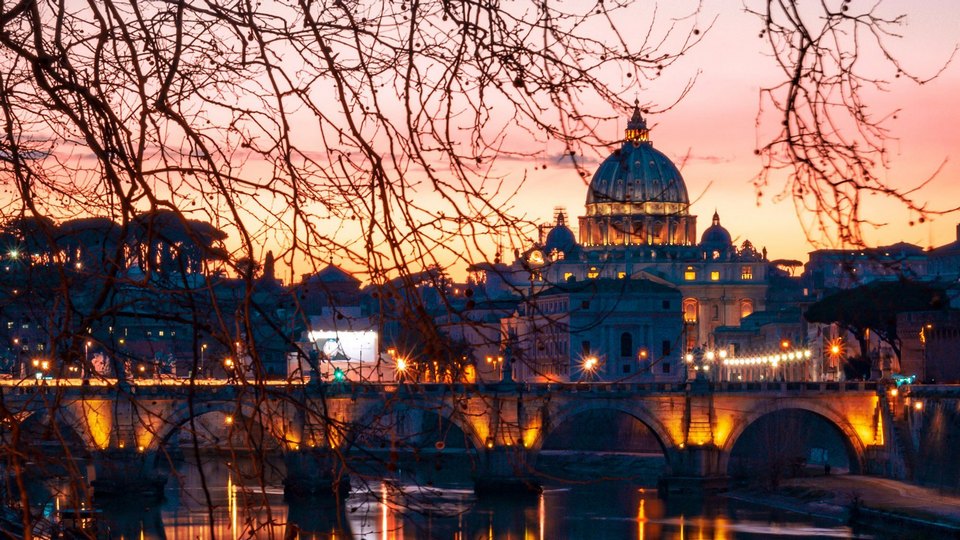
Nestled in the heart of the Vatican City State, the most sacred and powerful place in the Catholic world, the Vatican Museum is not only a magnificent art treasure but also a journey leading back to history, religion, and human culture. Each room and corridor here preserves thousands of immortal masterpieces from the Renaissance to modern times.
Are you planning to explore the Vatican? Pocket the guide of visiting the Vatican Museum from Living Nomads!
Vatican Museums guide: What’s Attractive About the Vatican Museum?
Rome City Highlights Guided Walking Tour
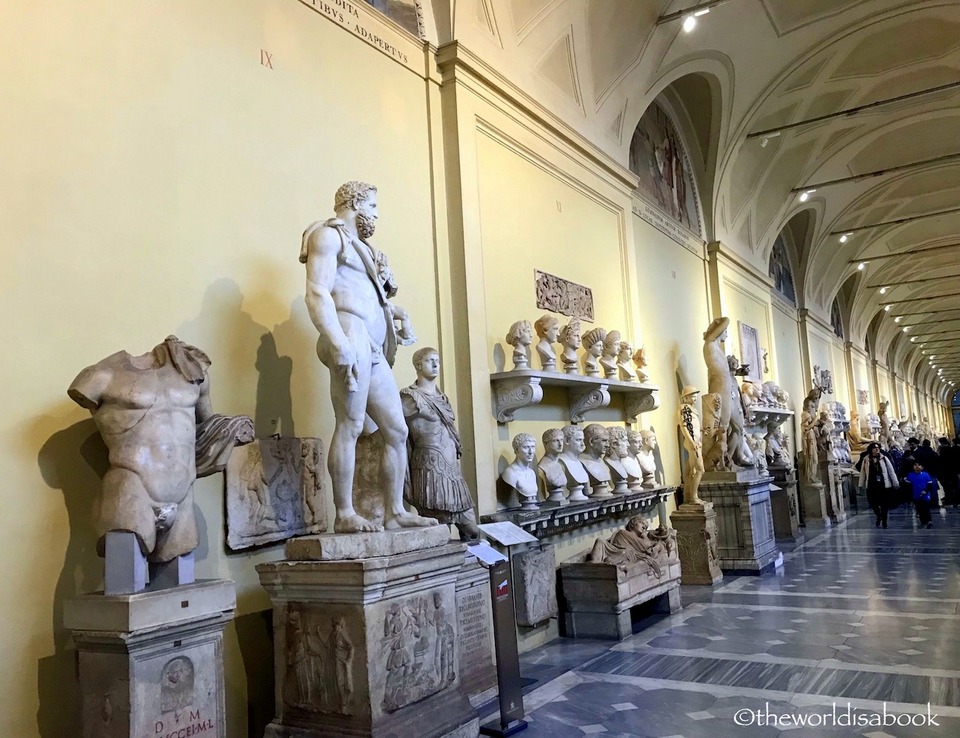
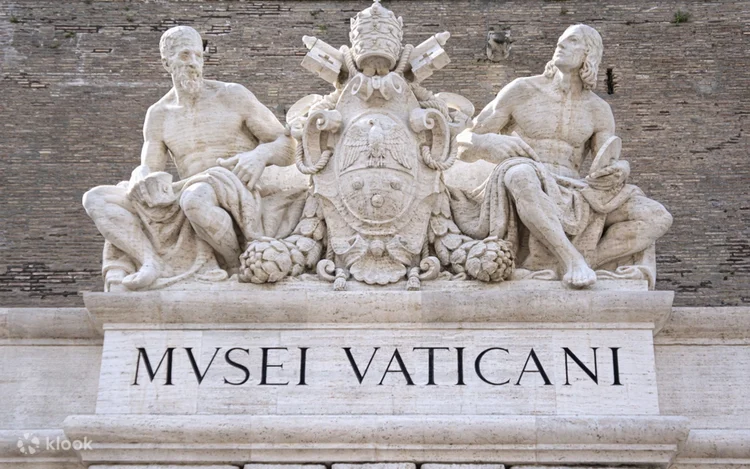
Located in the heart of the Vatican City – the smallest country in the world, the Vatican Museum stands out as an art treasure preserved for centuries. With an area of over 42,000 square meters, this place gathers about 70,000 artifacts, of which 20,000 are permanently displayed, a number enough to overwhelm any art lover.
The museum is a direct journey that takes visitors to explore the Catholic cultural heritage and Western art treasures, spanning from ancient times, Egypt, Rome to the Renaissance. Legendary names such as Michelangelo, Raphael or Caravaggio are present through each fresco, sculpture and religious architecture.
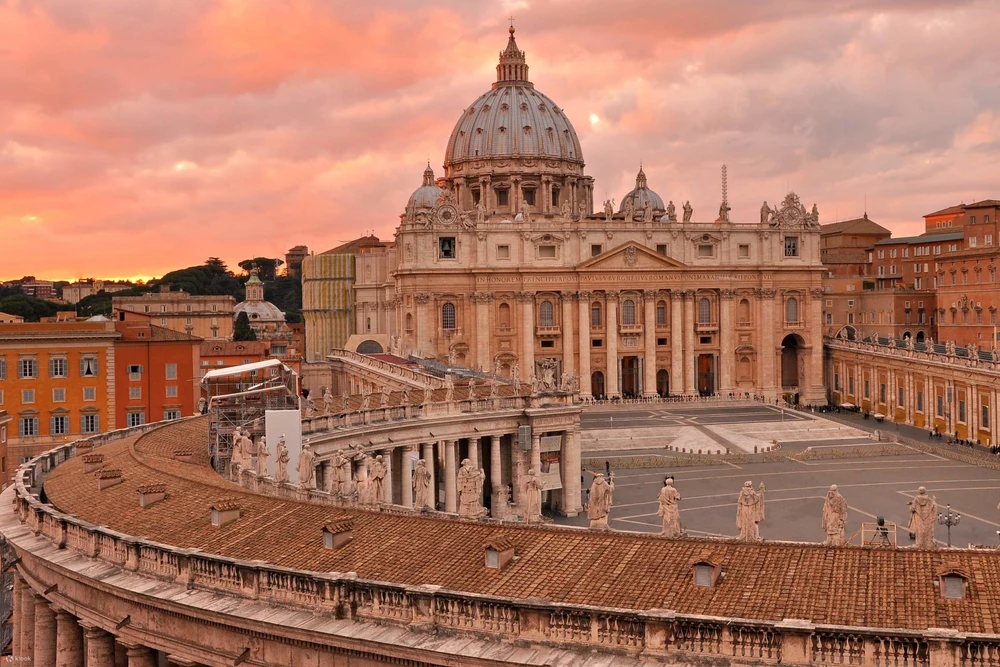
The most prominent stop on the journey is the Sistine Chapel, where Michelangelo painted the ceiling and main wall with the highest technique and emotion. This space is not only visually appealing but also makes viewers silent because of the weight of religion and history. A visit to the Vatican Museum is an opportunity to live among the quintessence of human art and fully feel the breath of Christian civilization.
Latest Vatican Museum Ticket Price List
Vatican Museums Tour with Optional St. Peter’s Basilica Access
Below is the latest reference price list for services at the Vatican Museum, including prices converted from Euro to VND, helping you easily plan your budget for the trip:
| Service packages | Price VND (from) |
|---|---|
| Admission (priority access) | 1.191.036 |
| Admission Ticket + Audio Guide | 1.344.323 |
| Entrance Ticket + Pantheon | 1.747.466 |
| English group tour | 3.035.073 |
| Small group tour in English | 3.341.646 |
| Chinese group tour | 3.954.792 |
| Priority Tour + Basilica Entrance Ticket | 2.728.500 |
| Entrance ticket + Tour guide + Audio guide | 1.348.921 |
Note: The above prices may change depending on the time of booking and promotional programs.
Where to Buy Vatican Museum Tickets?
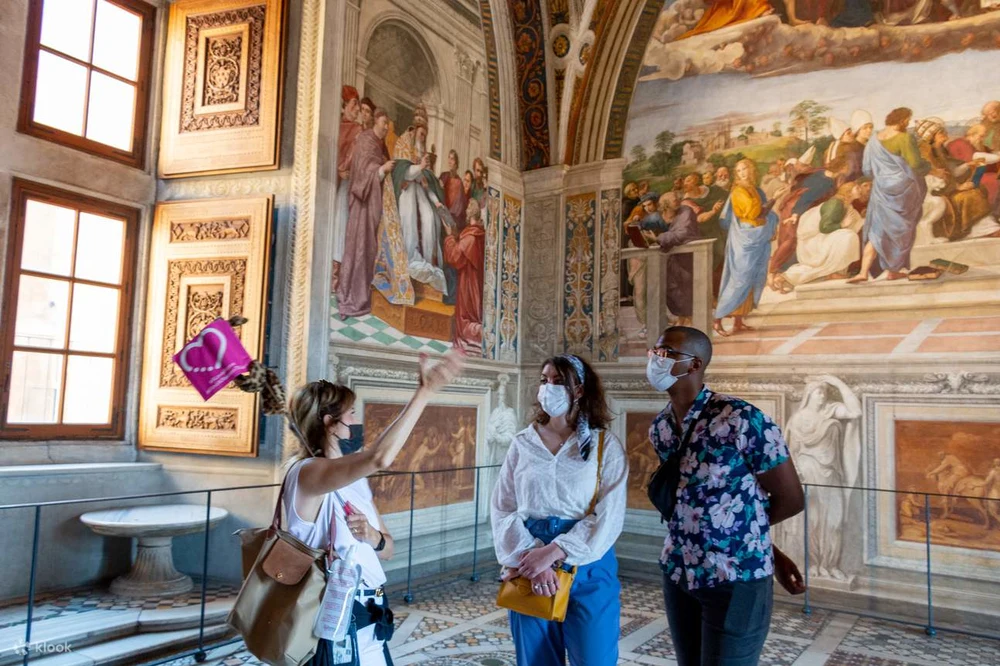
Vatican Museums and Sistine Chapel Ticket in Rome
Visitors can buy tickets to visit the Vatican Museum directly on the official website or through reputable platforms such as Klook. Both forms allow you to choose the date and time of visit in advance, helping you to be more proactive in your schedule and avoid the situation of sold-out tickets or having to wait in long lines. If you book on Klook, you will also get instant confirmation, clearly displayed prices and often have attractive promotions.
In addition, don’t miss the Klook Pass Rome with a super-saving tour combo, up to 50% off, including tickets to the Vatican Museum, Sistine Chapel and 28 other prominent locations. Prices start from only 1,532,000 VND, making it extremely suitable if you want to fully explore Rome while still saving money!
What are the Opening Hours of the Vatican Museum?
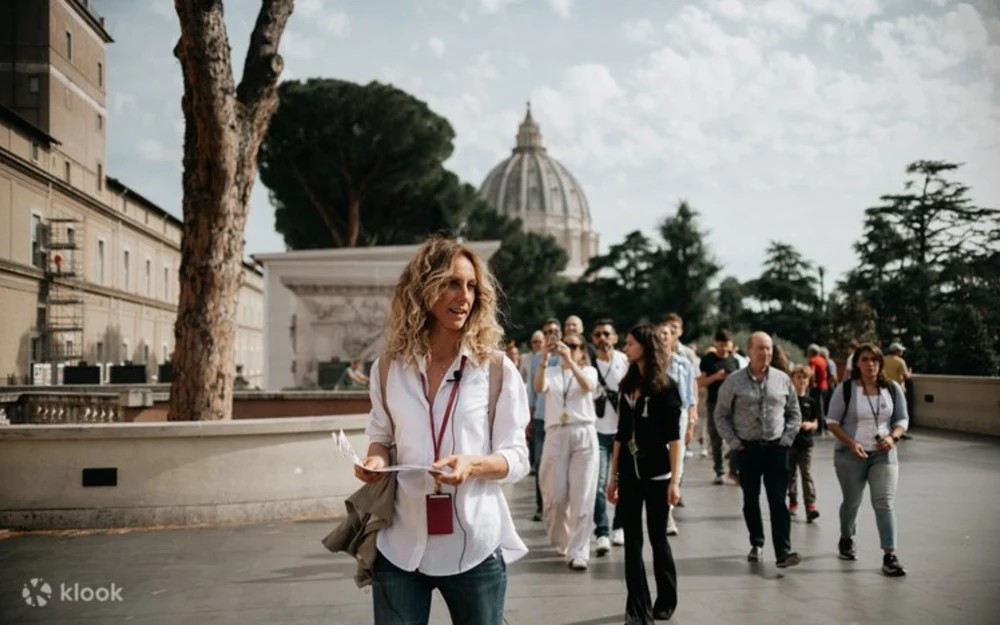
Vatican Museums and Sistine Chapel skip-the-line Ticket
The Vatican Museum is open from Monday to Saturday, from 08:00 to 20:00, with the last admission at 18:00. Please note that visitors must leave the galleries 30 minutes before closing time to ensure the museum can be maintained and closed properly.
In particular, the last Sunday of each month is a rare occasion when visitors are allowed free entry, from 09:00 to 14:00 (last admission is 12:30), unless it falls on important holidays such as Easter, Christmas, Saints Peter and Paul’s Day, etc. However, these occasions are often very crowded, so you should choose to go during the week for the most comfort. Before planning your visit, don’t forget to check the Museum’s unusual closures and holidays.
Must-See Artworks & Exhibits at the Vatican Museums
Sistine Chapel – Admire Michelangelo’s Legendary Ceiling
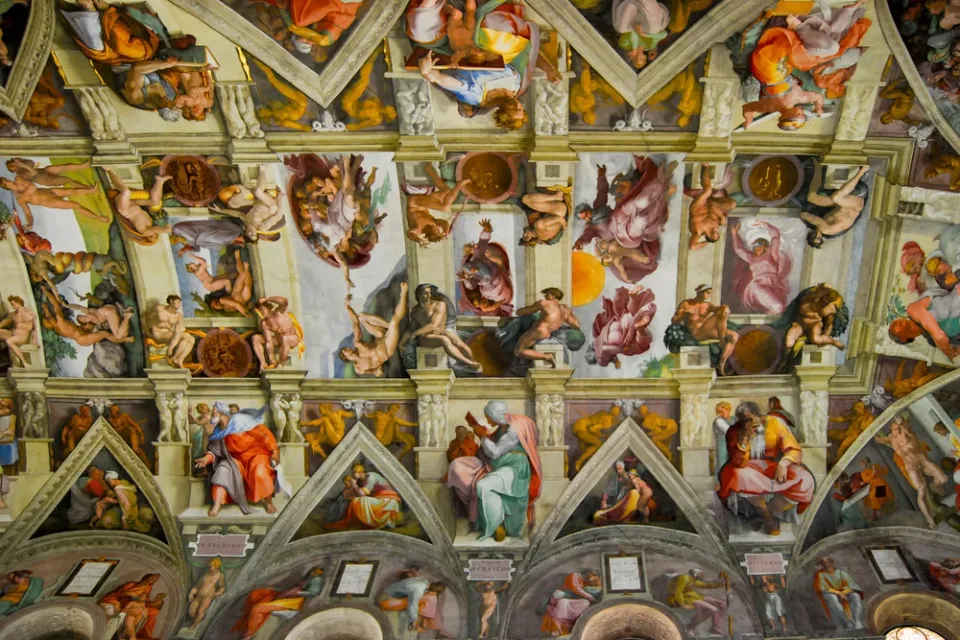
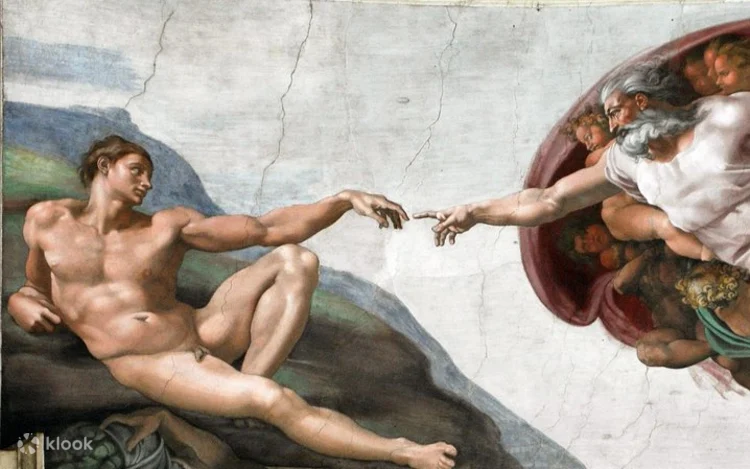
If you have to choose a single place that cannot be missed in your journey to explore the Vatican, it is the Sistine Chapel. This chapel ceiling was created by Michelangelo in 4 years (1508–1512), with more than 300 figures depicting scenes from the Bible, typically “The Creation of Adam” and the image of two fingers touching, which has become a global cultural symbol.
Looking up at the vaulted ceiling, visitors will feel the incredible depth, movement and vitality from each brushstroke. This religious work is worthy of being the pinnacle of Renaissance art. The sacred atmosphere, combined with the dim natural light, makes the experience of admiring the Sistine ceiling an unforgettable moment. A word of advice when you visit: stand still for a few minutes and let your soul immerse in this wonder.
The Last Judgment
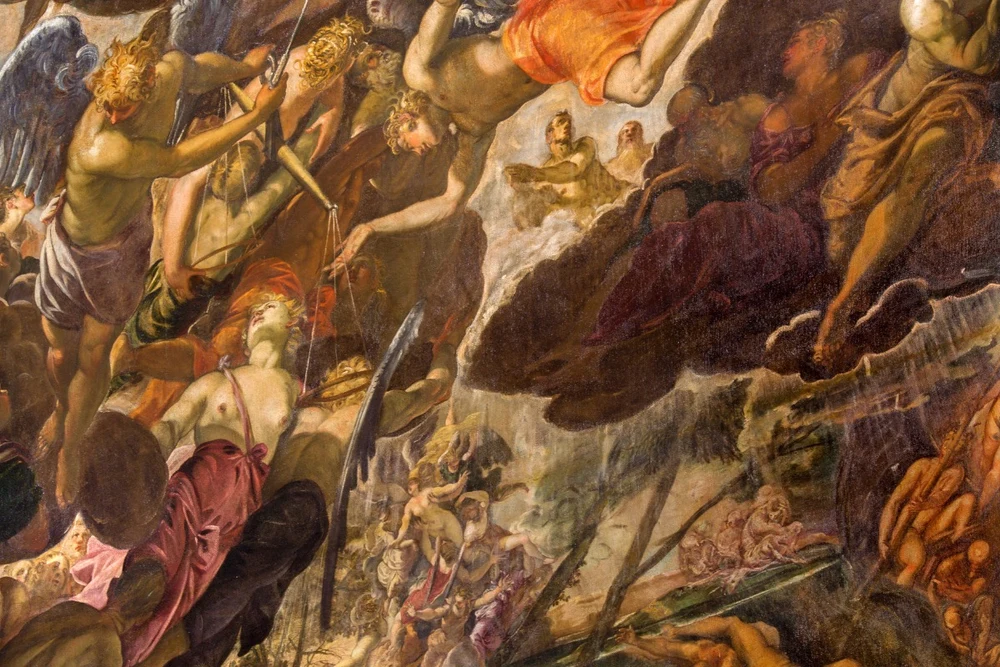
Just behind the Sistine Chapel is Michelangelo’s masterpiece, “The Last Judgment”, which is known as the haunting work of Michelangelo, completed nearly 30 years after he painted the ceiling. This giant wall, more than 13 meters high, depicts the scene of God’s return and judgment of humanity, with hundreds of figures entangled in the turmoil of fate.
In the center is the powerful image of Jesus, raising his hand to separate those who go to heaven and those who fall into hell. What is special is that Michelangelo painted his own face in the skin of Saint Bartholomew, expressing his inner turmoil. The longer you look, the more you see the philosophical weight hidden behind each stroke. This is not just a painting, but a journey to face faith, fear and salvation.
Raphael Room – “The School of Athens” Painting
Papal Audience with Pope Leo XIV (Vatican Blessing Tour)
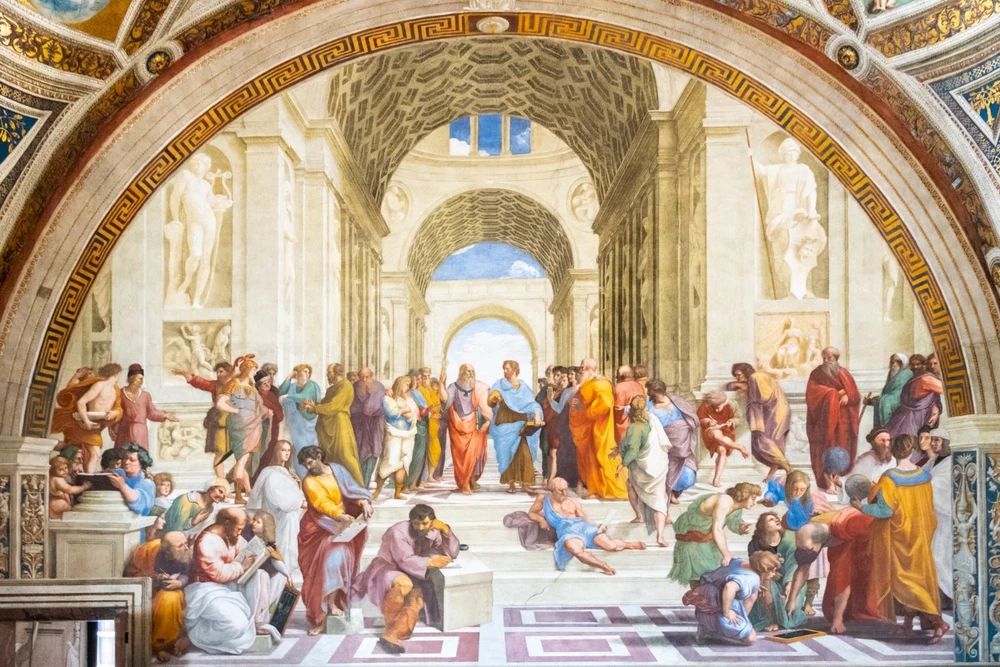
Of the four famous rooms painted by Raphael in the Vatican, Stanza della Segnatura is the academic highlight with the fresco “The School of Athens”. The work simulates an ideal hall, where the greatest minds of ancient Greece such as Plato, Aristotle, Socrates, Pythagoras… gathered.
Interestingly, Raphael incorporated portraits of Michelangelo and Leonardo da Vinci into the philosophers, both as a tribute and an affirmation of the intellectual role of the Renaissance. With its delicate symmetrical structure, deep perspective and vivid tones, this painting is both a testament to masterful painting techniques and a manifesto of human knowledge.
Ancient Statue Exhibition Area – Revisiting Greek – Roman Symbols
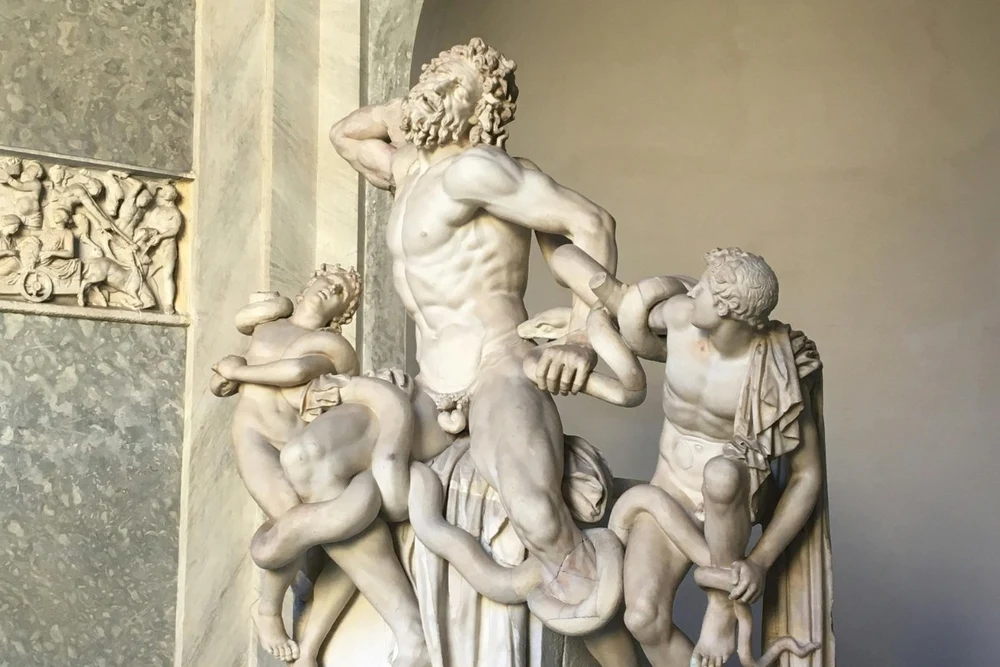
At the Pio-Clementino area, visitors often stop the longest in front of three legendary sculptures: Laocoön, Apollo Belvedere and Belvedere Torso. The Laocoön statue is a dramatic scene depicting the Trojan priest and his two children being squeezed by a sea serpent, full of pain and helplessness, which made Michelangelo exclaim in amazement when he witnessed it with his own eyes.
Nearby is Apollo Belvedere – the god Apollo walks with a proud demeanor, a handsome face, and body proportions considered the standard of classical male beauty. The Belvedere Torso, though just a headless, limbless body, carries a powerful energy and was an endless source of inspiration for Michelangelo. Every muscle and vein is alive as if in motion. This is where time seems to stand still to honor timeless art.
Pinacoteca Gallery – A Treasure of Paintings from Giotto to Caravaggio
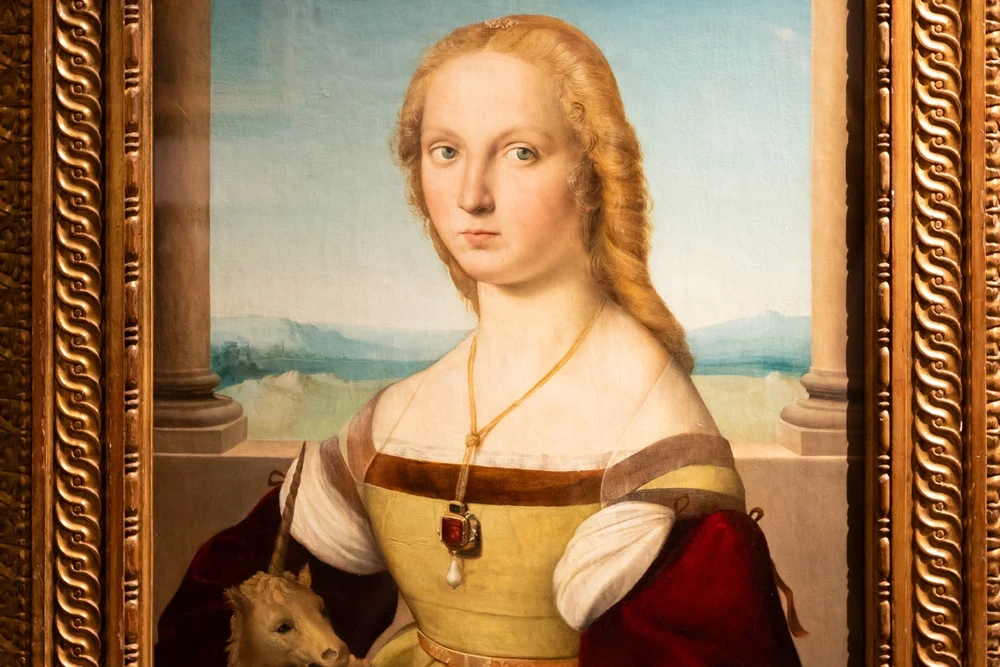
If you are an art lover, this is the ideal place to explore the entire history of European art through 450 works arranged in chronological order. Leonardo da Vinci’s work, “Saint Jerome in the Desert”, has a melancholy, powerful look, although unfinished, clearly showing a quiet style and precise anatomical structure.
Raphael ended his brilliant career with the painting “Transfiguration” with its two-story composition, magical light, expressing faith and miracles. Caravaggio appeared impressively with “Downfall of Christ”, the dazzling light contrasting with the deep darkness, conveying a silent and intense pain. Every step in the gallery is a step through time through each school and style of painting that formed the foundation of Western painting.
The Borgia Apartments – The Mysterious Color Blocks of a Scandalous Family
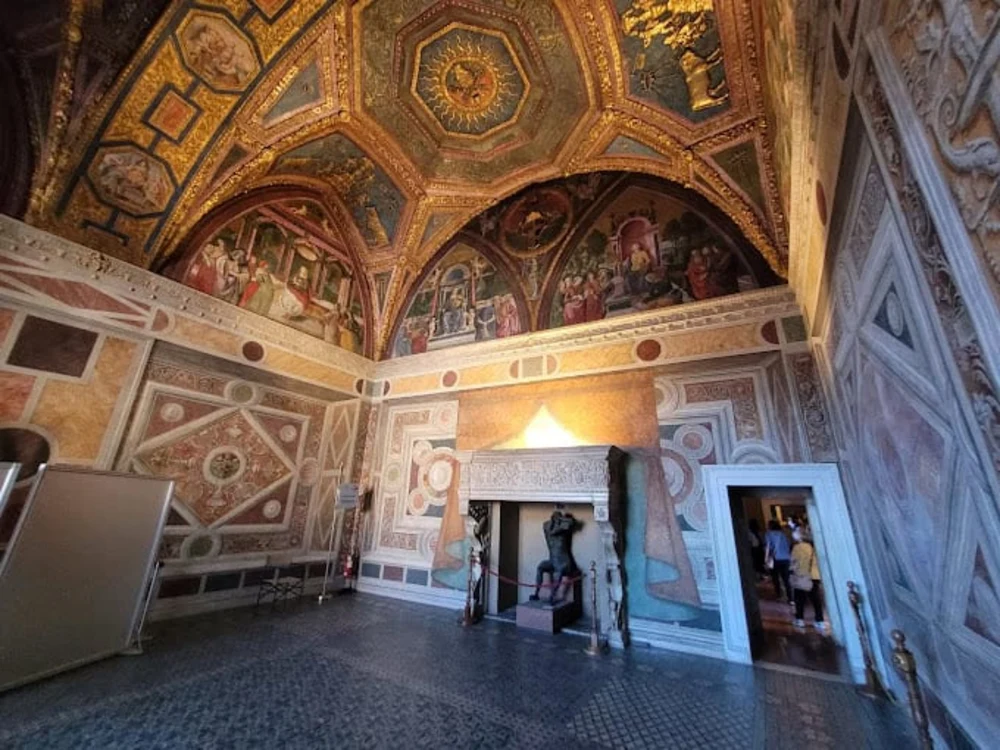
Hidden deep in the Apostolic Palace area is a series of rooms belonging to Pope Alexander VI – the head of the Borgia family famous for its power and scandal. All six rooms were painted by Pinturicchio in the sophisticated fresco technique at the end of the 15th century, combining Catholic, astrological and legendary elements.
A curious detail is that in the painting “Resurrection”, there appears an image considered to be the earliest representation of Native Americans in European painting. The paintings here not only have a strong Renaissance style but also evoke a sense of mystery through vibrant colors, rich motifs and metaphorical symbols. The space here is like a book full of codes waiting to be decoded by the group of history and art lovers associated with power.
The Gallery Of Maps – The World’s Most Beautiful Map Corridor
Rome Hop-On Hop-Off Bus by Gray Line Rome
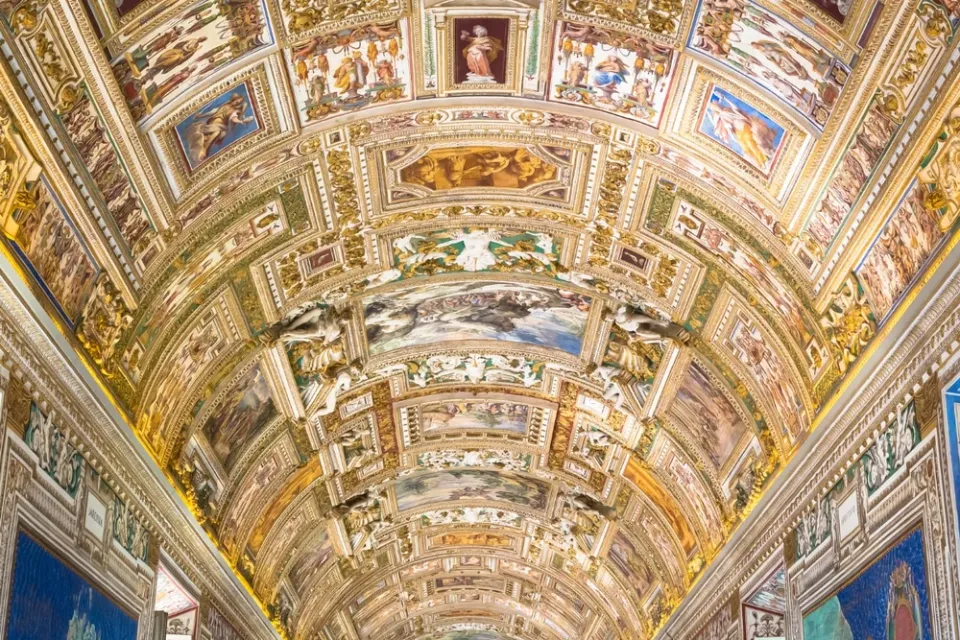
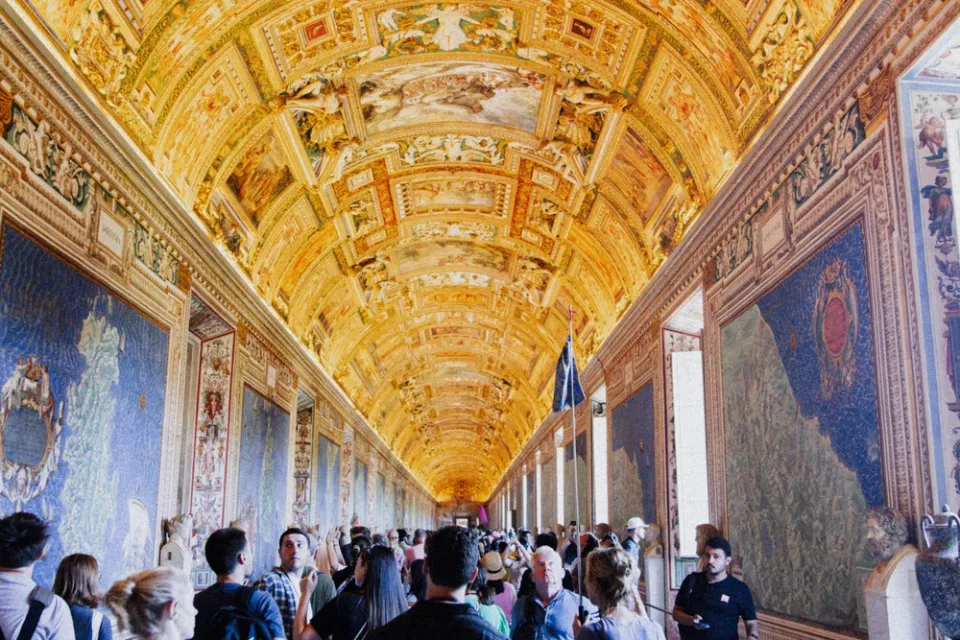
Entering the 120-meter-long corridor covered with a golden ceiling and giant wall maps, visitors feel like they are traveling through time. Made by Ignazio Danti, a Renaissance monk and geographer, in three years, the map series recreates the entire Italian territory in the 16th century with impressive accuracy. The special thing is that all the maps are drawn from the perspective of Rome, creating many strange perspectives such as Sicily in reverse.
On the ceiling, the Baroque-style decorative motifs make the corridor more magical. This is not only a geographical work but also a symbol of the strategic vision and pride of the church. Visitors who are passionate about history, architecture or simply love “stunningly beautiful” spaces will definitely want to stay here for a long time.
The Tapestry Gallery – When Art Is Recreated on Silk and Gold
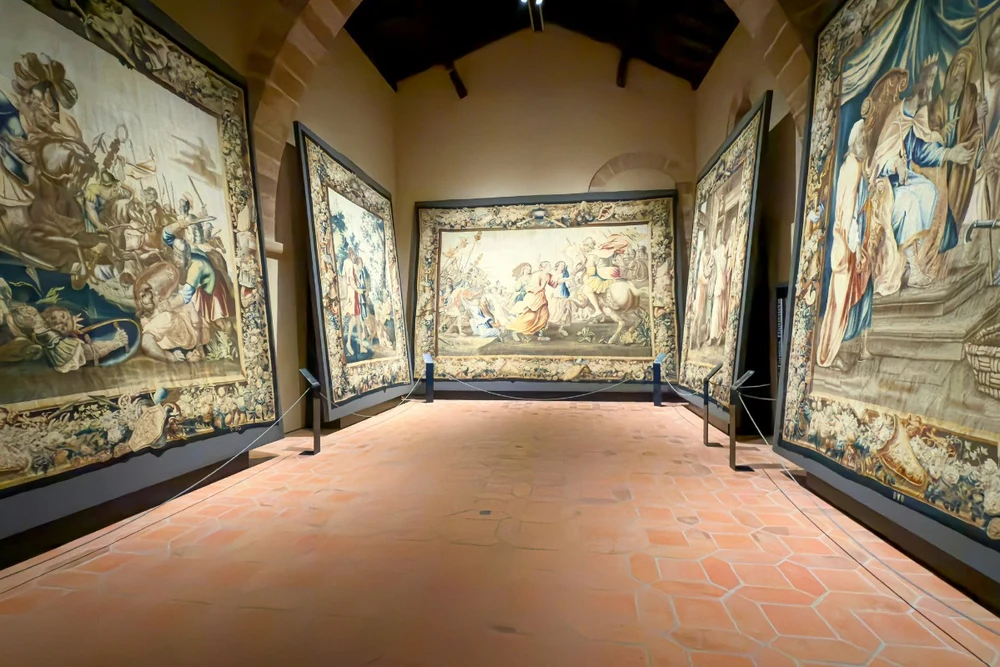
Walking down the long corridor of the Tapestry Gallery, visitors seem to be lost in the world of intricate embroidery by 16th-century Flemish artisans. Each tapestry here is a masterpiece hand-woven with silk, wool, and gold thread that is as vivid as a painting. The most prominent work among them is a series of tapestries depicting the life of Jesus, based on drawings by the artist Raphael.
The soft light and earth-colored walls further enhance the depth, sharpness, and lifelike movement in each scene. A powerful effect is the “Resurrection”. No matter which corner you stand, the eyes of God seem to always be watching. The journey through this room is for you to admire the masterful technique and feel the delicate combination of art, spirituality, and time.
Spiral Staircase – Unique Artwork
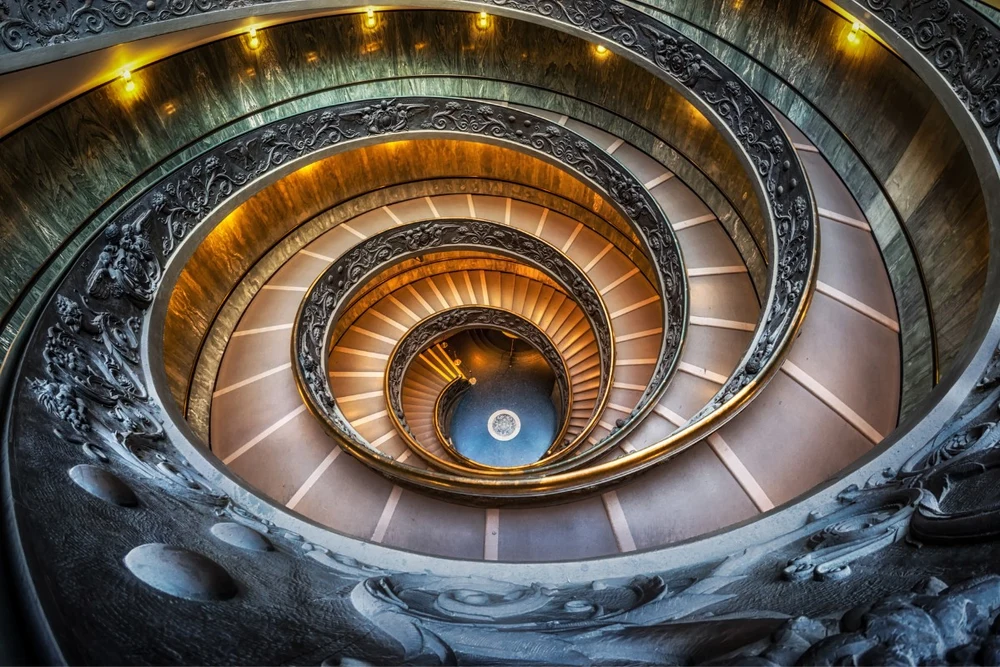
As soon as you step out of the exhibition area, you will encounter one of the most impressive architectural symbols in the Vatican: the spiral staircase designed by Giuseppe Momo in 1932. The structure consists of two spiral staircases intertwined, creating a double spiral that is both visually and symbolically attractive.
The staircase is the exit from the museum and also a famous photo spot, where natural light from the dome creates a beautiful effect on each step. This unique design represents the combination of art, science and modern thinking of the 20th century, creating the perfect highlight to end the tour in a poetic and inspiring scene.
Pinecone Courtyard – Artistic Photo Corner
Rome Colosseum, Roman Forum, Palatine Hill Tour
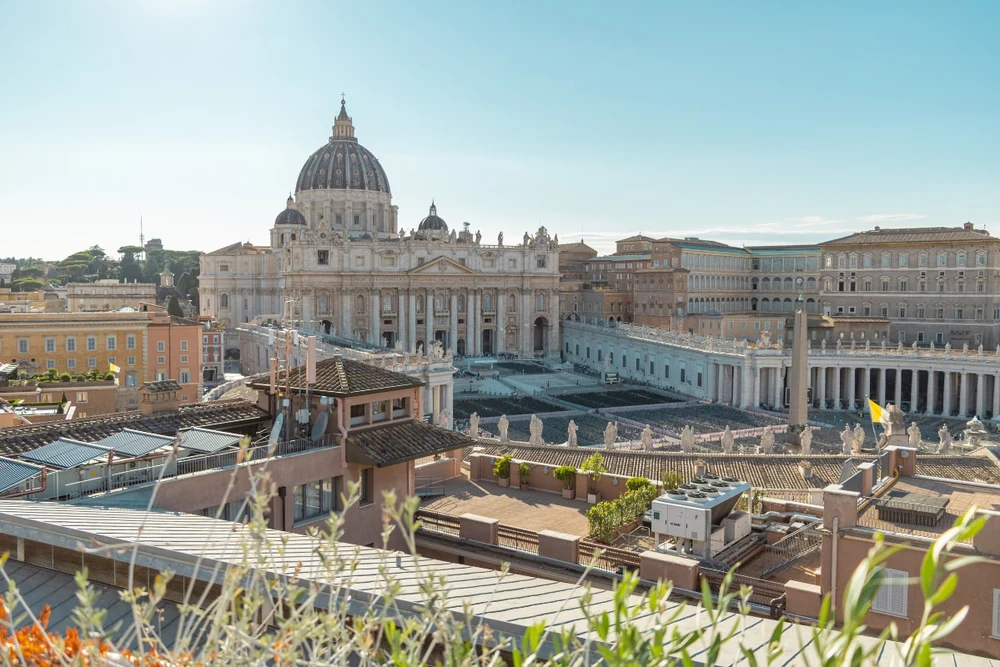
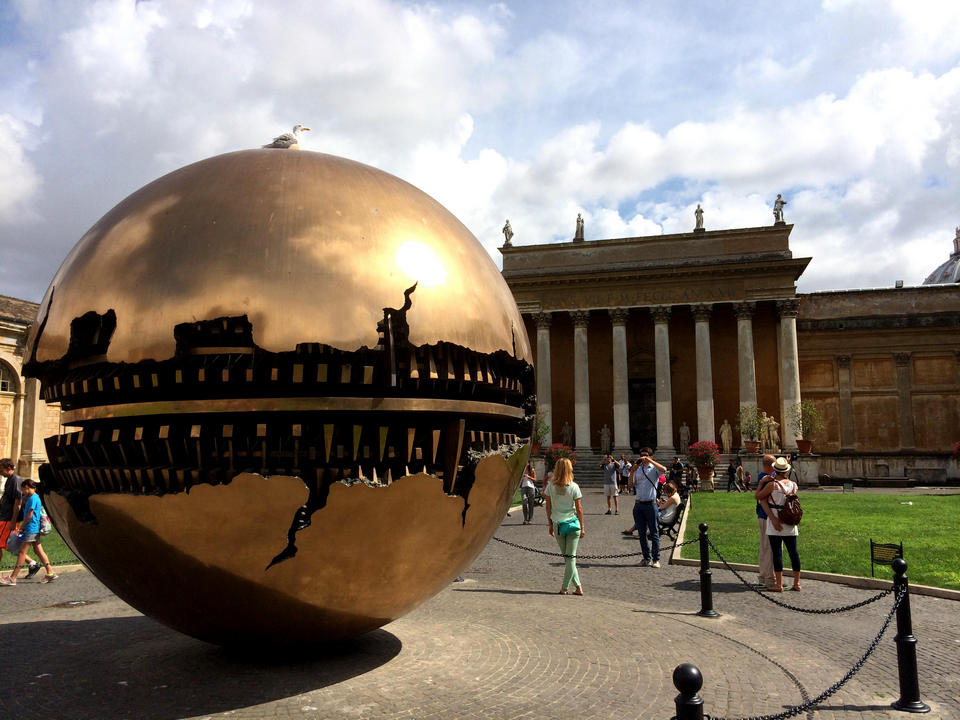
Behind the massive corridor and exhibition hall, the Cortile della Pigna courtyard offers an open, spacious and relaxing space. The name “Pine Tree” comes from the giant pine cone-shaped bronze statue, nearly 4 meters high, located at one end of the courtyard. This work dates back to ancient Roman times, was once a fountain, and is now an artistic highlight in the magnificent landscape.
The courtyard is surrounded by an ancient wall, harmoniously combining classical features and modern garden design. Contemporary sculptures are often placed here, creating a dialogue between the past and the present. Visitors can stop to rest, admire the panoramic view of the museum dome and feel the peace in the heart of the crowded Vatican.
How to get to the Vatican Museum?
Fiumicino Airport – Rome Bus by SIT Bus Shuttle
For passengers flying from Vietnam, Fiumicino Airport (FCO) is the main destination. After landing, use the Fiumicino – Rome Airport Bus Ticket of SIT Bus Shuttle, connecting the airport with the center of Rome in just about 45 minutes, a simple and economical solution for your journey to explore the Vatican.
Getting to the Vatican Museums from central Rome is easy, thanks to the dense and efficient public transport network. Metro line A is the preferred mode of transport for many visitors. You can stop at Ottaviano, Cipro or Valle Aurelia stations, then walk for 5–10 minutes along the Vatican walls to reach the entrance on Viale Vaticano.
If you prefer public transport on the ground, buses 49, 492, 990 will take you right near the museum entrance. Alternatively, lines 81 and 982 stop at Piazza del Risorgimento, from where you can walk for about 10 minutes. You can also try tram 19, which is ideal if you are staying near Prati.
Also, if you want to explore Rome while traveling, pre-book your Rome Hop-On Hop-Off bus tickets on Klook to travel between attractions and explore the city at your own pace.
Guide for Visiting the Vatican Museums Effectively & Saving Time
To have an effective and time-saving experience visiting the Vatican Museums, you should note the following tips:
Go as early as possible: Morning is the ideal time to avoid crowds. You should choose a ticket with a time slot before 10am to comfortably visit and take pictures.
Wear polite clothes: Because the Vatican is a religious site, you need to wear long pants or skirts over the knee, shirts with sleeves and not too revealing. Appropriate clothes will help you enter both the Sistine Chapel and St. Peter’s Basilica without trouble.
Bring personal headphones: If you use the audio guide application, headphones will help you hear more clearly in crowded and quiet spaces.

Borghese Gallery Tickets and Tour Options in Rome
Limit carrying bulky items: Large backpacks, umbrellas, tripods… must all be stored in the cloakroom. This service is free, however, you should still bring a small bag to conveniently carry personal items.
Don’t leave after the Sistine Chapel: Many people think this is the end, but there are many other interesting areas such as the Raphael Rooms, the Egyptian Museum, the quiet garden area… Don’t miss it!
Suggested Full-Day Vatican Itinerary
Although the Vatican is small, it is a treasure trove of art, architecture, and religion. To ensure your exploration journey is not too overwhelming but still profound, we suggest an easy-to-follow, easy-to-arrange itinerary suitable for groups of friends, couples, and solo travelers.
08:00 – 11:30 | Visit the Vatican Museums: Start your day at the Vatican Museums, which house thousands of artistic masterpieces such as the Sistine Chapel with its ceiling painted by Michelangelo and the famous “The Last Judgment”.
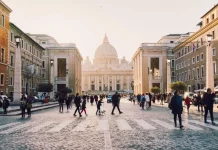
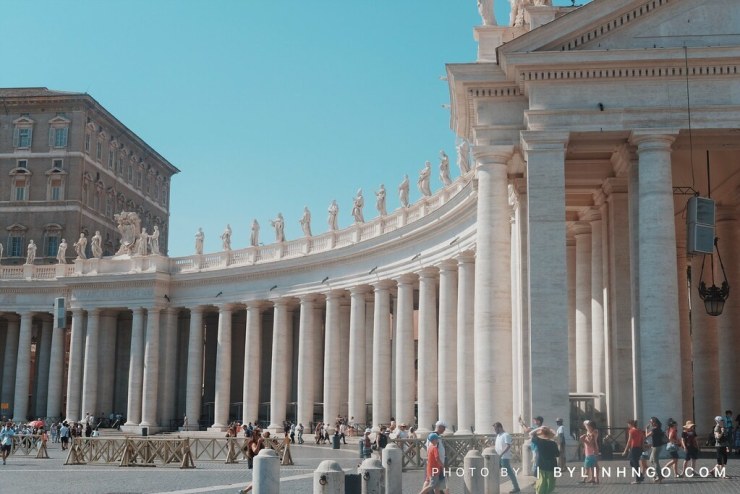
11:30 – 12:00 | Stroll around St. Peter’s Square: Leaving the museum, you can leisurely stroll around St. Peter’s Square, a structure with a unique elliptical architecture, surrounded by giant stone columns.
12:00 – 14:00 | Visit St. Peter’s Basilica: Continue your journey inside St. Peter’s Basilica, the largest church in the world. Don’t forget to climb the dome to admire the panoramic view of the Vatican from above.
14:00 – 16:00 | Explore Castel Sant’Angelo: End the afternoon at the ancient fortress of Castel Sant’Angelo, which used to be the refuge of the popes. Here, you can watch the Tiber River and the city of Rome in the sunset.
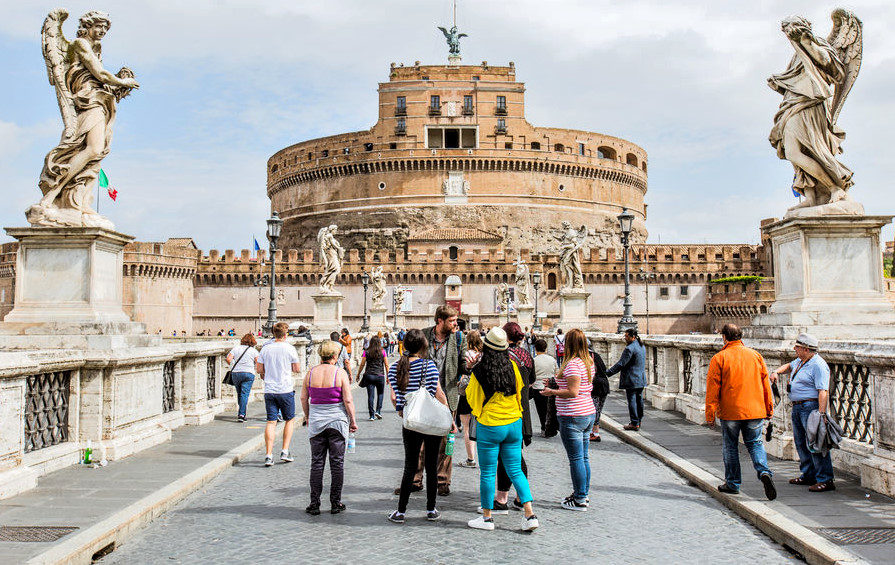
Or if you can book tickets early, you should combine a full day tour of the Vatican – Colosseum – Pantheon to fully feel the breath of ancient Rome and the colors of art and religion blending together.
Although only a small part of the Vatican, the Vatican Museums are a huge art treasure of humanity. From the legendary ceiling of the Sistine Chapel to the exquisite woven tapestry, every step here opens a vivid chapter of the history of art, architecture and faith.
Answers to Questions About the Vatican Museums
Where is the Vatican Museum located?
The Vatican Museums are located in the Vatican City State, right inside the capital of Rome, Italy. This is one of the largest and most famous museum complexes in the world, founded by the Pope to preserve and display priceless works of art of humanity.
What is special about the Vatican Museums?
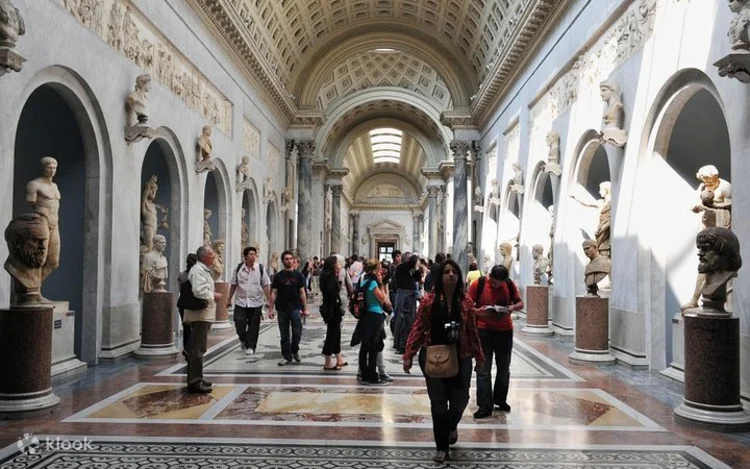
Inside are more than 20,000 works of art on display, including Michelangelo’s Sistine Chapel frescoes, Laocoön, Raphael Rooms, along with countless ancient statues, paintings, tapestries and ancient maps. Each gallery is a slice of the quintessence of European culture and art.
How long should you spend visiting the Vatican Museums?
On average, visitors should spend at least 2-3 hours exploring the main areas. If you love art or want to admire the details of the Sistine Chapel, spend about half a day (4-5 hours) to fully experience it.
Do you need to book tickets in advance?
Yes! Tickets to the Vatican Museums often sell out early, especially during peak tourist seasons (April–October). Booking your tickets online in advance on Klook will help you avoid hours of queues and allow you to choose “Skip-the-line” tickets for faster entry.
Is there a dress code?
Yes. As the museum is located in a religious area, visitors are required to dress modestly: no sleeveless shirts, shorts above the knee or skirts that are too short. Staff may refuse entry if this rule is not followed.
Are photos allowed inside?
Visitors are allowed to take photos in most areas, except the Sistine Chapel, where photography and video recording are strictly prohibited to protect the original artwork.
Book your tickets to the Vatican Museums today to make your trip more complete!
Some best day tours, trips, activities and transfer services, tickets in and from Rome you can refer to
- Shared Fiumicino Airport Transfers (FCO) for Rome by Terravision
- Colosseum, Roman Forum and Palatine Hill Tour
- [Buy 1 Get 1] Rome Big Bus Hop-On Hop-Off Tours (Open-Top)
- Rome to Florence Day Tour
- Colosseum, Roman Forum and Palatine Hill Skip-the-Line Entrance Ticket in Rome
- 1 Roma Pass for 45+ Attractions
- OMNIA Vatican and Rome Card
- Vatican & Rome Combo Sightseeing Tour
- Eurail Italy Pass
- Eurail Global Pass – 33 European Countries
- Vatican Museums and Sistine Chapel skip-the-line Ticket
- St. Peter’s Basilica Dome access and audio guide ticket
- Pompeii, Amalfi Coast and Sorrento Peninsula Tour from Rome
- Pantheon Ticket in Rome
- Vatican Museums Tour with St. Peter’s Basilica Access
- Vatican Museums and Sistine Chapel Ticket in Rome
- eSIM Europe with high-speed and stable Internet connection
Are you looking for more Italy travel guide: Tours, activities, attractions and other things? Let’s check it out here. And top things to do in Rome here.