






























Kanagawa Prefecture is home to unique natural beauty, architecture, and culture. So, Where to go in Kanagawa? Let’s check out 10 must-see & places to visit in Kanagawa with Living Nomads in this article!
- The guide for buying Tokyo Disneyland Tickets for First-Time Visitors
- Aichi Japan Guide: Ghibli Park, Must-See Spots and Nearby Attractions
- A Go-Karting Guide in Japan for Beginners
- Himeji guide: How to visit & what to do in A Masterpiece of Samurai History
- Chiba itinerary: Review of a Day Trip to Chiba – A Peaceful Land Near Tokyo
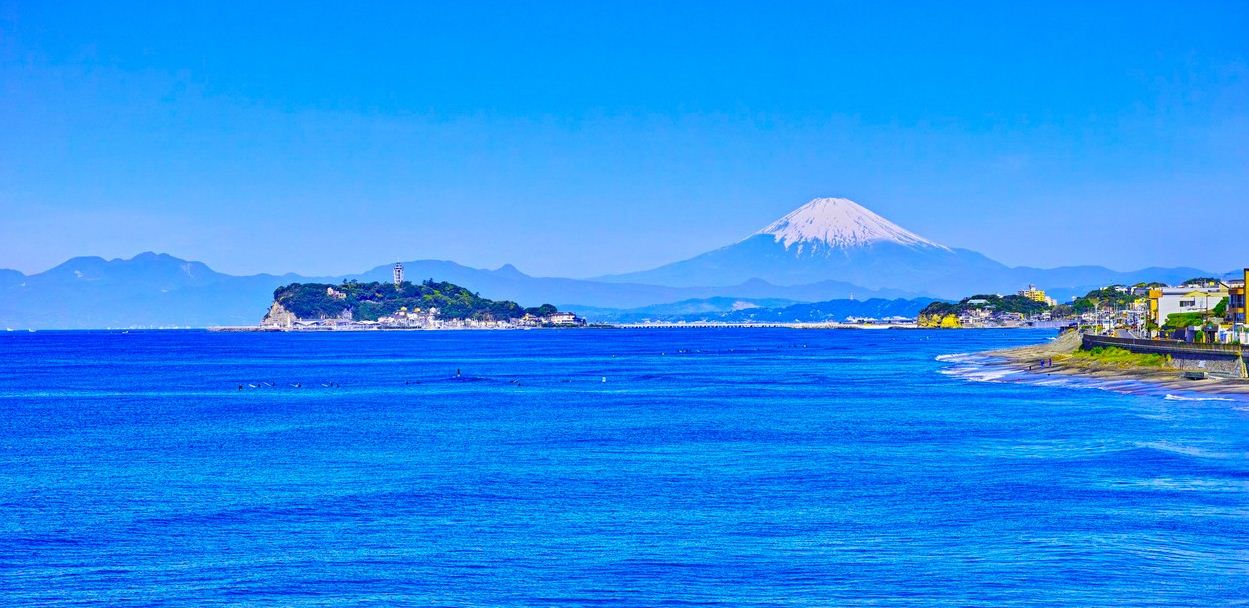
Kanagawa, located south of Tokyo, is a diverse tourist destination with a wonderful combination of art and nature. Here, visitors will be captivated by the majestic mountains, gentle coastline, and dynamic Yokohama city. Besides, you also have the opportunity to enjoy seafood, visit temples, relax in hot springs, and immerse yourself in modern art spaces. Enjoy the wonderful beauty of Japan with Klook through 11 Kanagawa tourist destinations!
Places to visit in Kanagawa: Yokohama Landmark Tower
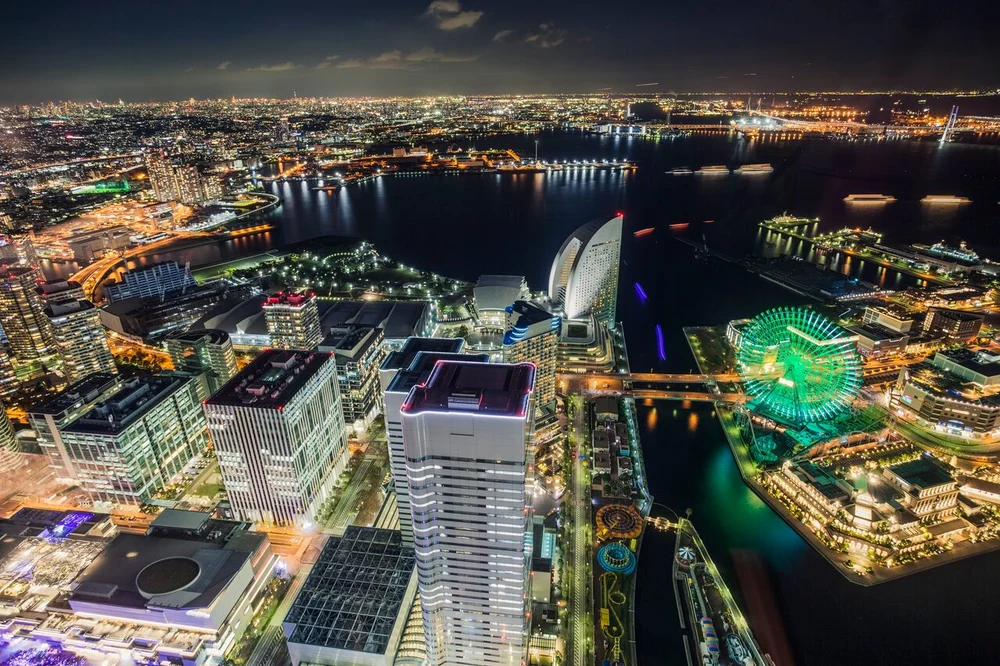
With an impressive height of 296m (70 floors), Yokohama Landmark Tower is the 2nd tallest building in Japan, and is the symbol of Kanagawa. Inside the building are many companies, shopping stores, restaurants, etc. One of the tourist attractions here is the Sky Garden, the observation deck located on the 69th floor.
To get to Sky Garden, you need to buy a ticket on the 3rd floor and take the high-speed elevator to the 69th floor. The elevator experience is also extremely special as this is the fastest elevator in Japan. At the observation deck, you will be able to admire a 360-degree panoramic view of Tokyo, Mount Fuji, and Yokohama Stadium.
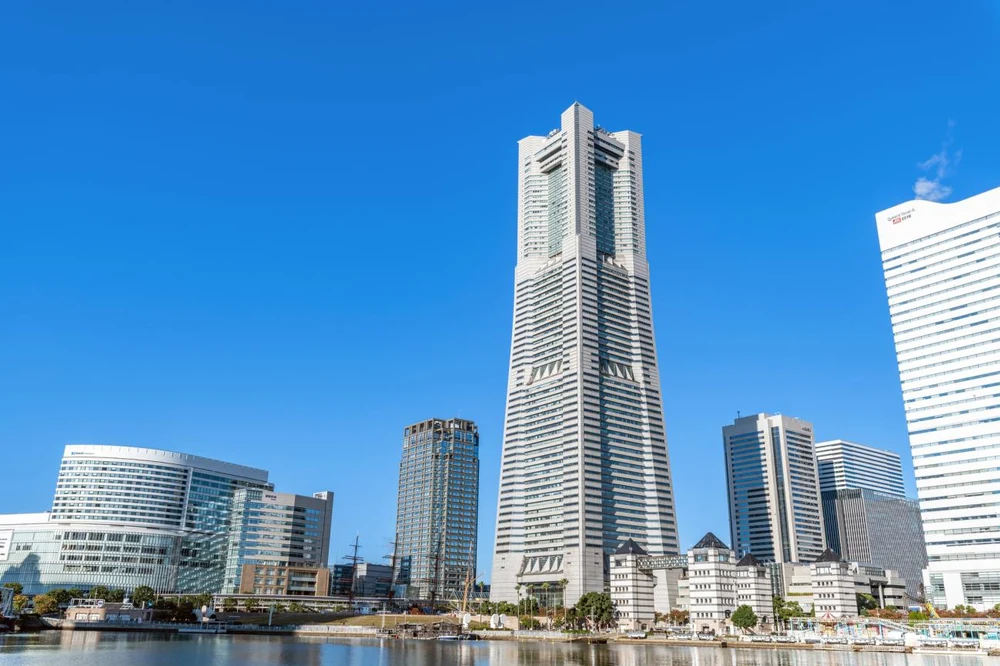
Yokohama Landmark Tower Sky Garden Ticket
Besides Sky Garden, this landmark building also has a large shopping mall with 170 stores from famous brands, a Pokemon Center amusement park, and Dockyard Garden. In particular, Dockyard Garden is an interesting attraction, recreating Yokohama Pier No. 2 – an important cultural property of Japan. Yokohama Landmark Tower promises to bring visitors a unique and diverse experience when exploring Kanagawa.
Yokohama Chinatown
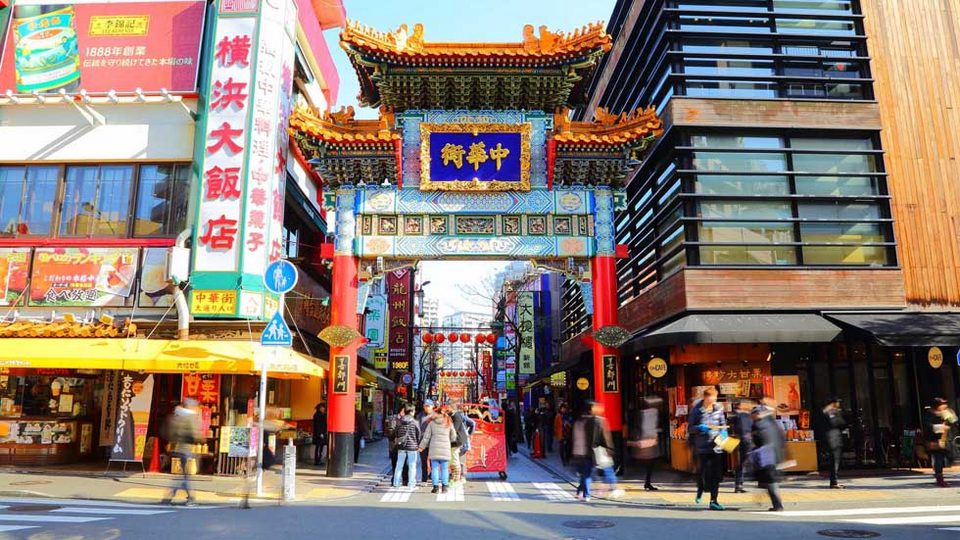
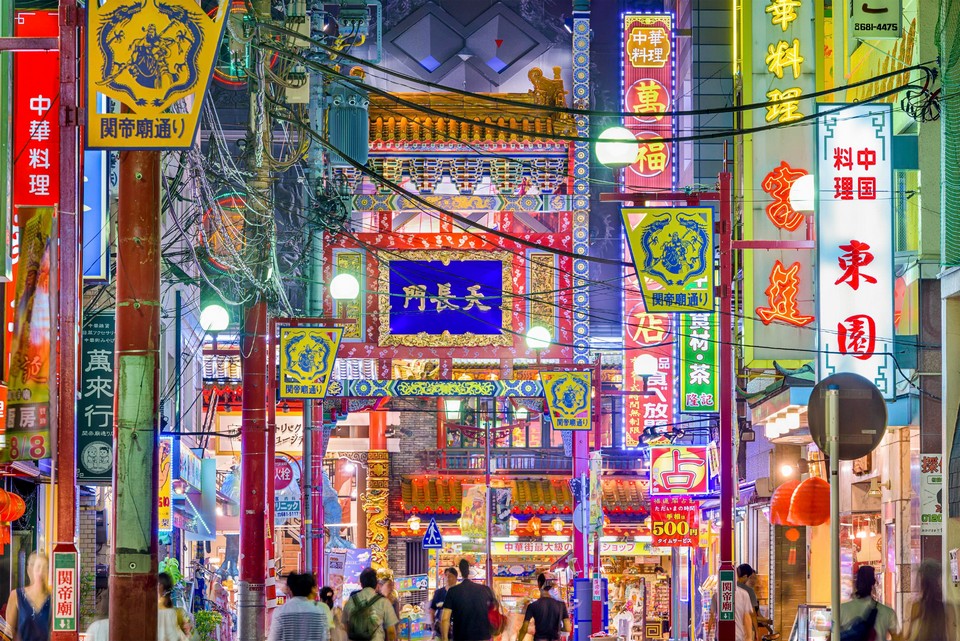
Yokohama Chinatown, located in the heart of Yokohama, is the largest Chinatown in Japan. The narrow, colorful streets of Chinatown are steeped in Chinese culture, with many Chinese shops and restaurants. It often hosts many events and festivals, such as the bustling Chinese New Year in early February.
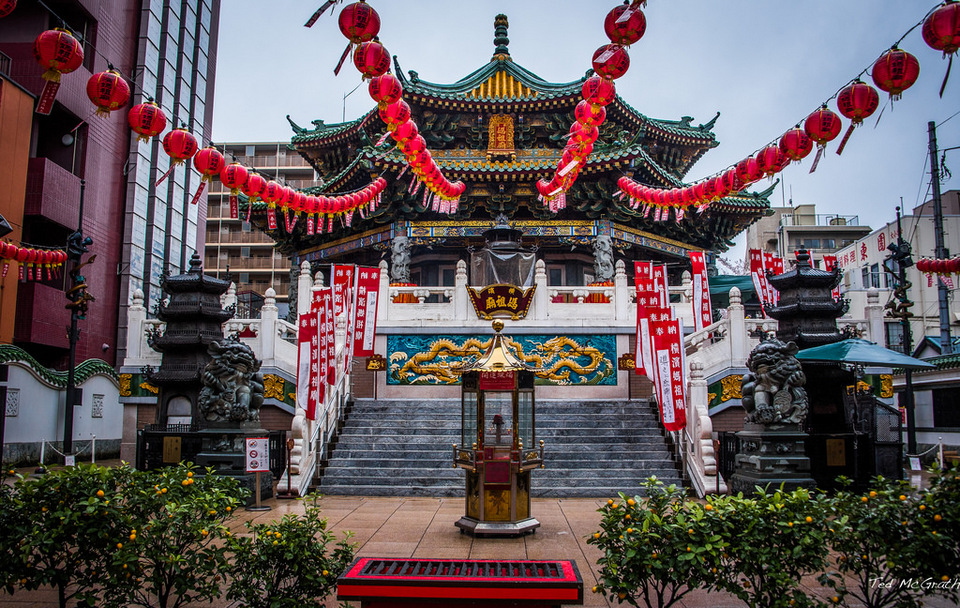
Chinatown has four colorful entrance gates, and inside there are five more. At the center of Chinatown is Kanteibyo, a shrine built in 1873 by Chinese people. This shrine honors Chinese gods, bringing success and prosperity to business people.
Yokohama Seaside Gourmet Train Pass
However, the unique point of Yokohama Chinatown is the cuisine at restaurants and eateries. Steamed buns (manju), ramen noodles and many other Chinese dishes have been uniquely Japanized, creating a unique culinary experience that cannot be missed when exploring the rich land of Kanagawa.
Where to go in Kanagawa: Sankeien Garden – A Healing Stop
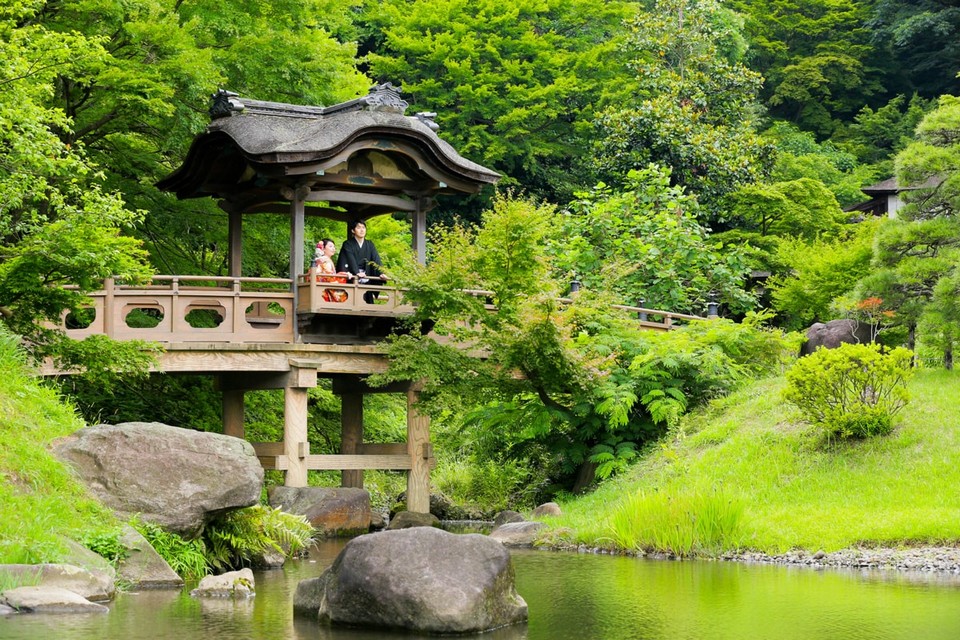
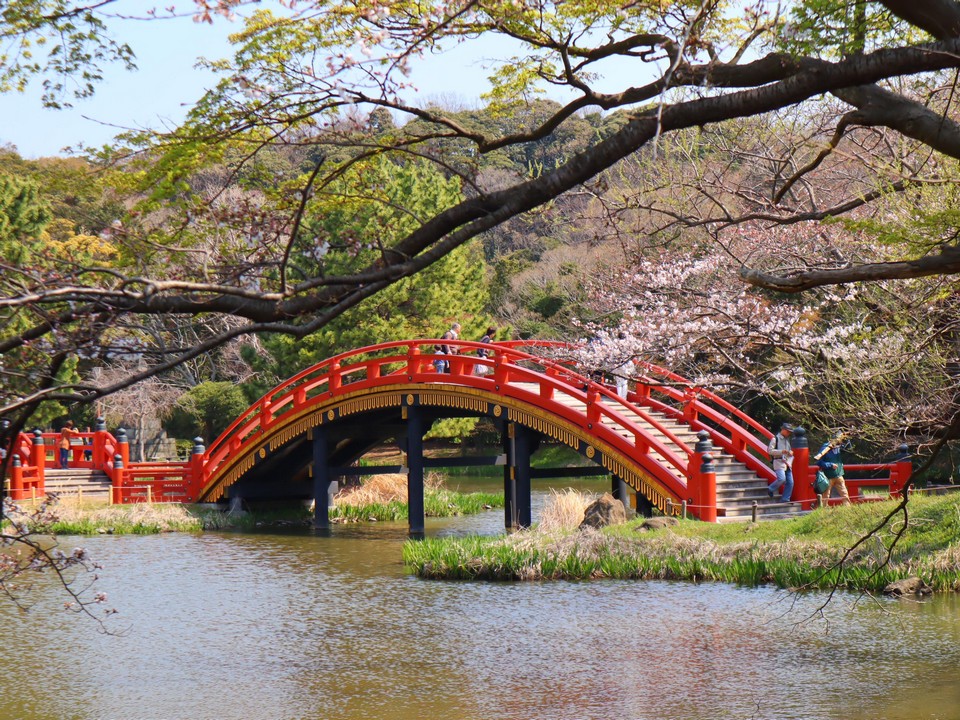
Sankeien Garden, located in the south of Yokohama, is a large space designed in the traditional Japanese style. With a pond, a small river, beautiful flower beds and winding paths, Sankeien has a strong Kyoto-style feel. Stepping into the garden, you will feel like stepping out of the bustling city and into the quiet Kyoto.
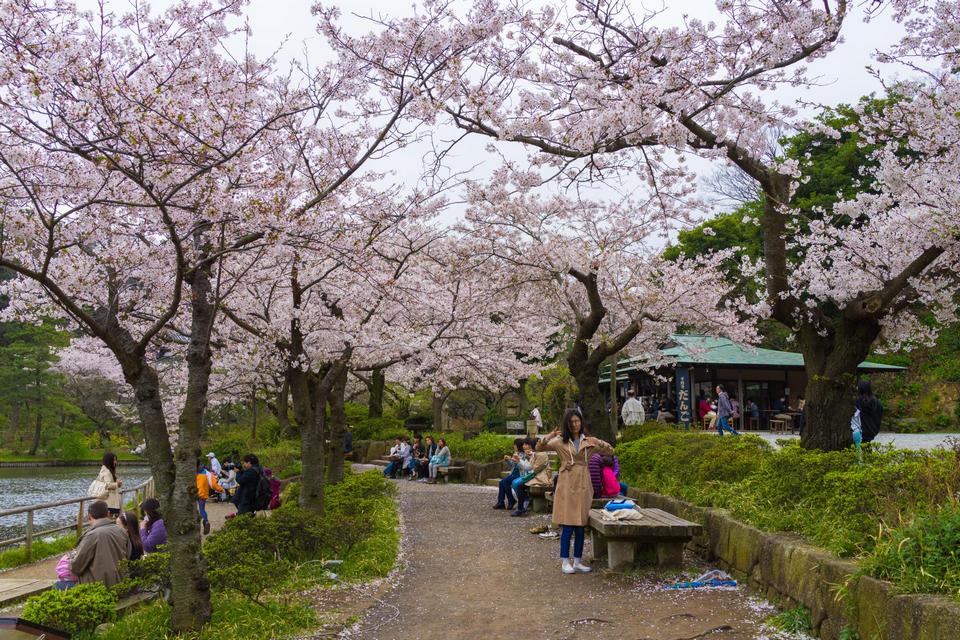
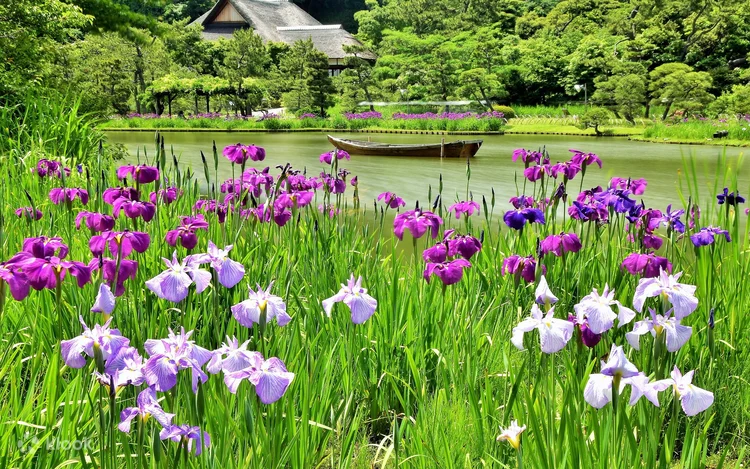
The garden was built by Hara Sankei and opened to the public in 1904. In the grounds, you will encounter unique historical structures such as the historic house of the daimyo (feudal lord), some tea houses and especially the entire main house and three-story pagoda of the ancient Tomyoji Temple in Kyoto. With its quiet space and traditional architecture, Sankeien is a great destination, helping visitors better understand the culture and history of Japan.
Kotokuin Temple – Yokohama Tourist Destination for Spiritual Believers
Located in Kamakura, Kotokuin Temple is home to the famous “Daibutsu” or “Great World-Honored One” Buddha statue throughout the Kanto region of Japan. Daibutsu is a bronze Buddha statue measuring 11.4 meters in height and weighing 121 tons, created in 1252. This Buddha statue was created by the Hojo clan, a powerful clan during the Kamakura shogunate.
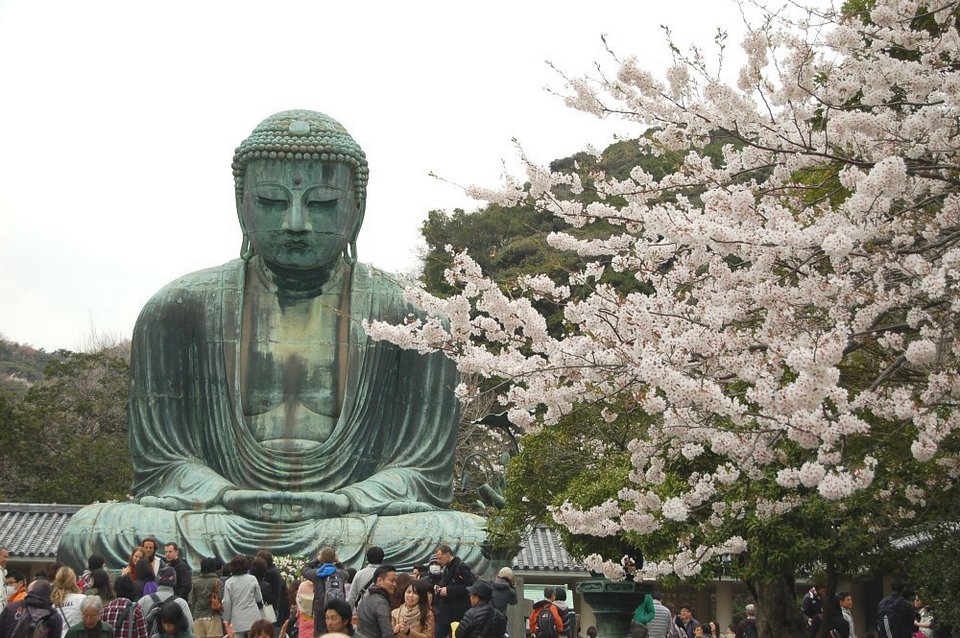
Although not as large as the Buddha statue at Todaiji Temple in Nara, Daibutsu Kamakura is more highly regarded for its artistic merit. Today, Kotoku-in belongs to the Jodo sect of Japanese Buddhism.
Initially, the statue was housed in a large hall at Kotokuin Temple. However, the main hall’s structures were repeatedly damaged by typhoons and tsunamis in the 14th and 15th centuries. Therefore, from the end of the 15th century, Daibutsu was moved and placed outdoors. Kotokuin Temple is not only a religious tourist destination but also contains many impressive historical and cultural values of Kamakura.
Tsuruoka Hachimangu Shrine
Narita Airport – Tokyo Limousine Bus
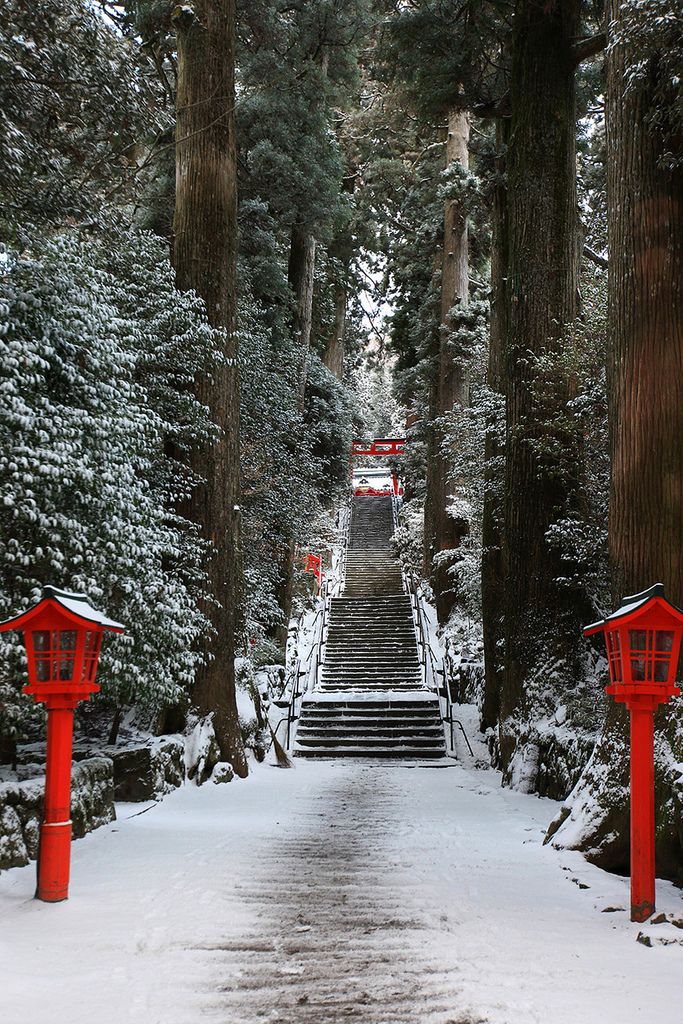
Tsurugaoka Hachimangu Shrine is the most sacred destination that cannot be missed when exploring Kanagawa. The shrine is a place to worship Hachiman, the guardian deity of the Minamoto family and of samurai in general. In addition, it also worships Emperor Ojin, Hime-gami and Empress Jingu.
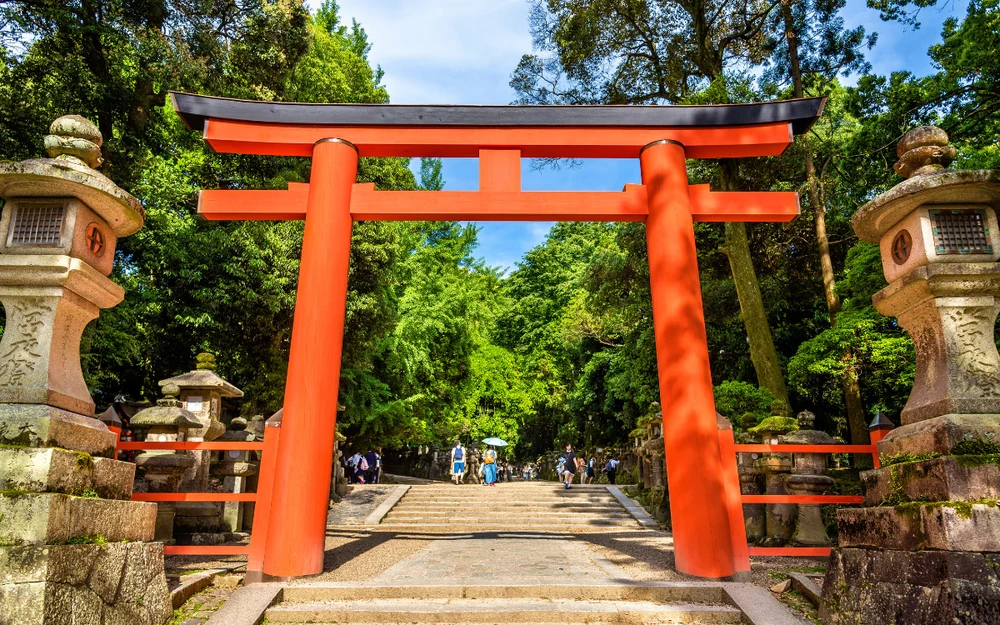
The path leading up to the shrine runs along the Kamakura coast and through the city center, lined with beautiful torii gates. The main shrine is located at the top with wide steps. There is a small museum in the main shrine that displays treasures such as swords, masks and historical documents. To the left of the stairs, in front of the shrine is the Maiden stage, where cultural events take place.
Every year, the shrine hosts many events that attract millions of visitors. You can come to the shrine to celebrate the New Year’s celebration Hatsumode, or the Yabusame horse-drawn archery festival in mid-April and mid-September.
Lake Ashinoko – See the Whole of Mt. Fuji
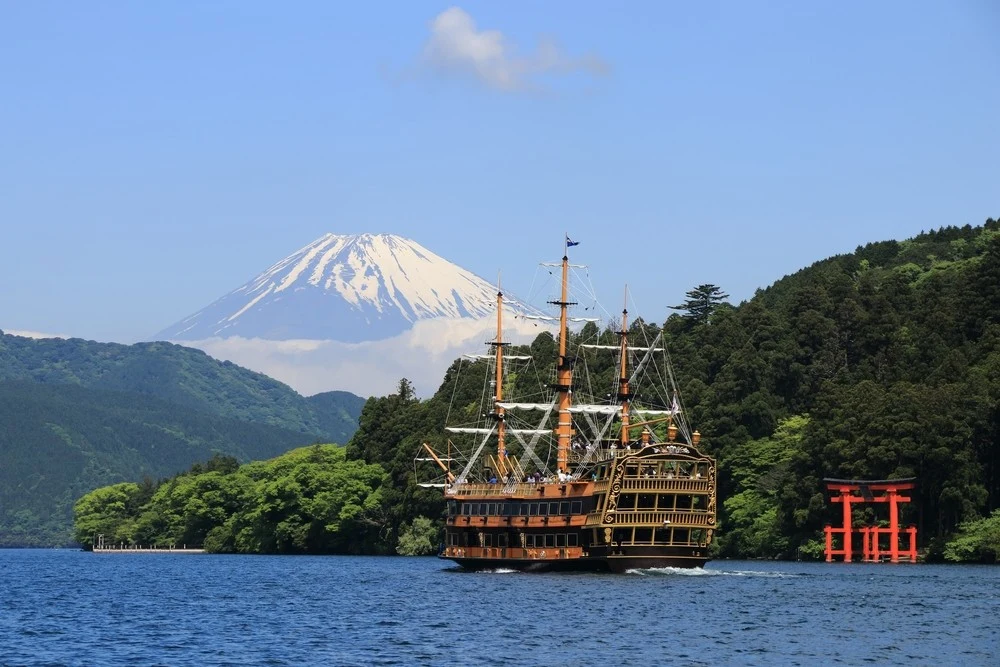
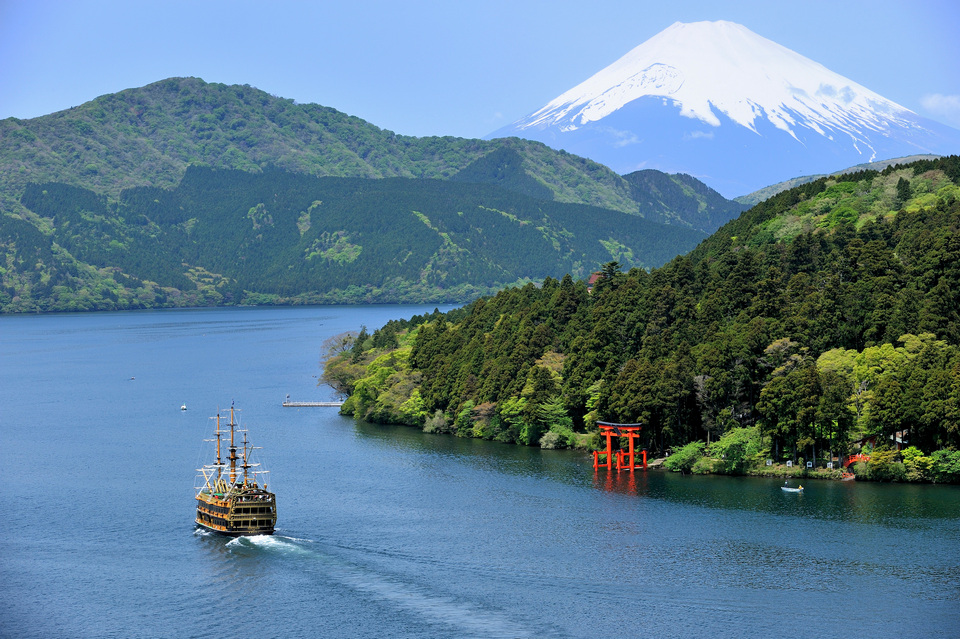
Lake Ashinoko, or Lake Hakone, is a beautiful lake in Hakone, Kanagawa Prefecture. The lake was formed by a volcanic eruption in 1170, and lies along the southwest wall of the crater.
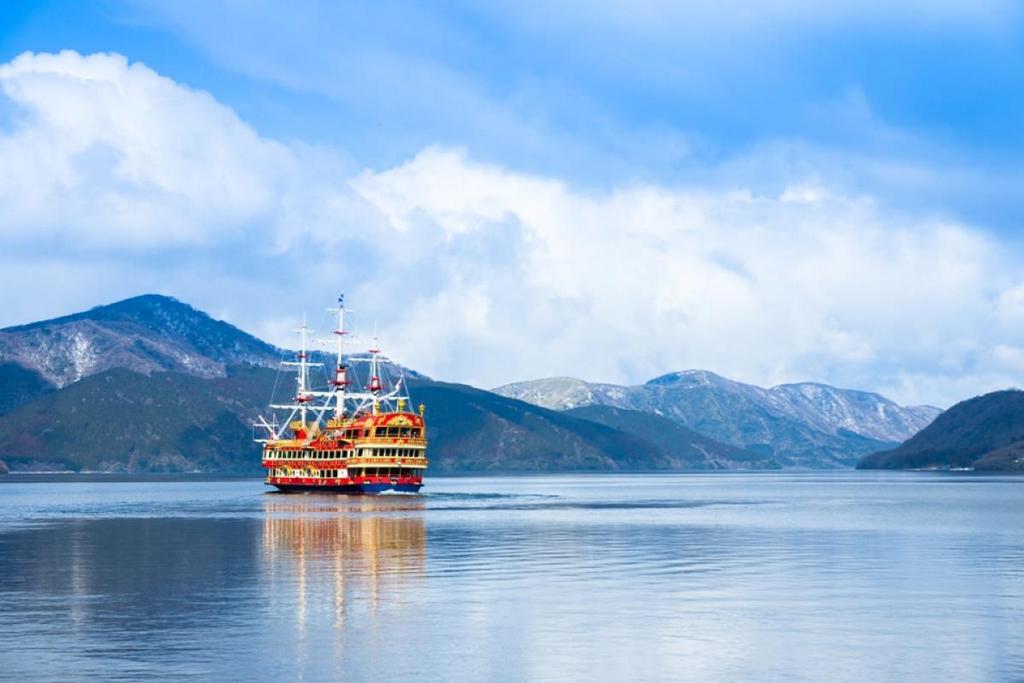
The lake is on the Tokaido Road, the main road connecting Kyoto and Tokyo. Visitors can enjoy the majestic scenery around the lake on tourist boats or ferries. Some ships are even designed in the style of classic warships, giving you an interesting sightseeing experience.
Mt. Fuji, Lake Ashi, and Hakone Day Tour from Tokyo
In addition, Ashinoko is also famous for its view of Mount Fuji, along with many hot springs, historical sites and ryokan around. Besides, you can also camp in the northern area, visit Hakone Shrine, or take a walk to enjoy nature at Onshi Park. Ashinoko is an exciting destination for those who want to explore the historical beauty and wonderful nature of Kanagawa.
Lake Sagami Park
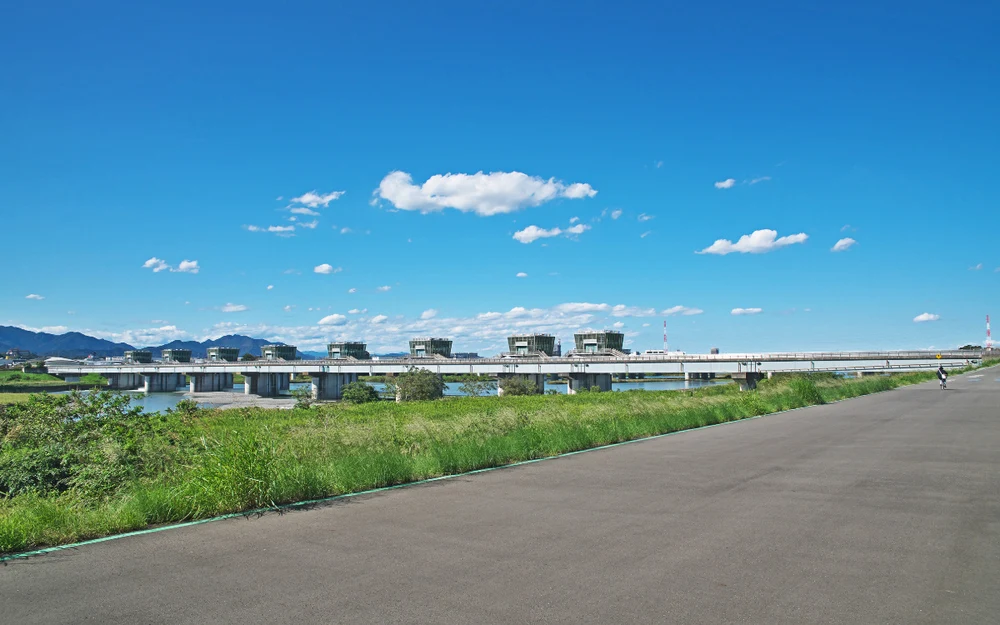
Lake Sagami is an artificial lake famous for its beautiful natural scenery. Surrounding the lake are lawns and green forests suitable for you to travel with family or friends. Lake Sagami Park opens up a panoramic view of the lake, a great place to enjoy the fresh nature. In addition, you can also participate in many exciting activities such as kayaking, fishing, picnicking around the lake, and overnight camping.
In addition, the area around the lake is also the place where fireworks festivals and boat racing festivals take place, giving you the opportunity to enjoy the unique cultural features of Japan. In particular, you can go to Sagamiko Resort Pleasure Forest to enjoy the impressive Sagamiko Illumillion light show and relax in the hot spring area in winter.
Enoshima Aquarium
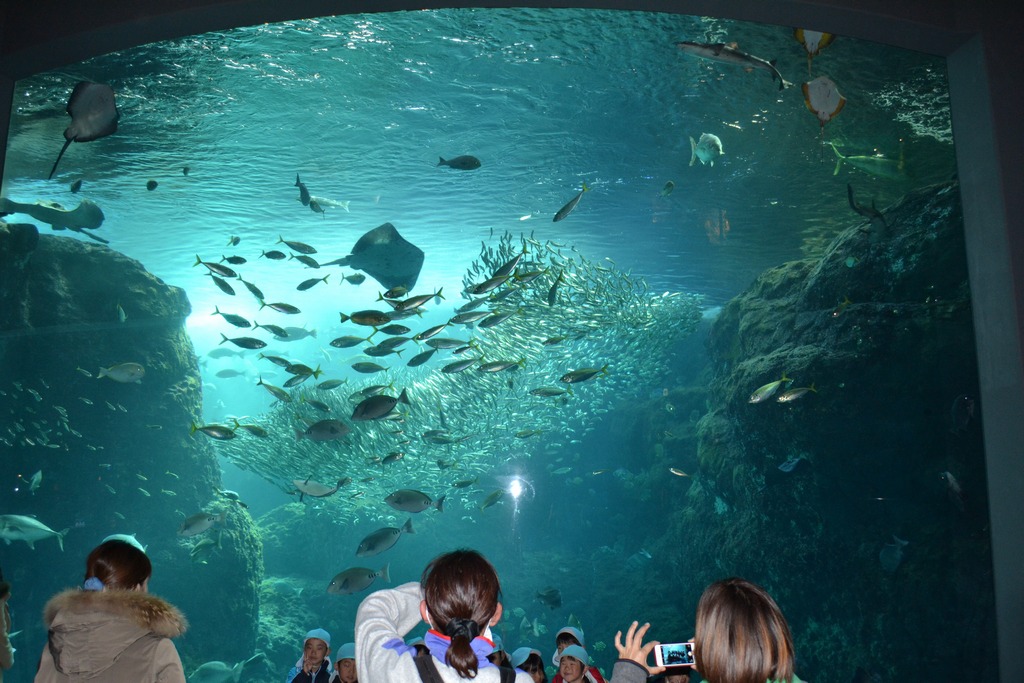
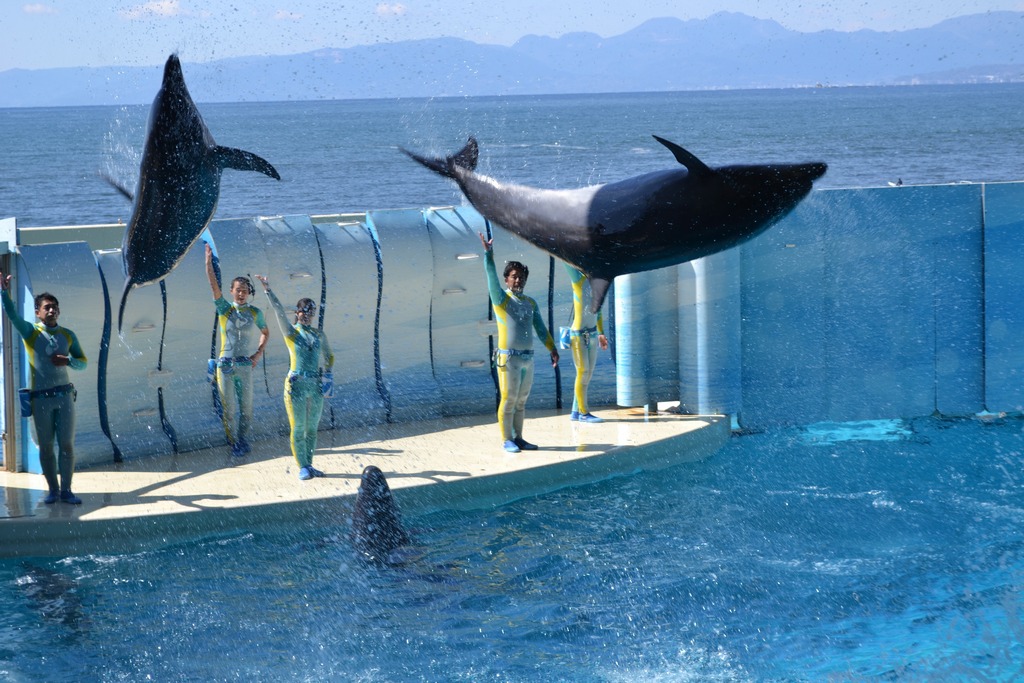
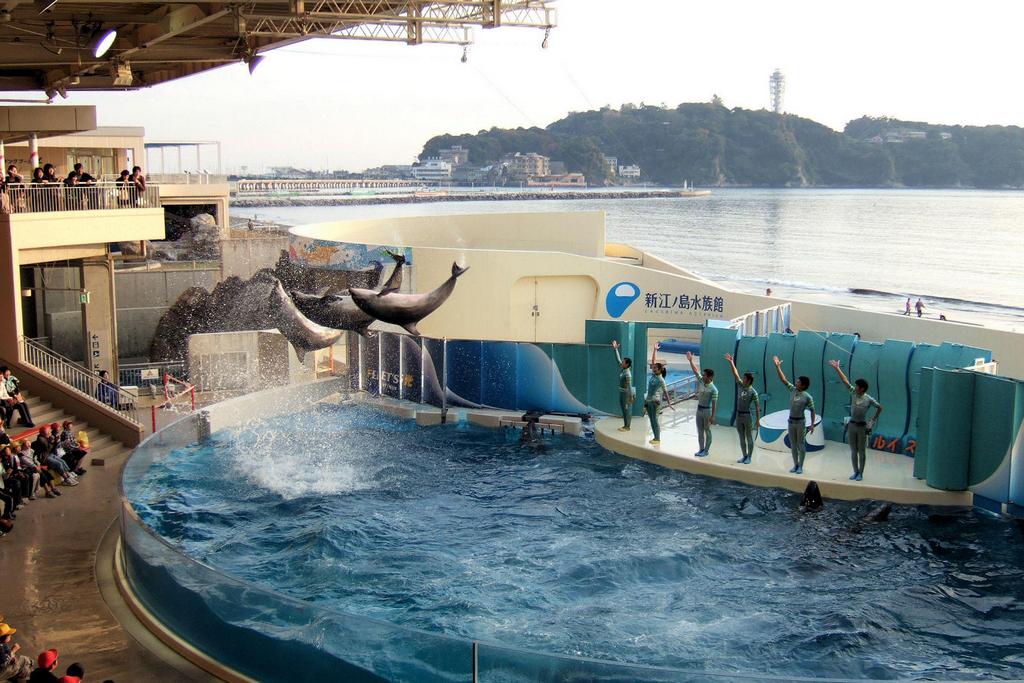
Enoshima Aquarium is located in a prime location next to Enoshima sea with a view of Sagami Bay, Mount Fuji and Enoshima Island. Here, you will step into a beautiful ocean world, like a miniature version of Sagama Bay. The aquarium has up to 20,000 marine creatures of more than 90 different species.
The aquarium offers you a close-up experience with adorable schools of fish through two diving shows in the tank. In particular, there are two jellyfish exhibitions, “healing” and “learning”. The exhibitions feature over 60 years of research and display methods.
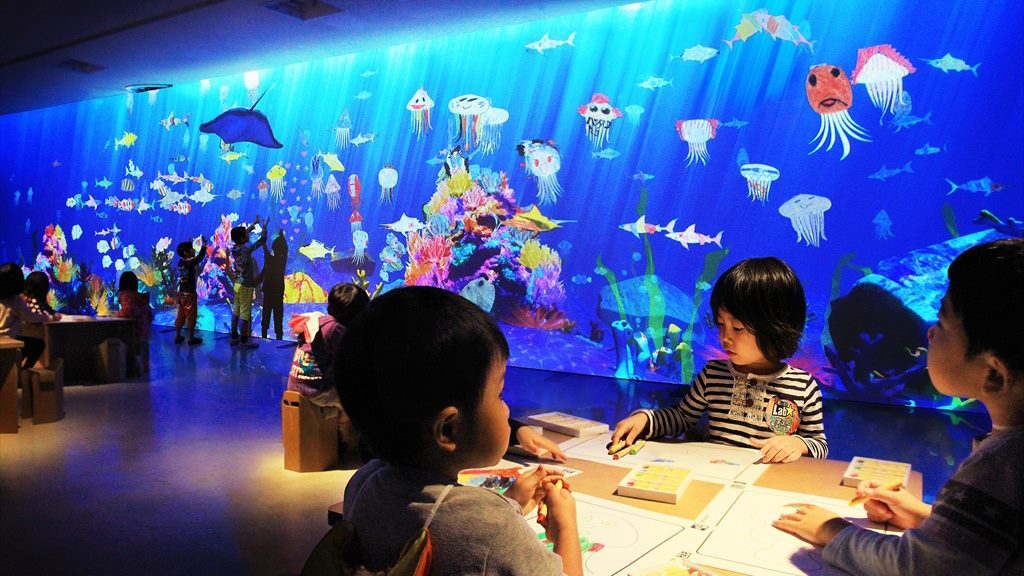
Enoshima Aquarium Ticket in Fujisawa
In addition, the aquarium also has special features such as the turtle beach. Here, you will see turtles slowly swimming underwater or laying eggs on the sand. Besides, you can also see penguins and adorable seals. The journey to explore Enoshima will help you connect with nature and create memorable memories.
Sea Paradise Park
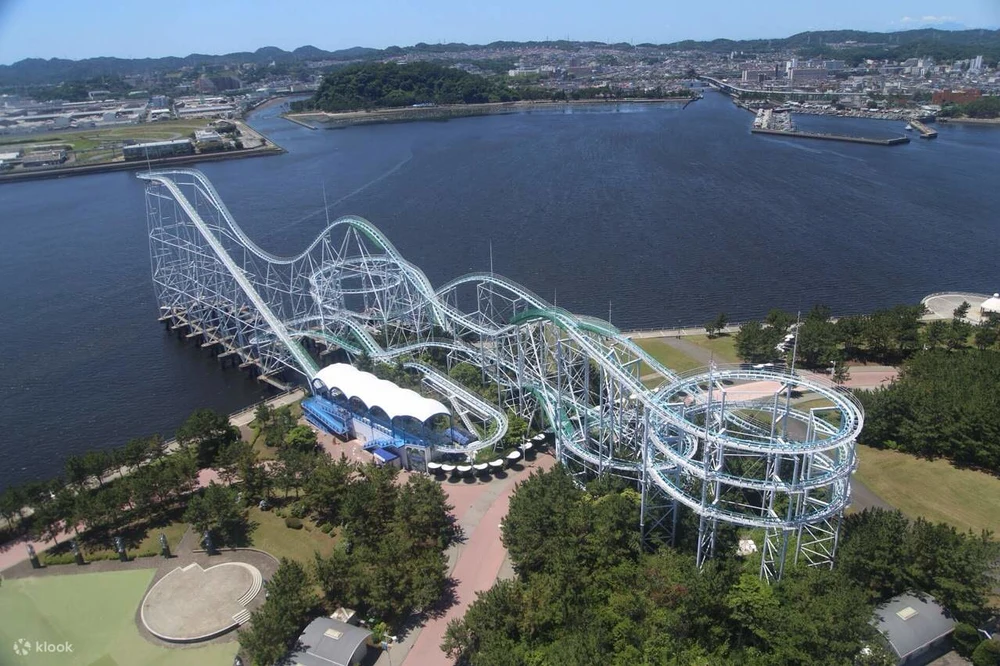
Located in Kanazawa district, Yokohama, Sea Paradise is the only urban marine park that occupies an entire 24-hectare island. This unique amusement park combines large aquariums, amusement parks, shopping areas, restaurants and hotels, attracting a large number of domestic and foreign tourists.
With four distinct themed aquariums, you will have the opportunity to enjoy admiring the beautiful sea creatures. From the Aqua Museum with 120,000 sea creatures, to Fureai Lagoon where you can directly interact with the special residents of Sea Paradise. Umi Farm, an experience aquarium, allows you to fish and grill directly to enjoy. Dolphin Fantasy brings a surreal space, allowing you to watch dolphins freely rotate around you in an arch-shaped tunnel.
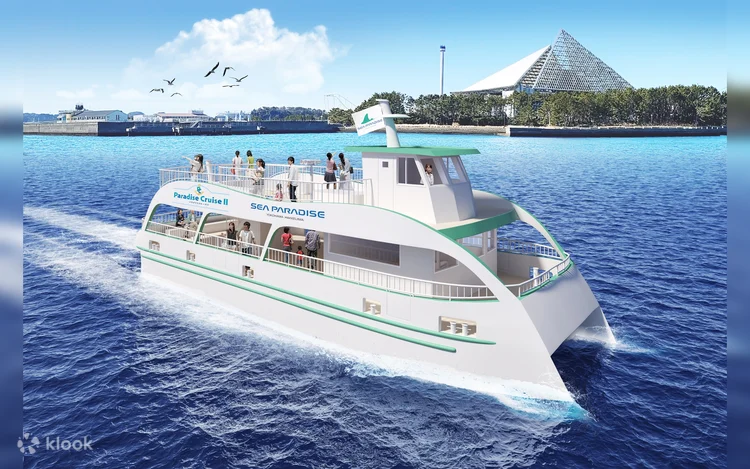
Yokohama Hakkeijima Sea Paradise Ticket
In addition, the park also has 16 entertainment spots suitable for the whole family, from children to adults. You can ride the Surf Coaster with a 1,271 meter long track; glide in the sky with a rotation over the sea; enjoy the impressive scenery at Sea Paradise Tower with a 360º view spanning the entire island and surrounding area.
Odawara Castle
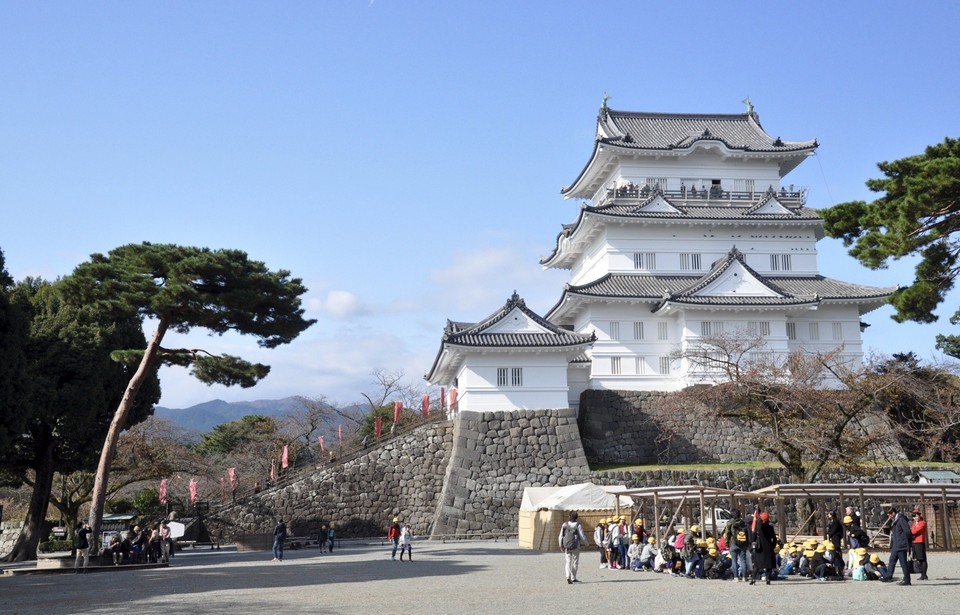
Odawara Castle is a historical symbol located in Kanagawa, Japan. The castle was built in the mid-15th century and was the seat of the Hojo clan, one of the most powerful clans of the Kamakura period. Although destroyed by an earthquake in 1703, it was quickly rebuilt, but in 1870 the tower and other structures were dismantled and sold. The tower was rebuilt in iron and concrete in 1960, following models and drawings from the Edo period. With three main gates restored, it is now the closest castle tower to Tokyo.
The castle has three outer floors and four inner floors, displaying historical artifacts such as armor and swords. The upper floor has an observation deck that offers visitors great views of the park and the surrounding city.
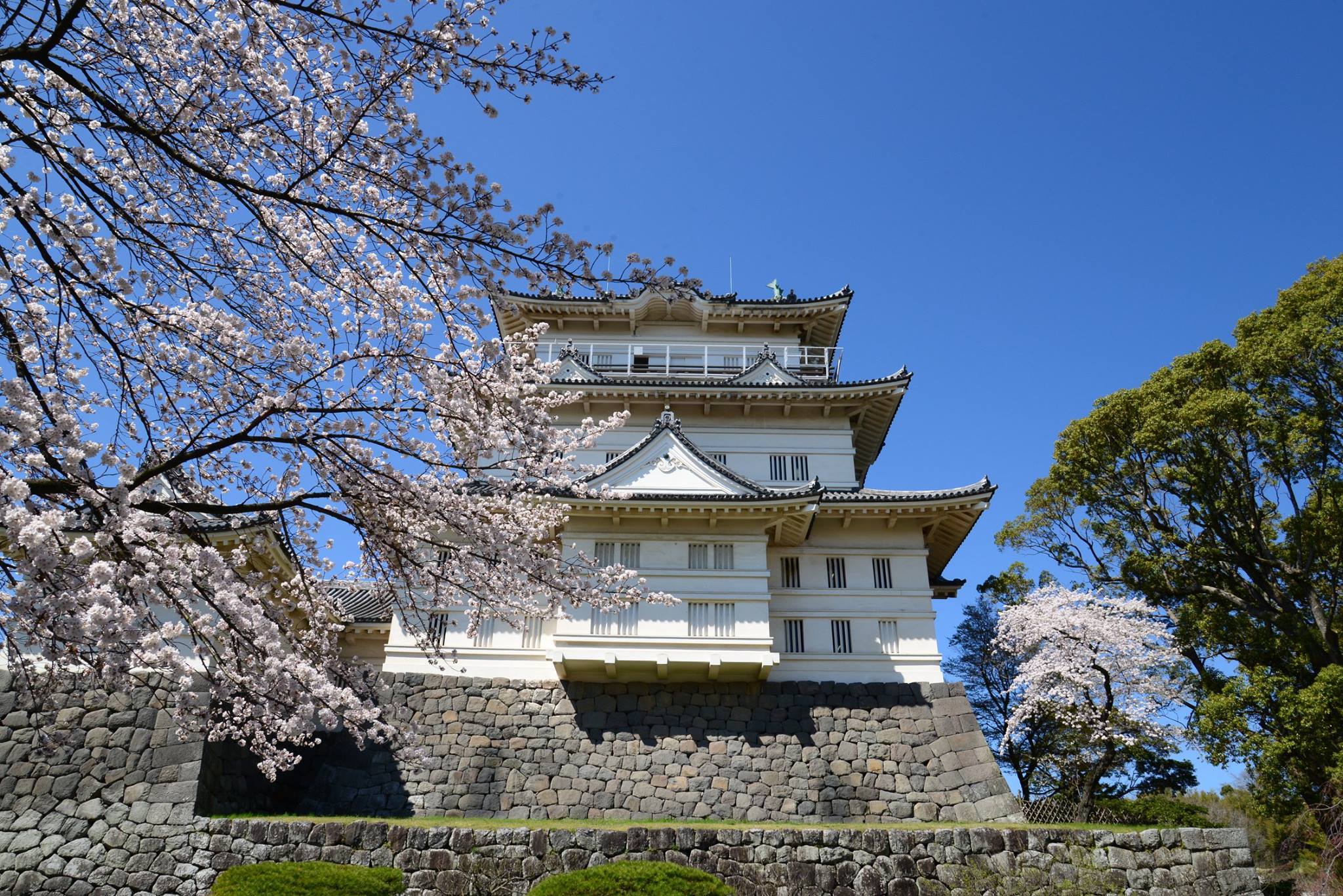
The castle is also famous for its cherry blossoms (usually blooming in late March to early April) and many other flowers, creating a poetic space. The castle grounds also have a Ninja Museum and a Samurai Museum, which are unique and interesting points of Japanese culture and history.
Hot Springs in Hakone
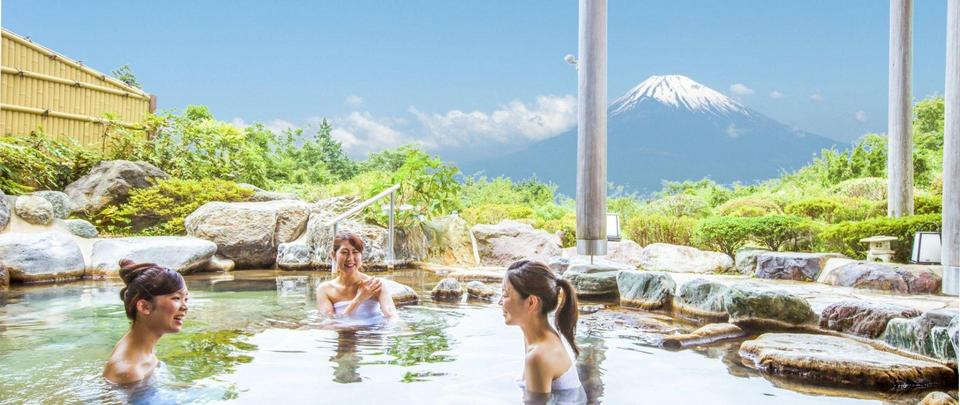
Hakone, one of the most popular hot spring resorts in Japan since ancient times, is the ideal vacation spot in Kanagawa for you. Yumoto, at the gateway to Hakone near Odawara, is known as one of the most famous hot springs with a long history, and high quality water. Many other hot spring areas are scattered in the hills and valleys of Hakone as well as the shores of Lake Ashi.
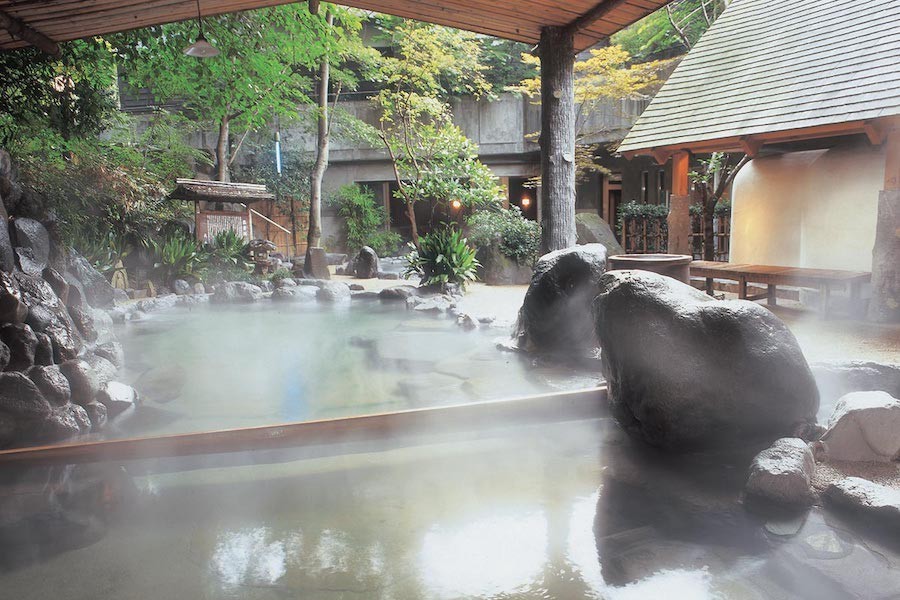
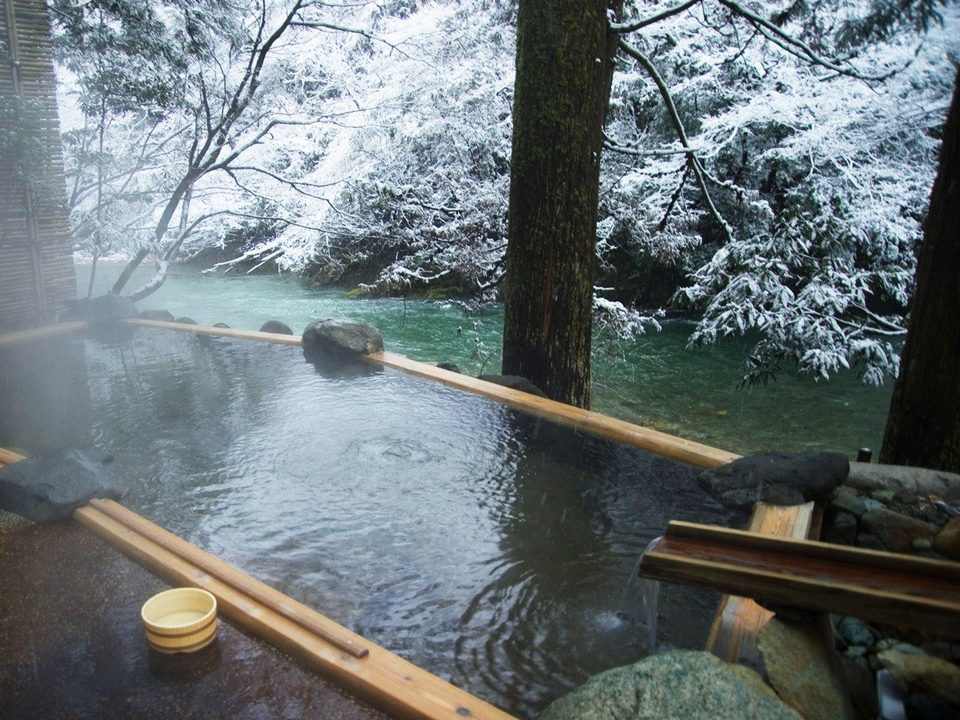
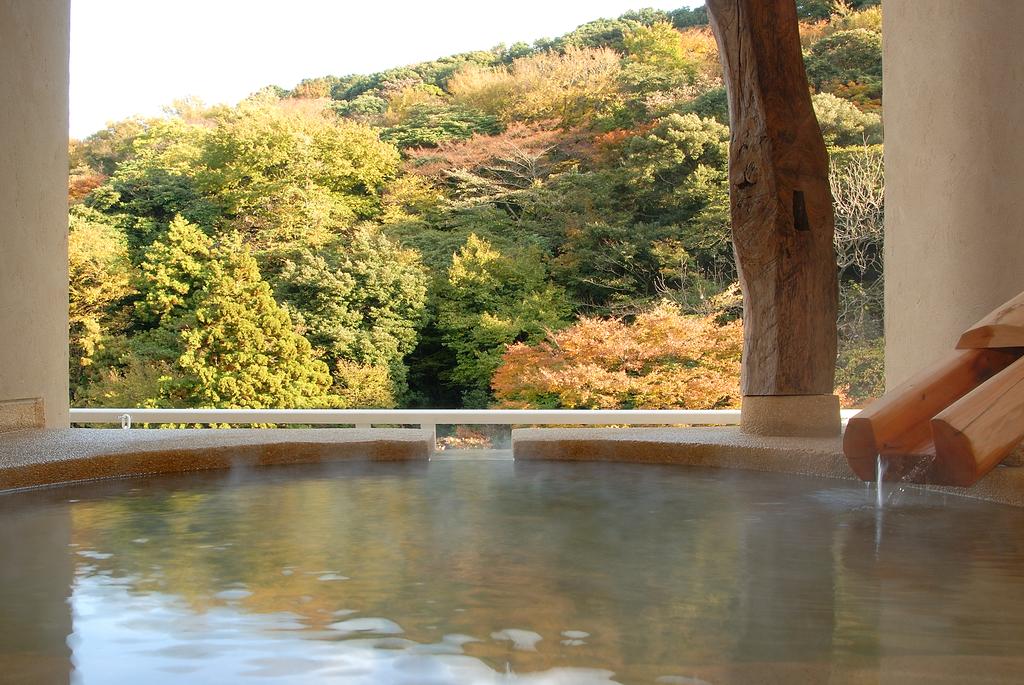
Visitors can enjoy hot spring baths at public bathhouses or ryokan. Many ryokan open their hot spring baths not only for guests staying but also for day visitors. While guests can use the baths for free, day visitors only need to pay a fee of about 500 to 2,000 Yen. Hakone is a hot spring paradise where visitors can experience traditional hot spring baths with a strong Japanese style.
Guide to Traveling to Kanagawa on Your Own
Kanagawa is a developed prefecture and has a convenient location adjacent to developed tourist areas, so you can travel here on your own by many means. You can refer to some ways to go from Tokyo to Kanagawa below:
- Train: You can choose to depart from Tokyo Station, Shinjuku and choose to stop at Yokohama Station, or Shin Yokohama. In Tokyo, there are also many types of trains for you to choose from such as Shinkansen JR Central, Odakyu Railway, Odoriko Express.
- Long-distance buses: Long-distance intercity bus services are available from many major bus terminals in Tokyo to major cities in Kanagawa. You can choose the night bus routes for quick travel.
- Taxi: This is a convenient option if you want to travel on a scheduled basis to tourist attractions in Kanagawa.
- Car rental: If you want to save on taxi costs, you can choose to rent a car to drive yourself (if you have an international license), or rent a car with a driver.
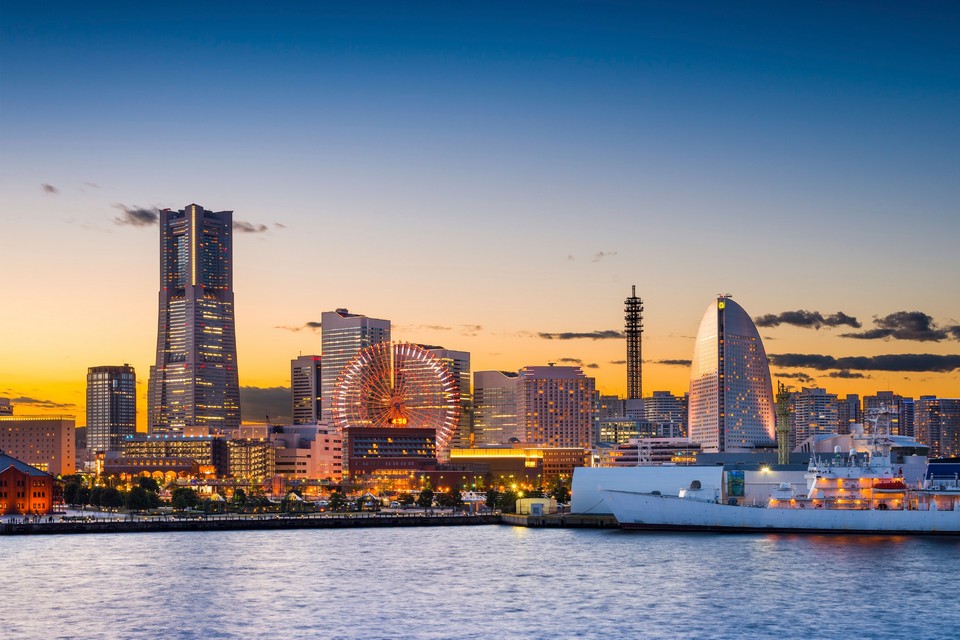
Kanagawa tourist attractions are a wonderful blend of modern cities, majestic natural landscapes and unique cultural experiences.
Some best day tours, trips, activities and transfer services, tickets in, from and to Yokohama you can refer to
- Yokohama Enjoy Pass
- Yokohama Hakkeijima Sea Paradise Ticket
- 2-Day Yokohama and Kamakura Enjoy Pass
- Yokohama, Kamakura, and Enoshima Anime Tour from Tokyo
- [Sale] Manten no Yu Japanese Style Hot Spring Experience in Yokohama
- Full day in Yokohama with a local
- Helicopter Riding Experience by Yokohama Sky Cruise
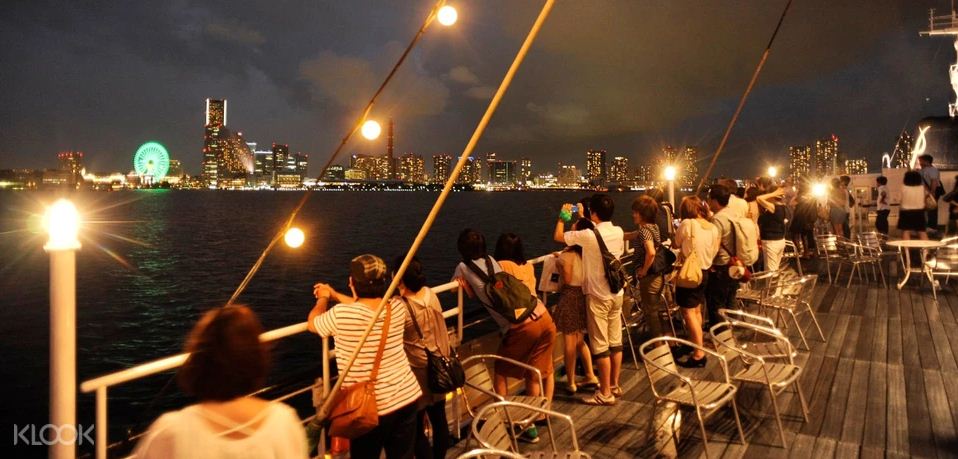
- Yokohama Lunch, Afternoon, and Dinner Cruise
- Cruise-over in Yokohama
Are you looking for more top things to do in Kanagawa: Tours, activities, attractions and other things? Let’s check it out here.