








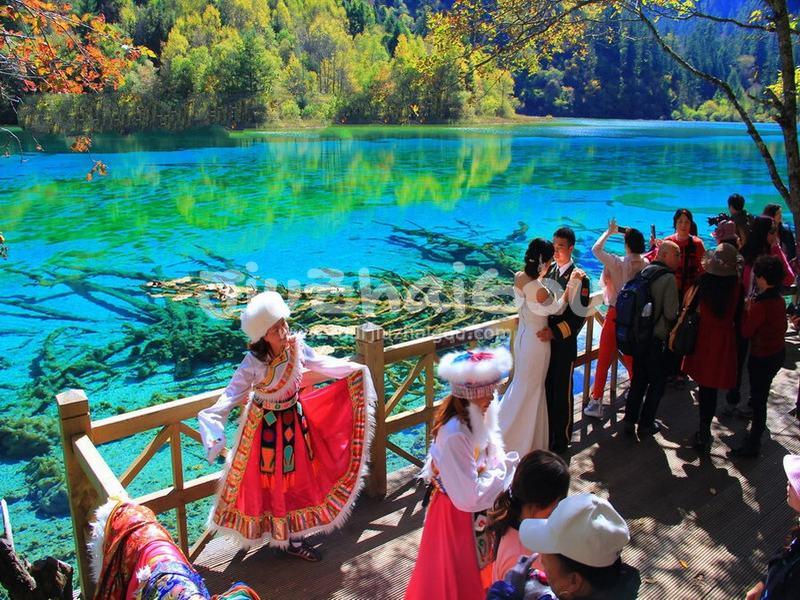
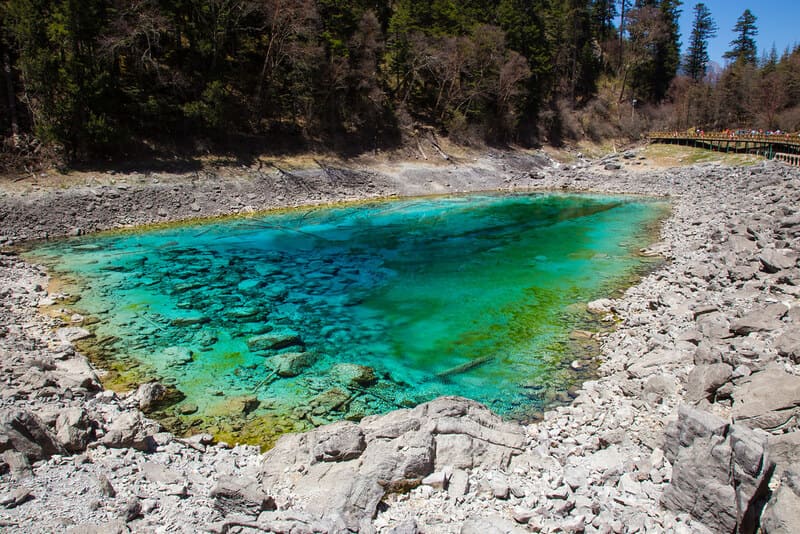
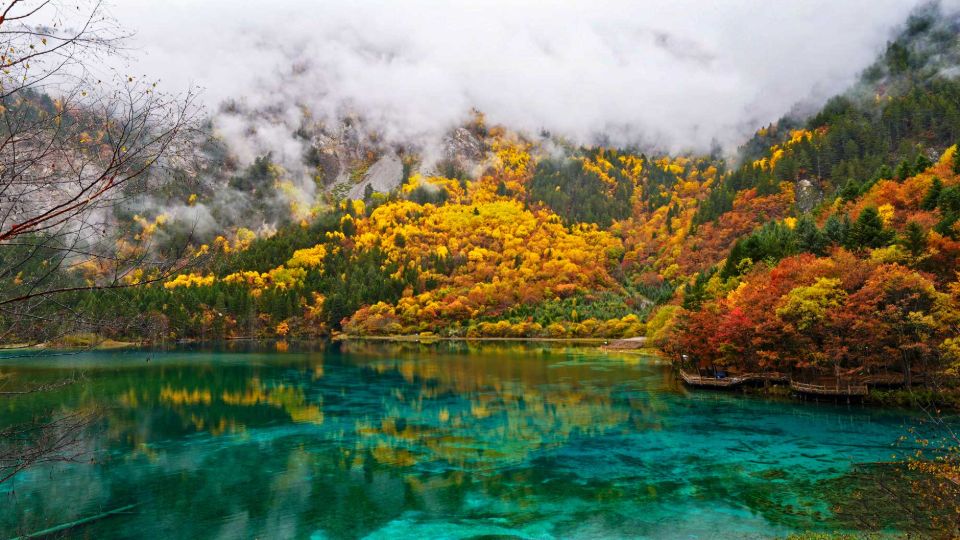
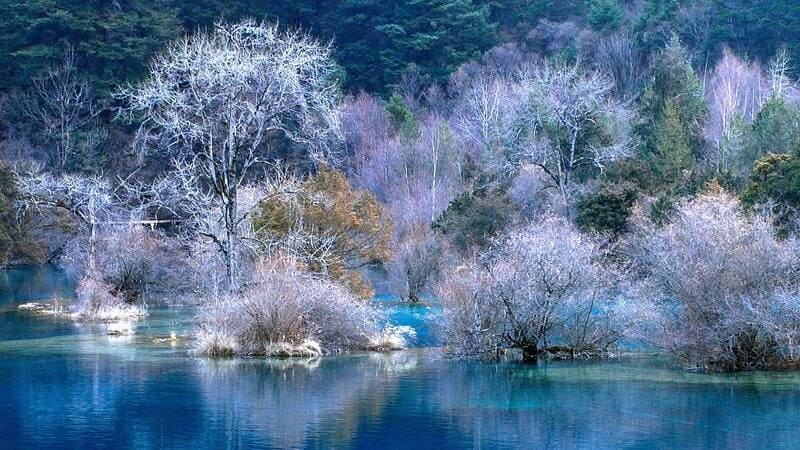
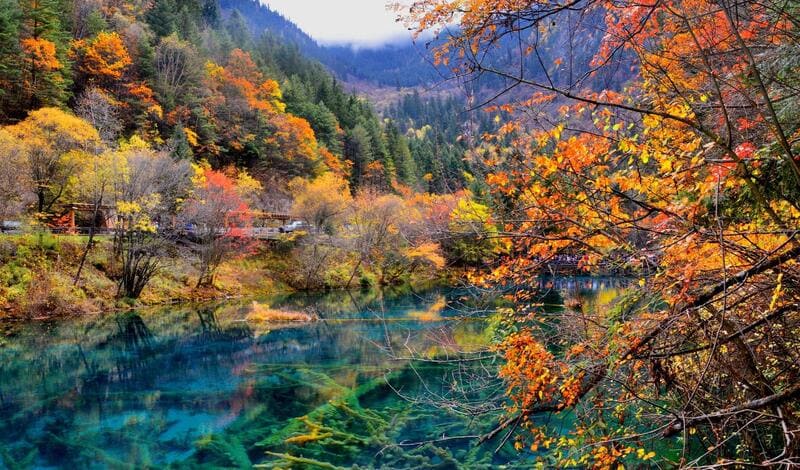
Located at an altitude of 3010m, the Five-Color Lake is about 100m long, 60m wide and 6.6m deep. This is the smallest and most beautiful lake in Jiuzhaigou, and is also known as the “eye of Jiuzhaigou”. The water in the lake flows from underground streams by large and small rivers in Jiuzhaigou. This prevents the lake from freezing in winter. In particular, the lake has many different colors due to the reflection of sunlight, algae and limestone.
- Where to go in Hunan? 15 most beautiful & best Hunan places to visit
- Guilin itinerary 4 days: What to do, see & how to spend 4 days in Guilin, China
- Where to go in Guilin: 15 best places to visit in Guilin as Beautiful as Ink Paintings
- The ULTIMATE Yunnan Travel Guide for Independent Travelers
- Sunac Land Guangzhou review: A Four-Season Entertainment Experience
Changhai Lake
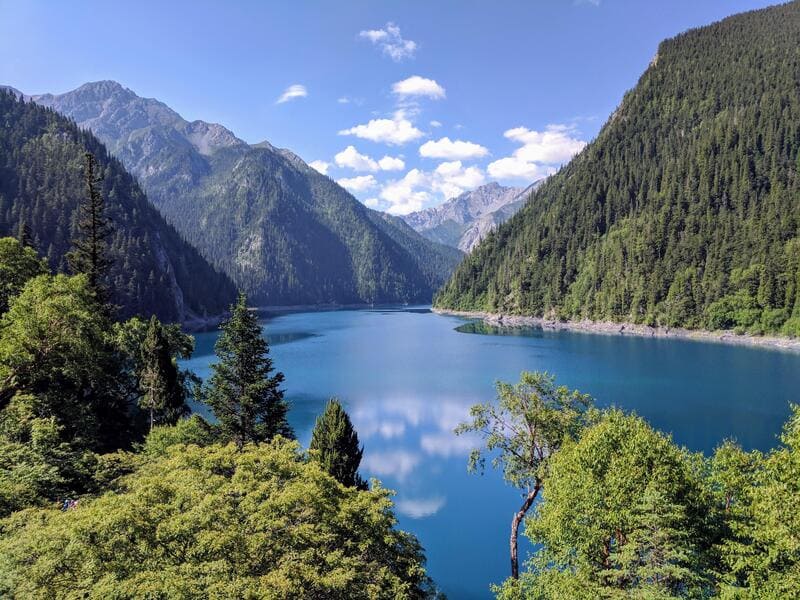
Changhai Lake is 3,101m above sea level, about 4,350m long, 300m wide and 90m deep, with a capacity of 45 million cubic meters. The entire Changhai Lake is shaped like the letter “S”, it is the first ice-blocking lake and freshwater lake in Jiuzhaigou. The lake also has the highest altitude, deepest water, largest area and largest storage capacity in Jiuzhaigou.
Pearl Shoal Waterfall
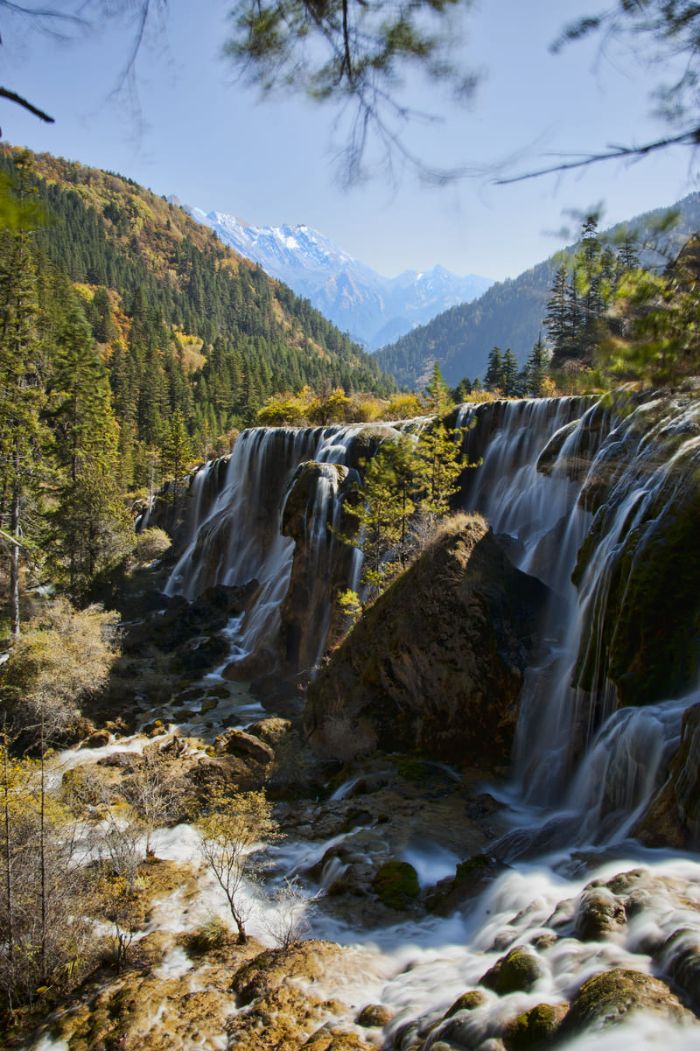
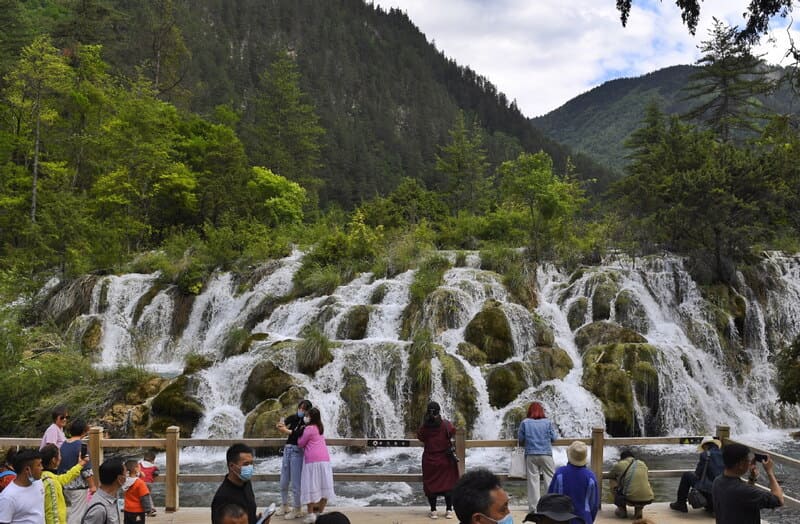
Pearl Shoal Waterfall is 2,433m above sea level, with an average height of 21m and a width of 270m. The waterfall was formed after the calcification process made the slopes higher and harder, giving the waterfall a crescent-shaped concave surface. The waterfall falls to the bottom of the valley, creating a roaring sound. Standing in front of the majestic nature, you will feel your soul being filled with strength and abundant energy.
Pearl Lake
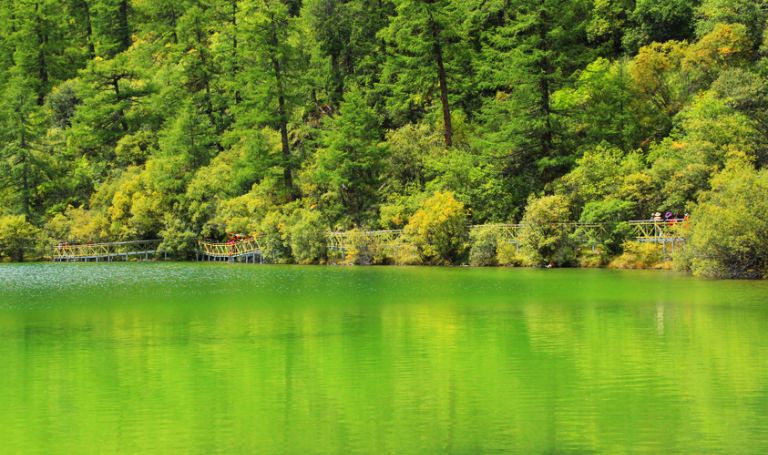
Pearl Lake is 2,450m above sea level, the lake surface is 112.3m wide, 189m long, has an average slope angle of 20 degrees and a relative height difference of 15m. It is so named because the countless drops of water scattered like pure white pearls, making it dazzlingly clear.
Nuorilang Waterfall
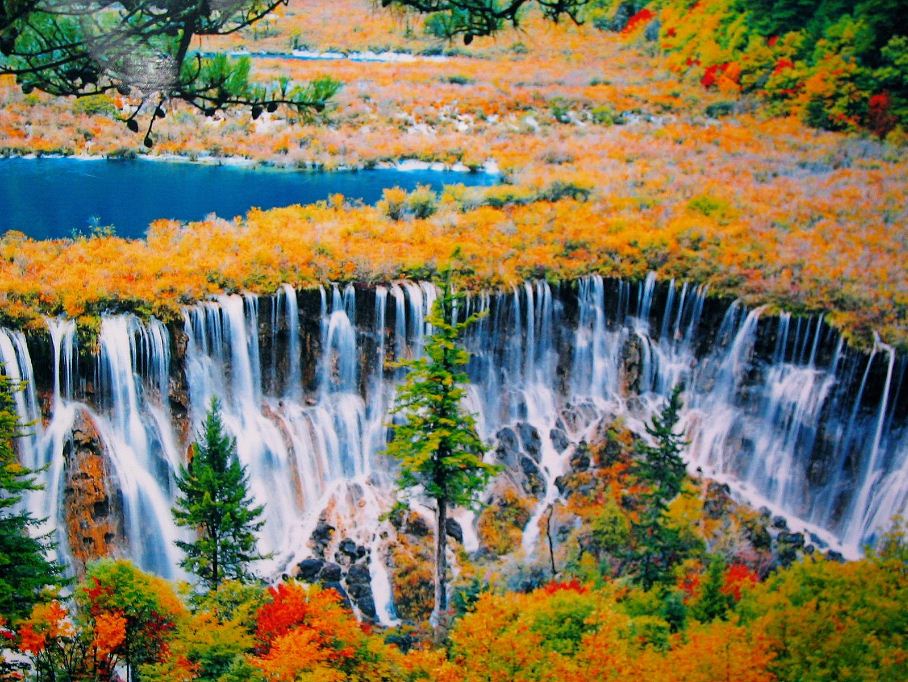
At an altitude of 2,343m above sea level, 24.5m high and 320m wide, Nurirang Waterfall is the widest alpine karst waterfall in China. The waterfall falls so strongly that the sound shakes the entire valley.
In the cold winter, the waterfall becomes a giant curtain of ice. Countless ice columns hanging on the cliff become a rare world of ice crystals. The ice sculptures of various shapes meet the light, revealing a charming light blue color.
Panda Waterfall and Panda Lake
Panda Waterfall is 2574m above sea level with a height of 65m and a width of 75m, so it is also called Cao Waterfall. The waterfall has three levels and is the steepest waterfall in Jiuzhaigou. During the flood season, a large amount of water flows from upstream, making Panda Lake full of water and creating a continuous flow down the waterfall. In the dry season, the flow of the waterfall is much gentler but still creates a natural beauty that visitors cannot take their eyes off.
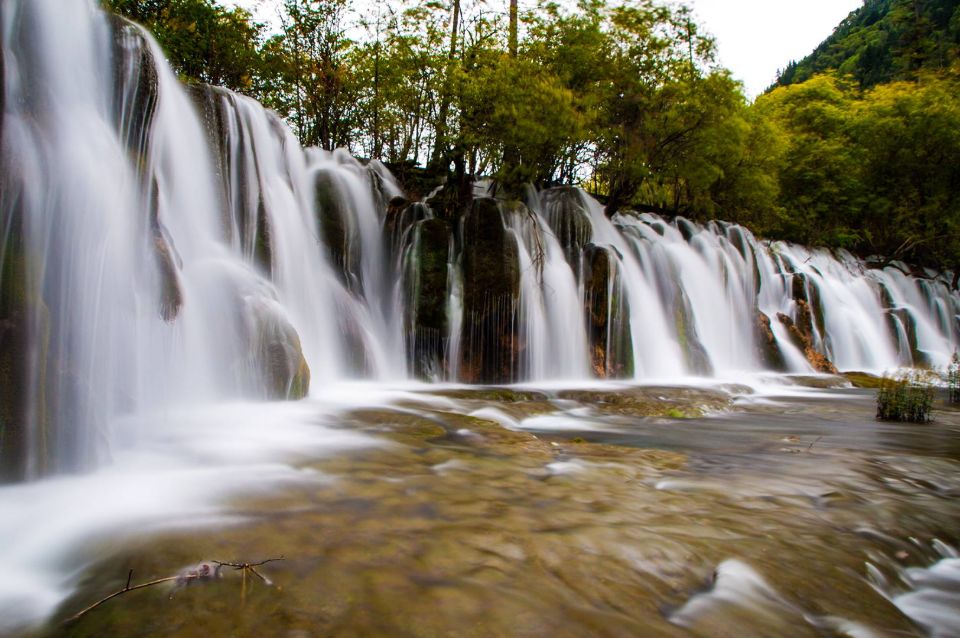
Panda Lake is located at an altitude of 2574m above sea level. The lake is large in size with a length of 670m, a width ranging from 109 to 237m and an average depth of 15.6m. The lake area is 10.8m square and contains 1.8 million cubic metres of water.
The lake is named after the pandas that live around here. The lake water level changes seasonally with an amplitude of 5 – 7m. When the rainy season comes, the lake water overflows to form majestic waterfalls. When the dry season comes, golden limestone beaches appear on the lake shore.
Zharu Temple
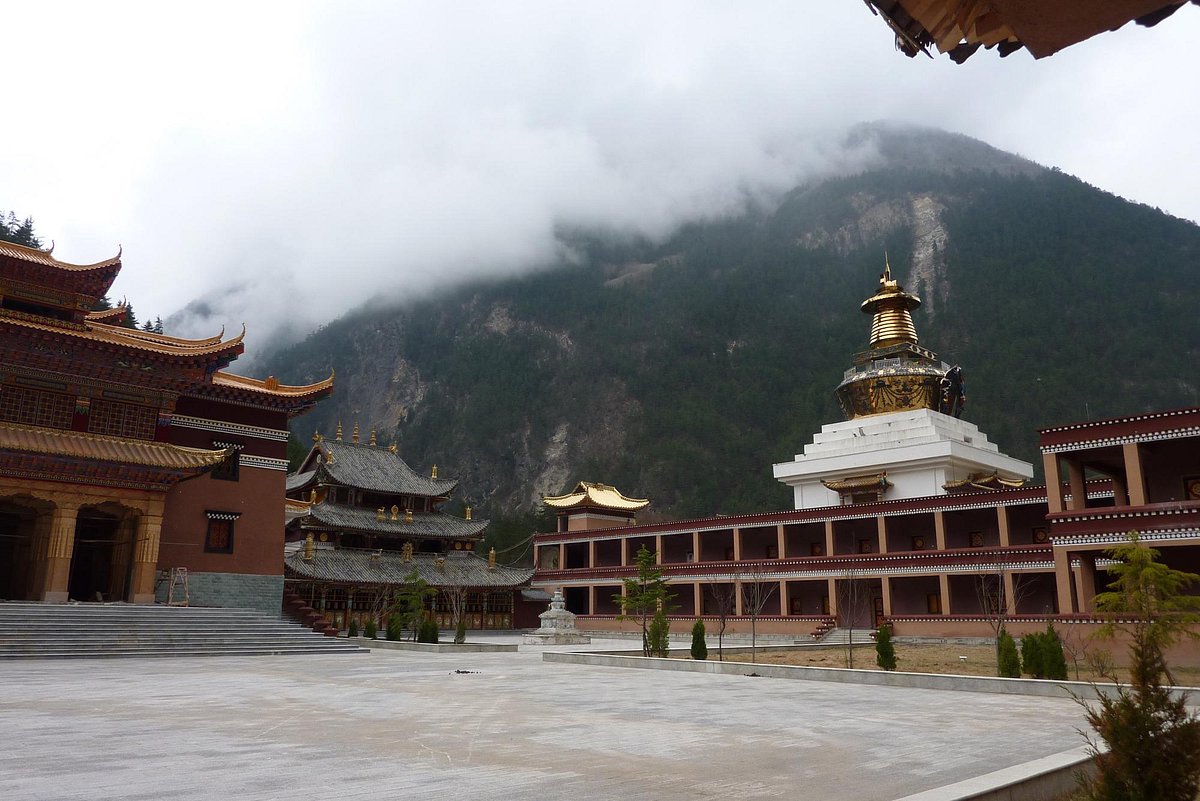
Zharu Temple, located at an altitude of 2,026 meters above sea level in the Jiuzhaigou Scenic Area, Sichuan Province, China, is the only religious temple in the area. Built in the late Ming Dynasty, the temple has undergone two renovations and is known to Tibetans as “Ranwu Gongba”.
Zharu Temple is a holy place for followers of Bon, an ancient Tibetan religion. It not only has great cultural and historical value but is also an important spiritual destination, attracting tourists who want to learn about local beliefs and traditions.
Primitive Forest
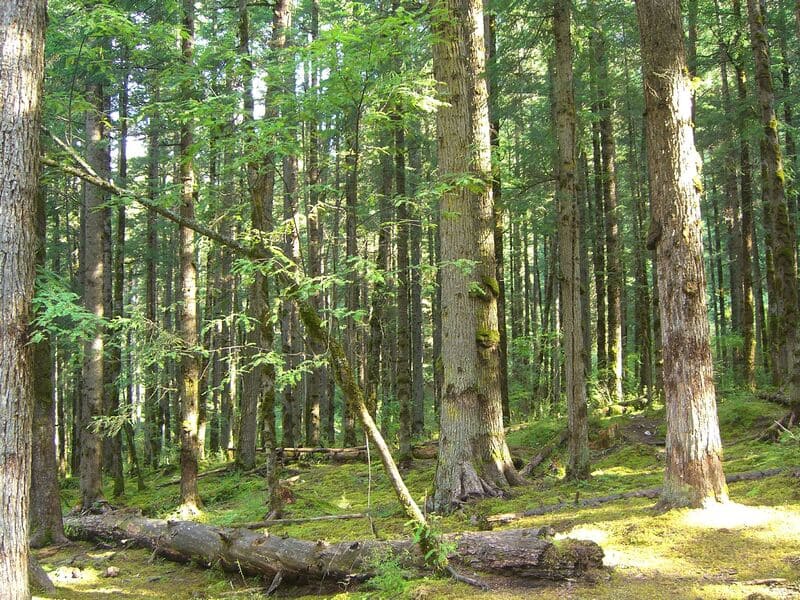
A forest at an altitude of 2,930 meters above sea level. The vegetation here mainly consists of fir and spruce. There are also trees that are 100,000 years old, under the canopy are shrubs such as honeysuckle, rhododendron, arrowroot, ferns and around is covered with a layer of moss several dozen centimeters thick.
The smooth green soil makes the forest covered with lichen. Lichen is considered the inspector of the natural environment. As long as there is a little bit of toxic substance in the air, lichen cannot survive. The appearance of lichen shows that the air quality in Jiuzhaigou is very good for the pristine environment.
Mirror Lake
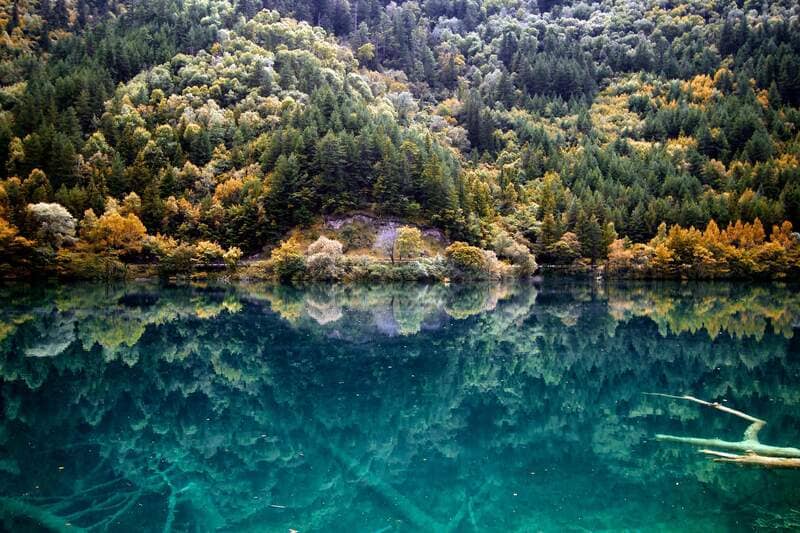
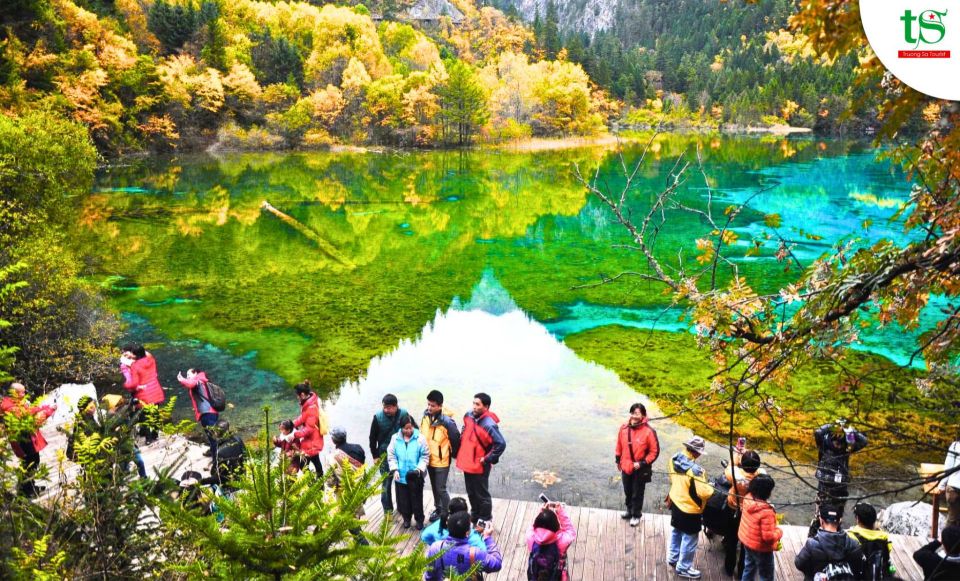
The lake is 2,367m above sea level, 1,155m long, 241m wide and 31m deep. This is the 3rd largest lake in Jiuzhaigou, named because the water surface is as smooth as a mirror.
As the name suggests, Mirror Lake is like a mirror, reproducing the scene on the water surface without any distortion. Visitors to Jiuzhaigou Valley are amazed by the vivid reflection in the mirror lake. And when visiting the Mirror Lake, remember to come before 9 o’clock or after 5 o’clock, only then will the beauty touch your heart.
Huanglong Scenic Area
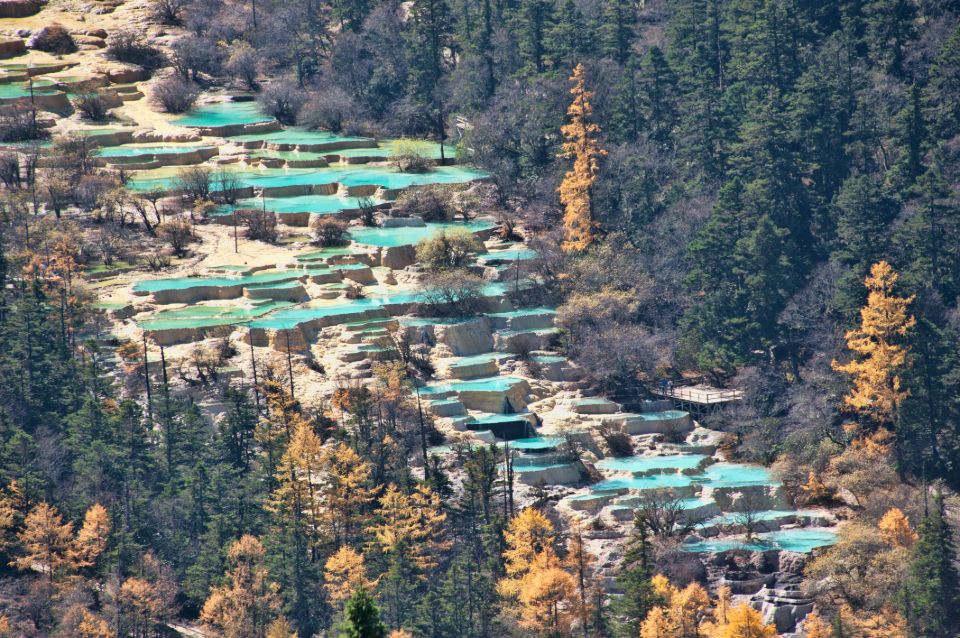
The Huanglong Valley in the scenic area has thousands of calcified sulfur lakes with different shapes and colors, the 2,500-meter calcified sulfur lake is the longest in the world. The main attractions along the way include Xishen Cave, Golden Sand Pavement, Bonsai Lake, Huanglong Cave, Huanglong Temple, Zhenhai Stone Pagoda, Wucai Lake, Zhuanhua Jade Pond, etc.
Jiuzhaigou Food Guide
Of course, in addition to the scenic spots, the food here is also worth trying. Jiuzhaigou food is mainly Tibetan food. These delicacies are not only unique in flavor but also rich in nutrients, and are an indispensable part of the Jiuzhaigou trip.
Yak beef and Yak hotpot
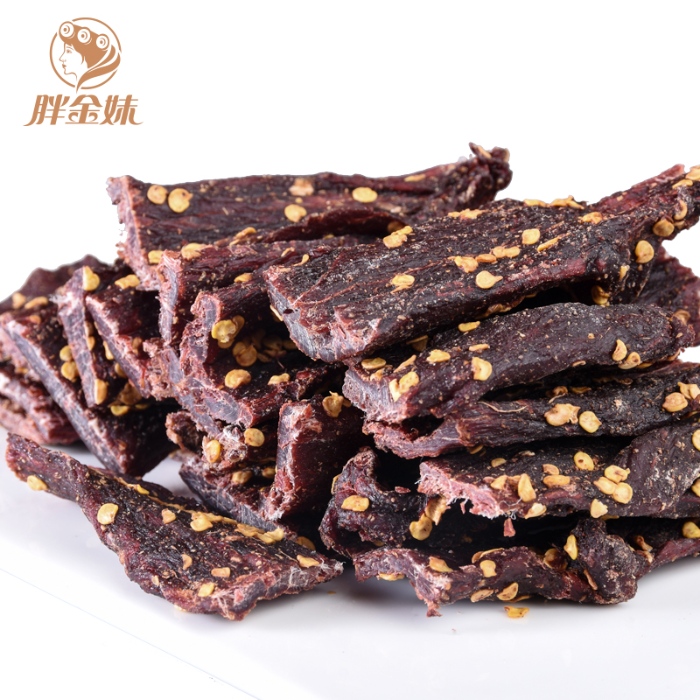
The beef is salted, thinly sliced, mixed with chili, and served with wine, which is a delicious dish. Of course, the wine must be local highland barley wine. Yak beef is produced on the Jiuzhaigou plateau, Songpan, the meat is fragrant and has a bit of wild game flavor, our braised beef can be vacuum-packed, so it is very convenient for tourists to buy and take home, a gift for friends.
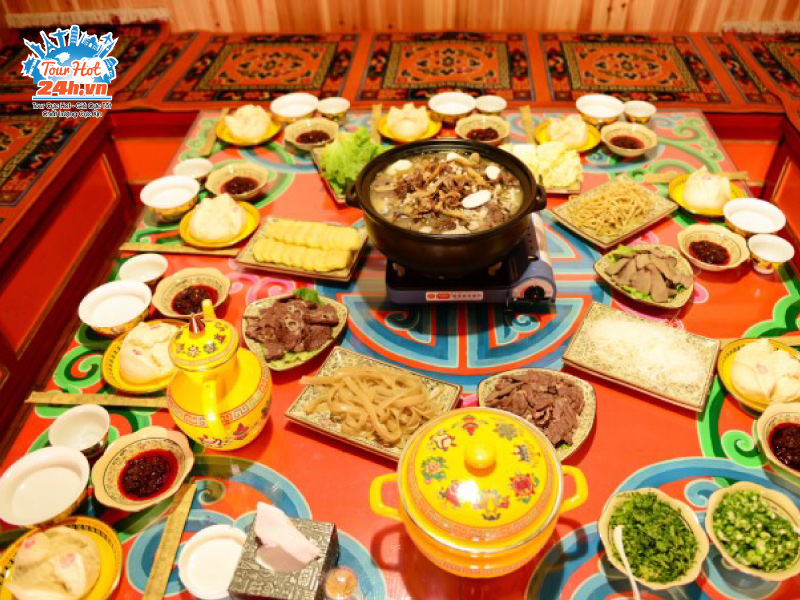
It is said that the Tibetans in Jiuzhaigou have long regarded their traditional food as a long-standing custom. With a rich sense of cuisine, they have created a unique and delicious yak beef soup.
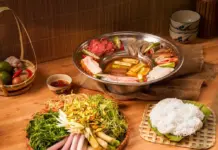
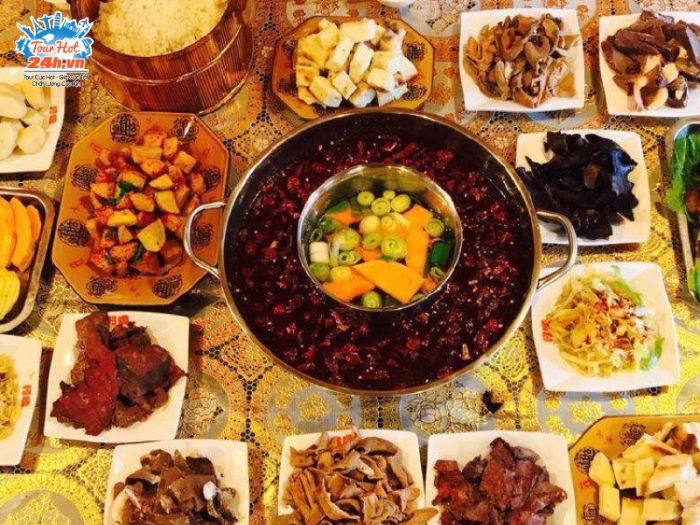
Local yak is the main ingredient, and from there, a unique Tibetan-style beef hotpot is created. The yak beef hotpot is made from a secret recipe, mainly using ingredients that are only available in Tibet. Yak hotpot creates a delicious flavor and is worth trying according to Jiuzhaigou travel experience.
Tsampa
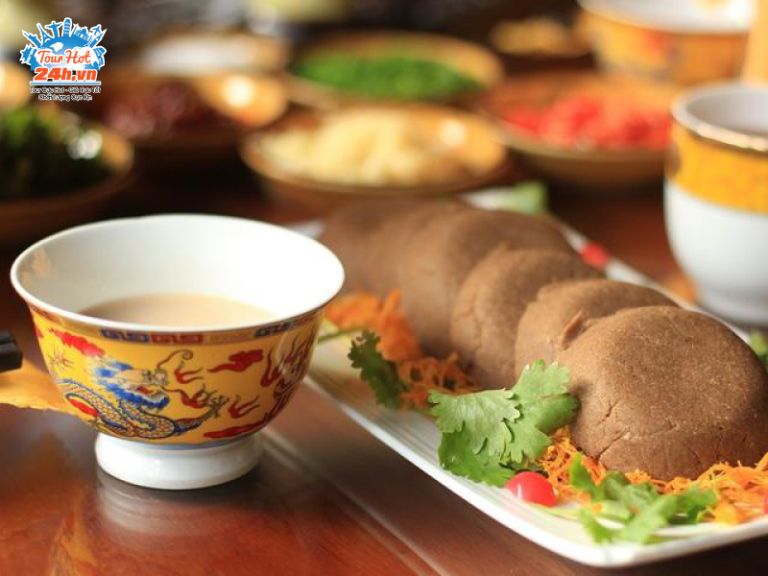
Tsampa has a unique sweet taste, its ingredients include barley, peas, oats, etc. Tibetans always carry tsampa whether they are working in the fields, herding cattle in the mountains or traveling. Tsampa is easy to carry, is a high-quality and cheap food in livestock areas where land is sparse and raw materials are scarce.
Ciba Potato
Ciba potato is a very special dish in Jiuzhaigou. The way to prepare it is to steam the potatoes, put them in a wooden barrel and pound them hard until the potatoes clump into lumps. Then, people mash them until smooth and boil them in a pot. After cooking, add pickled cabbage and chili to get ciba potatoes, which are very smooth and delicious.
Steamed buns with milk cream
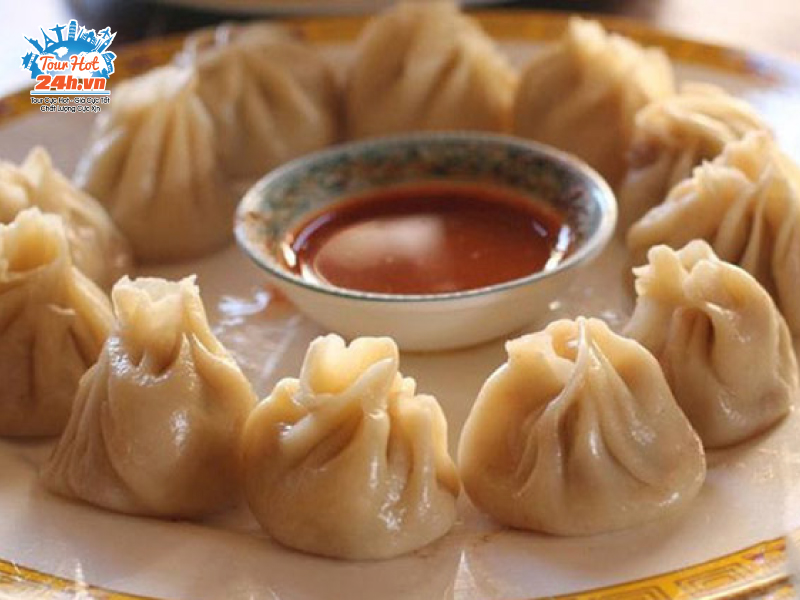
As the name suggests, steamed buns with milk cream inside look very fatty and fragrant. Fresh milk cream is opaque and sour, very suitable for use as a filling. After the milk cream dries, Tibetans eat it as a snack, and can also put it in porridge or soup as a seasoning.
Steamed buns with milk cream here are very delicious and easy to eat. Very suitable for both Tibetans and Han people, young and old can eat it. This is the dish that most tourists choose when coming here!
Qingke Barley Wine
Highland barley wine is an indispensable drink in the life of Tibetan people, and it is also the best drink for holding festivals and entertaining guests. The method of making highland barley wine is to clean and cook highland barley or wheat, add koji to ferment, after a few days of making wine, the wine is slightly yellow, sweet and sour, so it is called “Tibetan beer”.
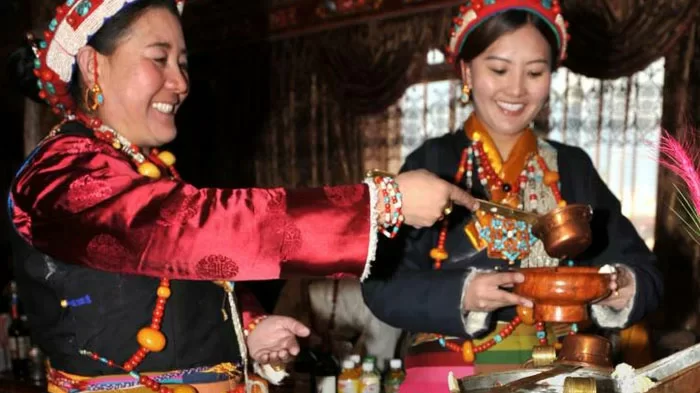
Qingke barley is the only highland barley in China’s Tibet Autonomous Region and Qinghai Province. According to experts, this type of barley is rich in nutrients and minerals and is a unique food similar to a functional food that helps reduce blood fat, improve digestion, prevent diabetes and reduce the impact of altitude on the body.
To make this wine, Tibetans clean the barley, then steam it and ferment it for a few days. When the solution is light yellow and sweet, it is ready to use. This is an indispensable drink for Tibetans, often served on major occasions or to entertain guests.
Butter Tea
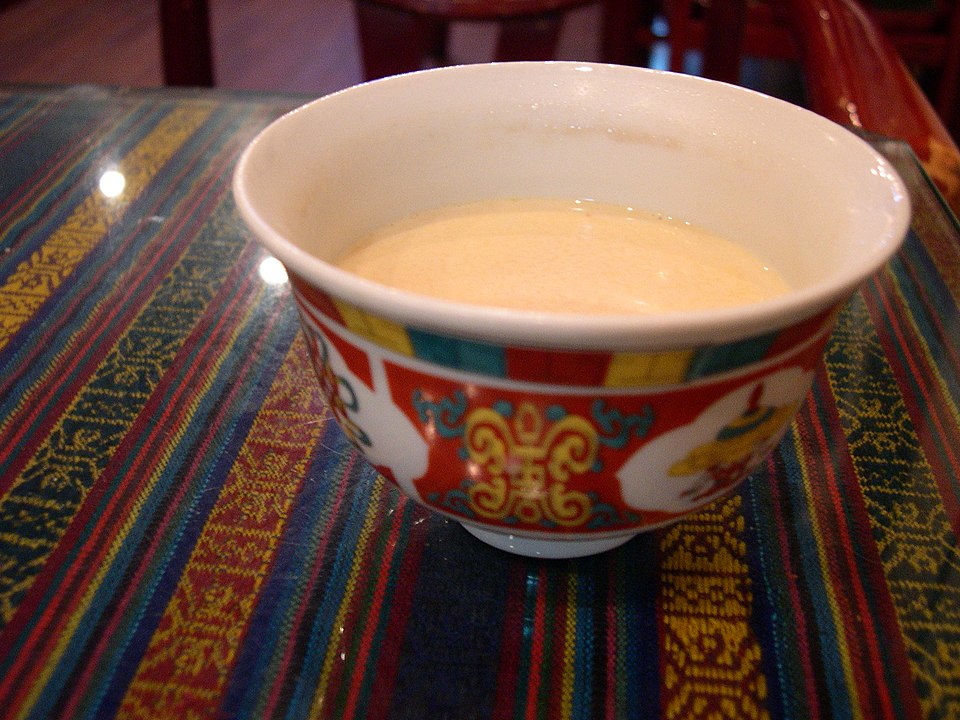
In Tibetan homes, pots of butter tea are boiled on the stove from morning to night, at any time you can drink fragrant and hot butter tea. Butter tea is nutritious, mildly fragrant, has the effect of quenching thirst and nourishing, so it is extremely loved by Tibetans.
Chinese sausage
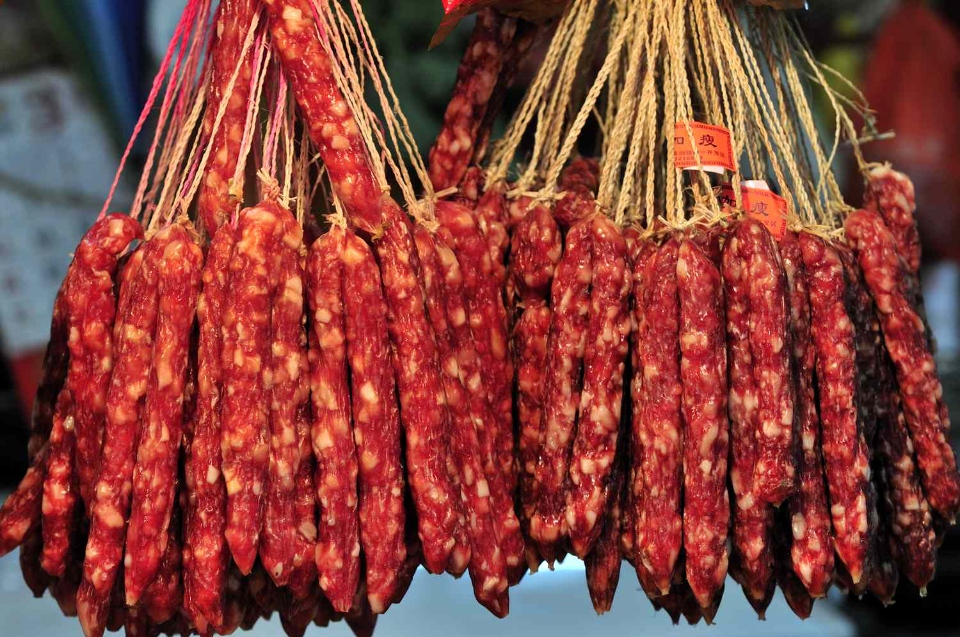
Chinese sausage is the most delicious dish in the list of Tibetan cuisine. For every Tibetan, entertaining guests with Chinese sausage is an honor for the people. Chinese sausage is made from pig intestines, blood, spices and yak (or pork) which is very nutritious and delicious. According to Jiuzhaigou travel experience, you must definitely try this delicious dish!
Sauerkraut Noodles
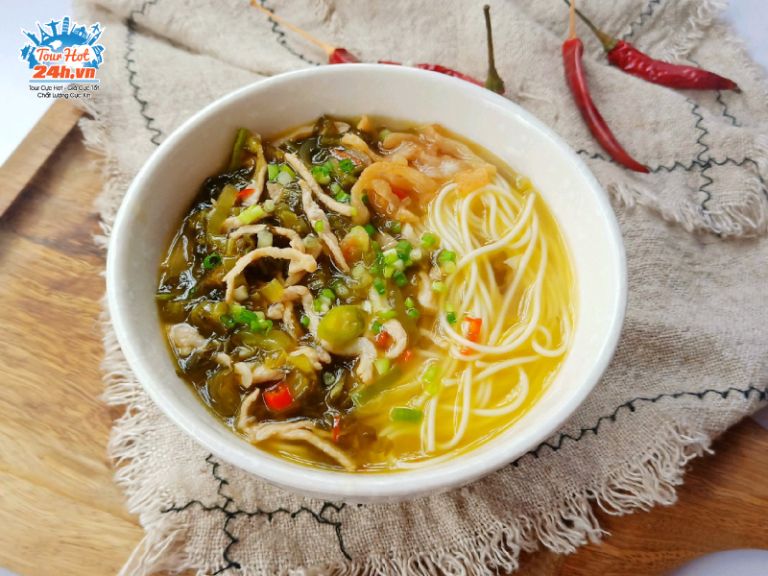
Sauerkraut Noodles are a traditional Tibetan dish. To make this noodle dish, you must first stir-fry the sauerkraut. Then add dried bacon or fresh yak meat. Finally, add potatoes, noodles, salt, green onions, … and cook until the sauerkraut noodles are delicious. The combination of meat and spices creates an unforgettable traditional Tibetan dish.
Ginseng rice
Ginseng rice is considered by Tibetans as an auspicious dish, they eat it first during festivals. The method is to boil ginseng first, then scoop rice into a bowl, scoop cooked ginseng on top of rice, sprinkle sugar, and finally pour some hot ghee on top.
Blood sausage
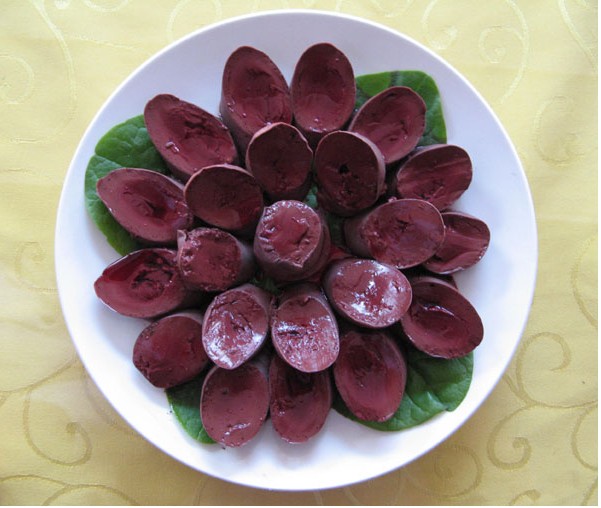
The herders in the Tibetan region do not cook sheep’s blood separately, but pour it into the small intestine and cook it. Blood sausage is made from casing, blood water, spices and yak meat (or pork). This is the best dish in Tibetan recipes.
Wild Jiuzhaigou Mushroom Hot Pot
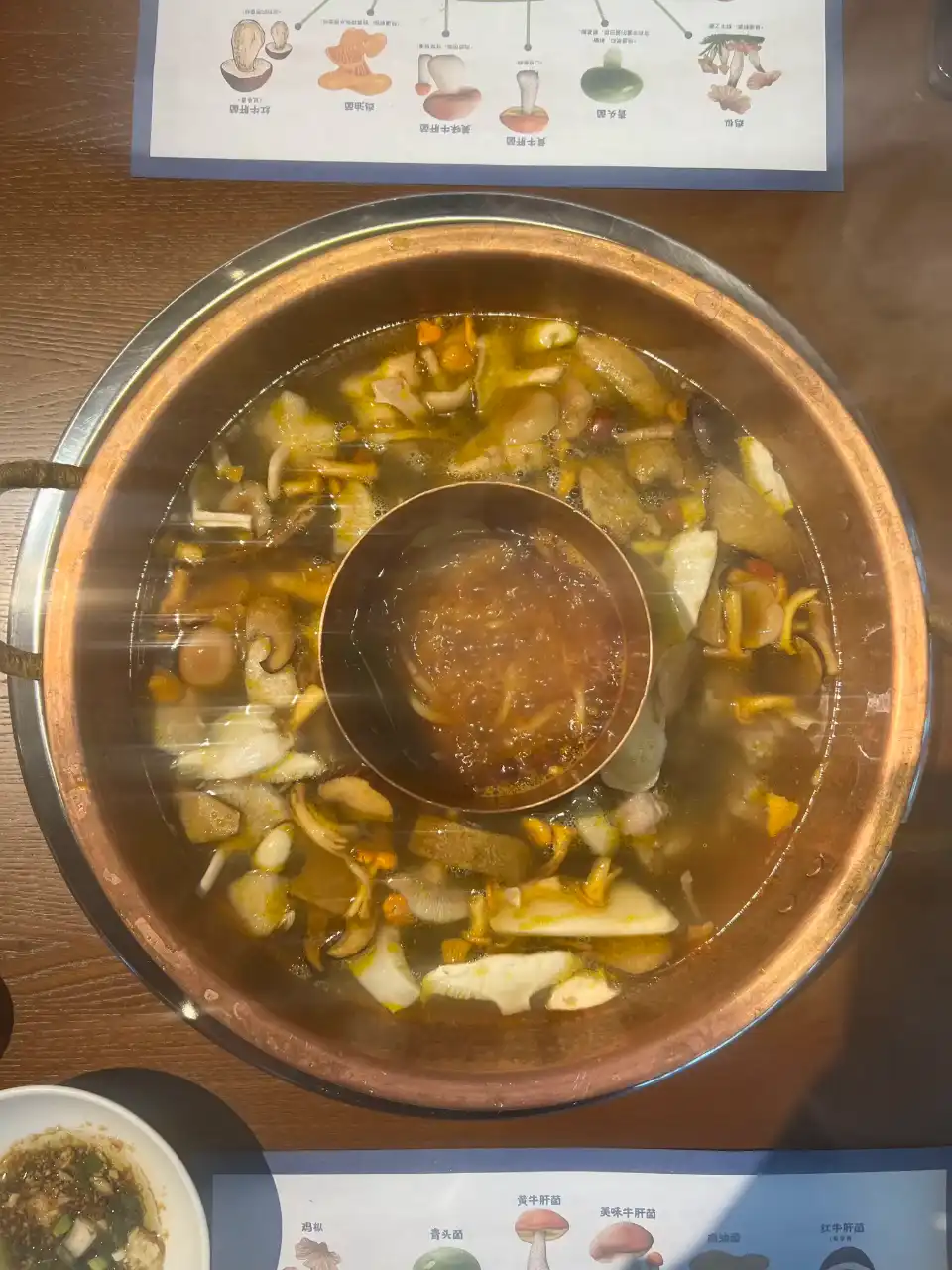
Jiuzhaigou Mushroom Hot Pot uses exquisite ingredients. All the ingredients used are from precious wild mushrooms in Jiuzhaigou, which are delicious and nutritious. The aroma of chicken soup and mushroom flower water blend together. Fragrant and fresh. It is a unique mountain delicacy. The moisturizing and nourishing effect is quite good. And various bacteria can be mixed freely, and you can add more strains of bacteria that you like to eat.
Where to eat in Jiuzhaigou?
Continuing on the Jiuzhaigou travel guide, we will learn about the dining places and restaurants here!
Nuorilang Restaurant
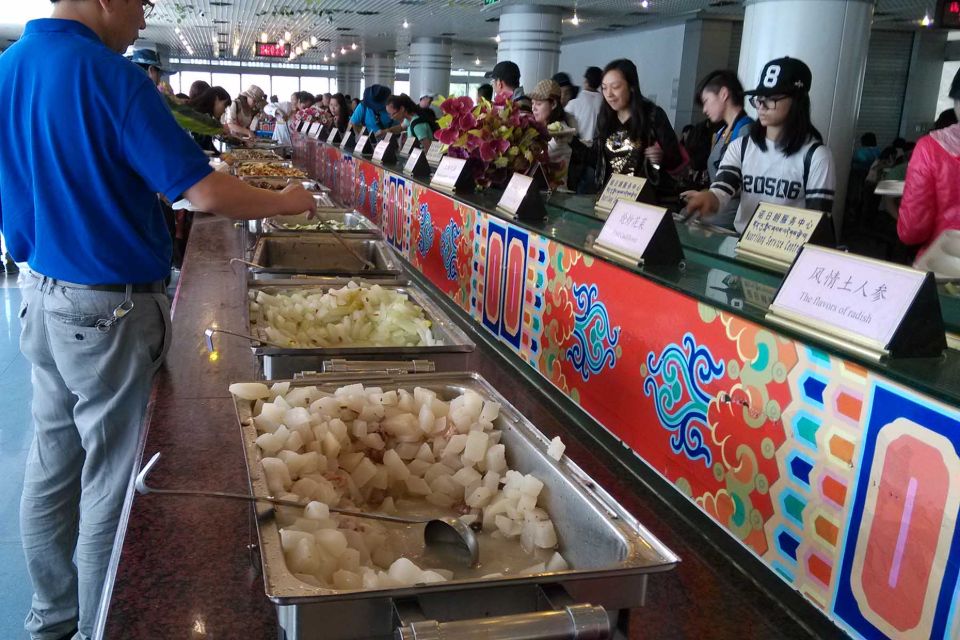
Nuorilang Restaurant is the only restaurant in Jiuzhaigou Scenic Area, opening hours are: 11:00-14:00 in the peak season and 11:00-13:30 in the low season. The restaurant offers three types of buffet and table meals at 60 yuan/person, 98 yuan/person and 138 yuan/person. Instant noodles are priced at 15 yuan/box. If you do not dine at the restaurant, you can choose to bring your own dry food. The working hours and fees of Nuorilang Restaurant are for reference only and are subject to the restaurant’s implementation.
You can buy special local tourist souvenirs at Nuorilang Restaurant and Shuzhengzhai Folk Culture Village in Shuzhenggou.
Abuluzicang Restaurant (Jiuzhaigou)
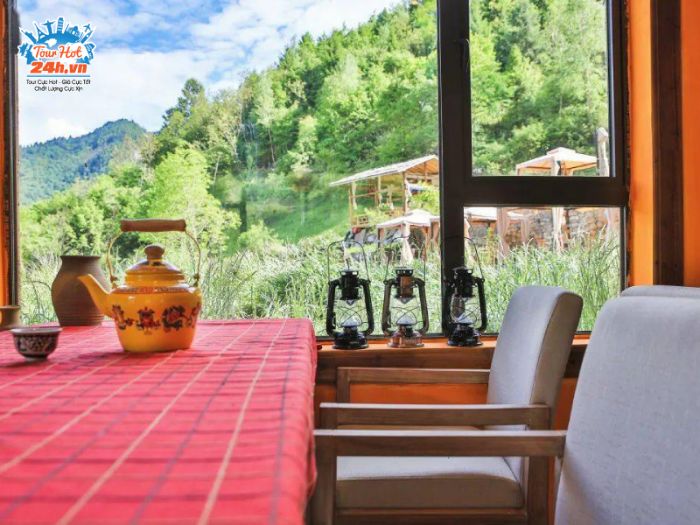
Abuluzicang Tibetan Restaurant (Jiuzhaigou Branch) is a Tibetan-style restaurant with a spacious and quiet space. The restaurant is famous for its delicious dishes made from potatoes. Homemade yogurt is also a dessert worth trying when enjoying the cuisine here.
- Address: No. 22, Group 2, Shangsizhai Village, Zhangzha Town, Jiuzhaigou County.
- Business hours: Monday to Sunday 09:30 – 22:00.
Black Tent Restaurant
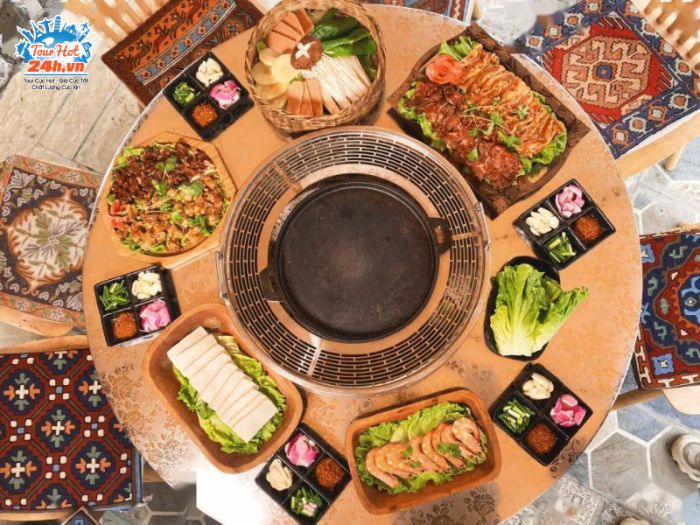
Black Tent Restaurant has a clean, hygienic space and fresh air. Here, you can feel the hospitality of the Tibetan people and experience the customs and characteristics of the Tibetan people.
The shop’s famous dishes are Tibetan delicacies such as yak dumplings, beef noodles, etc. The yak is fresh and delicious, and there are many ways to cook it, and different tastes can satisfy different groups of people. You can also buy yak here as souvenirs or gifts for relatives and friends.
- Address: Ruiqing East Road, Hongyuan County (Qiongxi Town), Aba Tibetan and Qiang Autonomous Prefecture.
Bianbian Street
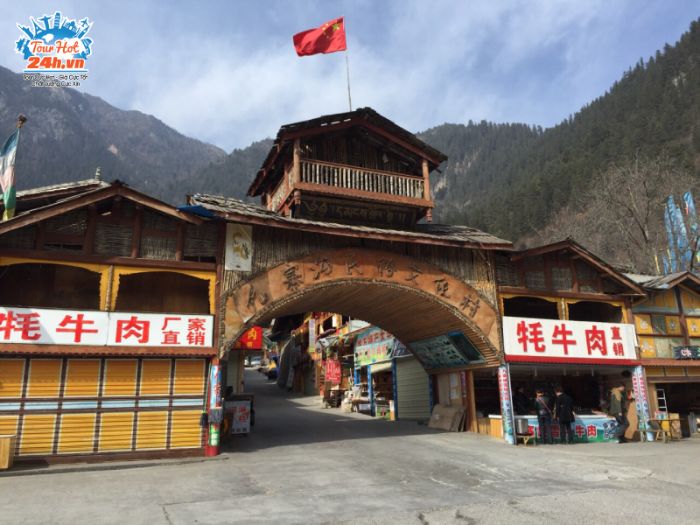
Jiuzhaigou Bianbian Street is a small shopping street, the best place for tourists to buy local specialties and Tibetan souvenirs. When the night falls, invite your friends to drink tea at the bars here, and you will definitely be intoxicated by the charming night of Jiuzhaigou.
Here, you can step into a small Tibetan teahouse and enjoy a leisurely and comfortable experience. In addition, you can also enjoy the aroma of Tibetan coffee in the beautiful scenery, going up and down the 5,000-year-old wine shop or the Taibai Prince Building.
- Address: Zhangzha Town, Jiuzhaigou County, Aba Tibetan and Qiang Autonomous Prefecture, at the entrance of Jiuzhaigou (near the gate of the scenic area)
- Business hours: all day.
Cuihai Yunlai
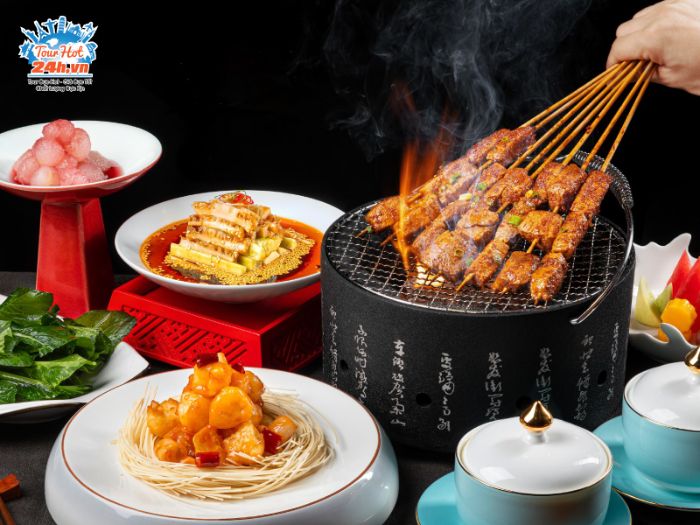
Cuihai Yunlai Restaurant is located on the first floor of Gesang Pavilion. It can serve 200 guests at a time, and is decorated in Tibetan and Qiang styles. The restaurant is headed by famous chefs and offers Sichuan cuisine with a special Tibetan flavor.
Among them, the special dishes include: spicy crispy chicken, Sichuan-style soy sauce chicken, grilled fish, etc. Special Tibetan dishes are also served here such as: Tibetan yak meat, Tibetan bacon, wild vegetables, wild mushrooms, etc.
- Address: Zha Village, Jiuzhaigou District, Aba Tibetan and Qiang Autonomous Prefecture, Sichuan Province.
- Business hours: 8:00 – 20:00.
Nuorilang Central Restaurant
This is a square-shaped restaurant, combining traditional Tibetan architectural style and modern architectural technology. The restaurant here serves buffet with 3 prices of 60, 98 and 138 yuan. The food quality is quite good and the price is reasonable.

There is a free public dining area inside the Nuorilang Center. If you have prepared food, you can come to this area to eat and rest. In addition, there are also delicious instant noodles and ham sausages for sale here.
- Address: 300 meters up Nuorilang Waterfall in Jiuzhaigou Scenic Area, Jiuzhaigou County, Aba Zang and Qiang Autonomous Prefecture, Sichuan Province.
- Business hours: 10:00 – 14:00.
What to buy in Jiuzhaigou?
Whenever we travel to any new place, we also have the habit of buying some specialties and souvenirs for our relatives. According to Jiuzhaigou travel experience, you can refer to the items to buy below!
Dried Yak
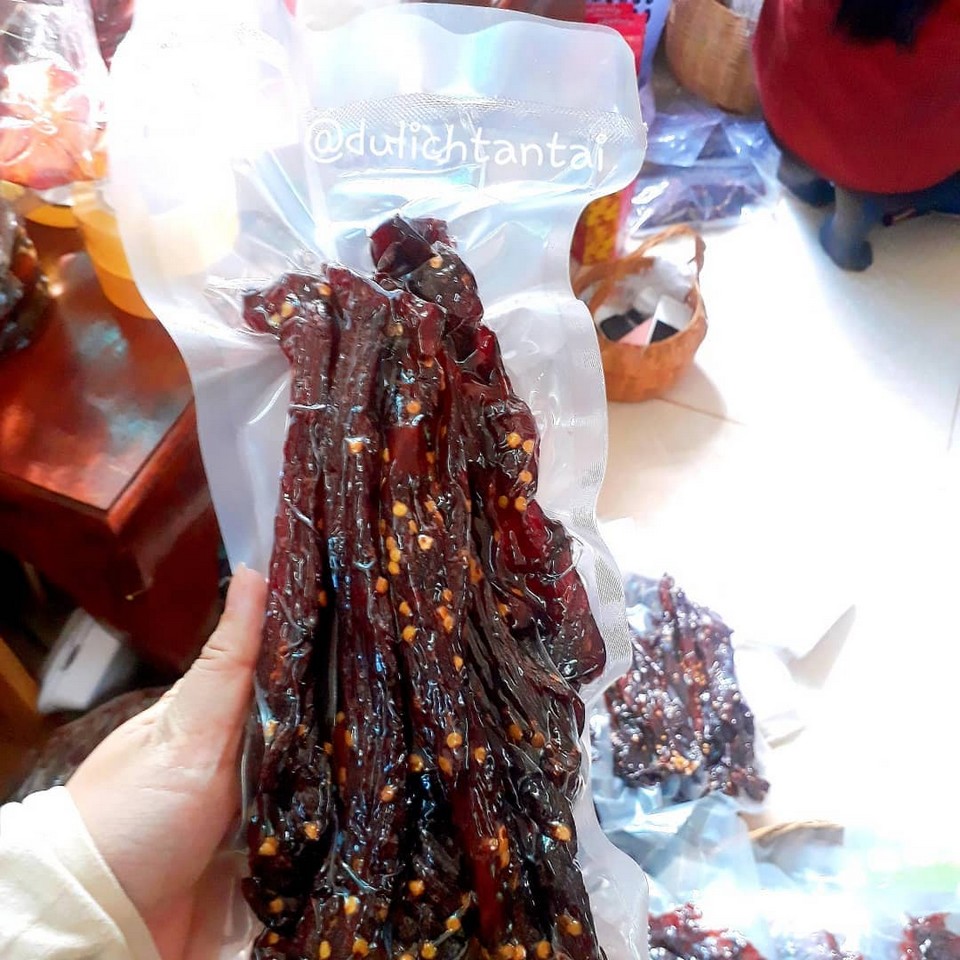
Dried Yak is a local specialty of the Tibetan people, with many different flavors such as the mild spiciness of the meat or the toughness of the meat… It is very delicious to eat, the aroma rushes into the nose, it is delicious to chew in the mouth and has nutritional value. Yak beef is marinated with spices, cut into thin slices, mixed with chili is a great appetizer with wine!
Currently in Jiuzhaigou, there is a Yak beef processing factory, processed and marinated then vacuum packaged at a price that is not too high. Convenient for tourists to buy as gifts for friends.
Horn comb
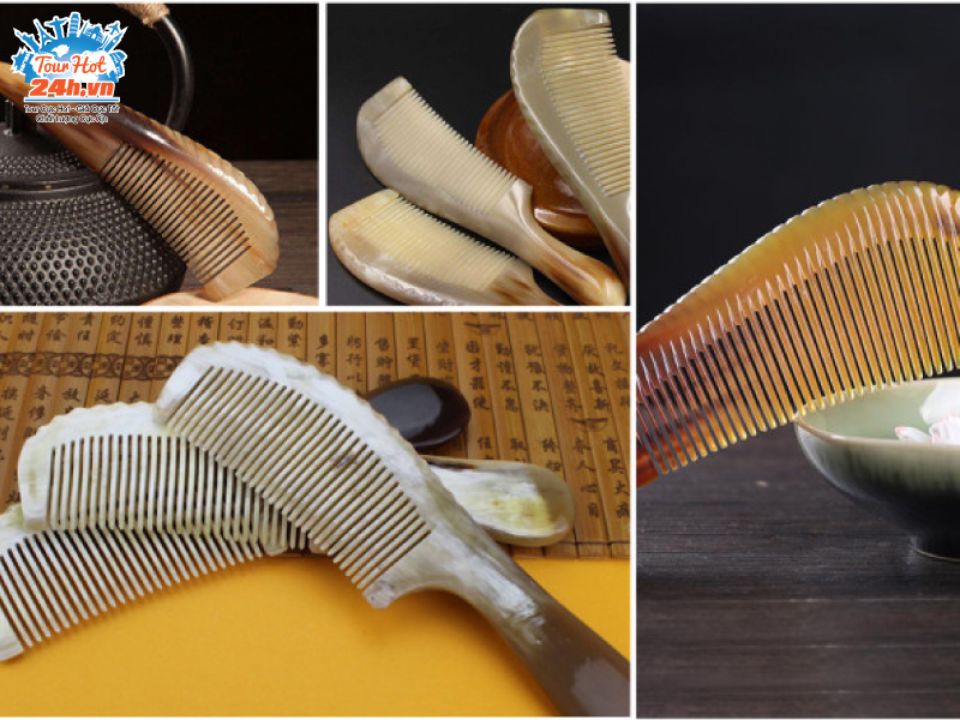
Horn comb is a comb made of animal horn. It has the effect of reducing itching without pain, warming the body, accelerating blood circulation of the scalp, and enhancing immunity. When coming to Jiuzhaigou, you will see horn combs for sale in many different styles at any souvenir shop. This is the most meaningful souvenir when traveling to Jiuzhaigou for relatives and friends.
Barley wine
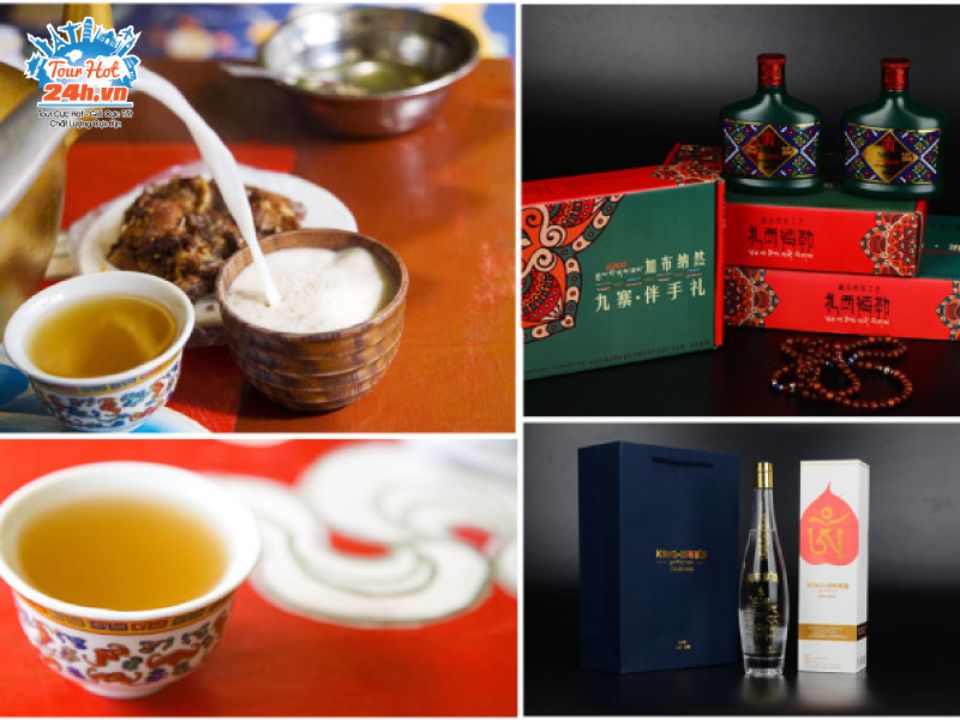
Barley wine is an indispensable drink in the lives of Tibetans. The barley wine here has a slightly yellow color, a sweet and sour taste, and is called “Tibetan-style beer”. It is considered a premium product for organizing festivals and entertaining guests. The flavor is very special, making anyone who drinks it remember it.
According to Tibetan customs, when guests arrive, the host will enthusiastically hold a jar of barley wine and pour three bowls in a row to invite guests. The first two bowls of wine, guests can drink all or leave a little depending on their alcohol tolerance. By the third bowl, you must drink it all in one gulp to show respect to the host and then you can drink freely with the host.
Tsampa
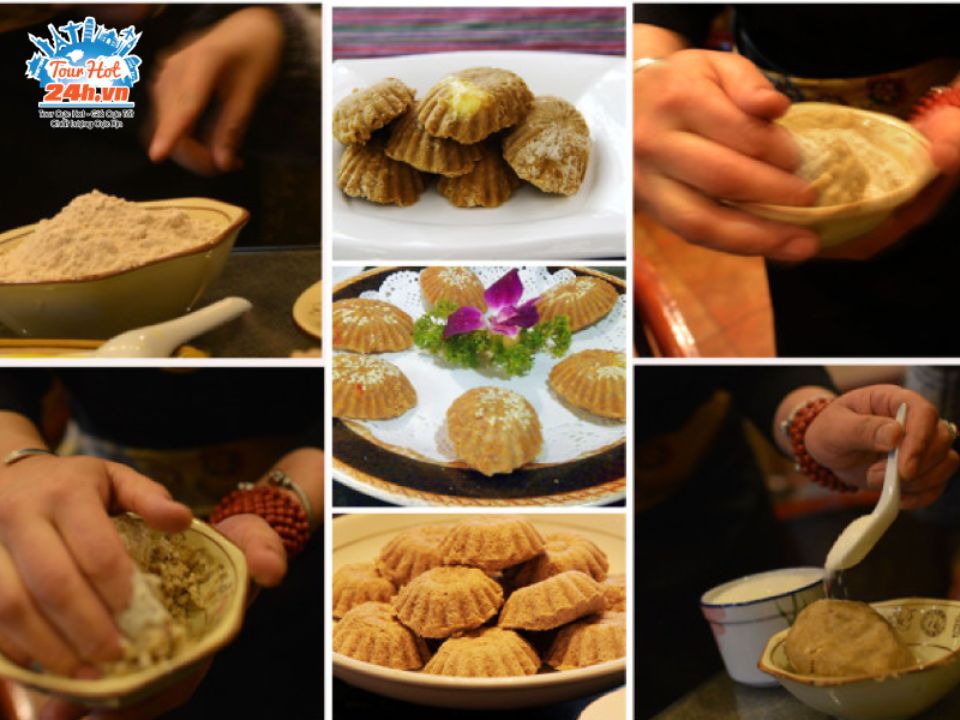
In addition to enjoying it on the spot, you can also buy some tsampa cakes as gifts for relatives. Tsampa cakes are divided into barley tsampa, pea tsampa, oat tsampa, etc.
Tibetans often carry tsampa cakes with them so that when they are hungry, they can take them out to eat to fill their stomachs. Tsampa cakes taste very delicious, soft and melt in the mouth, which is why they have become a favorite dish of Tibetans.
Butter Tea
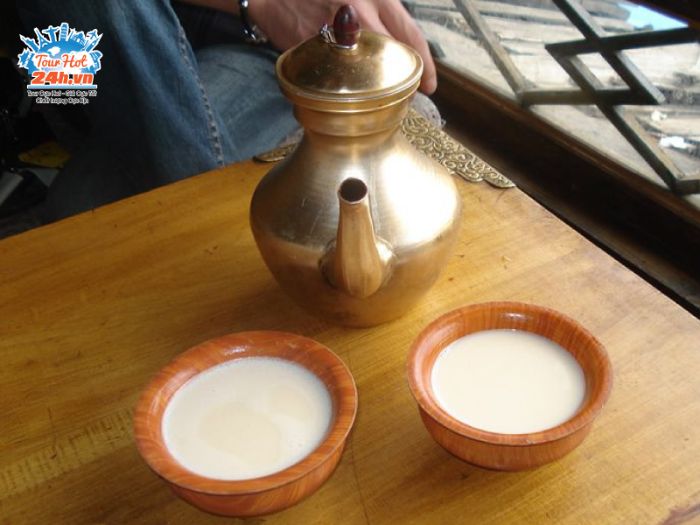
Butter Tea is a tea made from the branches and leaves of the famous tea tree in Jiuzhaigou. During the Ming Dynasty, it was also called “Biancha”. Tibetans mainly eat meat, with few vegetables and fruits, and most of their food lacks vitamins. So to supplement vitamins, they made “butter tea”.
“Butter Tea” must be a type of tea with a strong flavor that can cover the smell of butter and milk. The main ingredients of butter tea are tea, butter, milk, walnut powder, peanuts, sesame seeds, eggs and salt. Put these ingredients in a pot, mix well, boil the tea water until it turns red, then pour it in. Stir for a while and you will have a pot of fragrant butter tea.
Things to note when traveling to Jiuzhaigou Valley
- Jiuzhaigou Scenic Area is a high-altitude area, not suitable for strenuous exercise, so drink less wine and eat more vegetables and fruits to prevent altitude sickness. The elderly and the sick should prepare common medicines.
- Jiuzhaigou Valley has a humid, pleasant plateau climate, but the temperature difference between day and night is large, especially in late autumn after October. You can wear thin clothes during the day, but according to Jiuzhaigou travel experience, you should prepare an extra jacket to protect against the cold at night.
- The scenic area has strong sunlight and strong ultraviolet rays. If you stay outdoors for a long time, wear a sun hat and apply sunscreen to protect your skin.
- Jiuzhaigou has a dry winter climate, and is prone to forest fires, so in the off-season, the scenic area will close some plank roads. The closure of the plank roads only affects walking trips between scenic spots, not sightseeing at the scenic spots. The plank roads that are closed in the off-season are: the plank road from Changhai Parking Lot to Wucaichi, the plank road from Shangshihai to Zechawazhai, the plank road from Jianzhuhai to Pearl Beach, the plank road from Jinghai to Shuzhengmofang, and the plank road from Heijiao Bridge to Mizokou. In addition, during the off-season, the primeval forest protection station will be closed for conservation, and the three scenic spots in the area (primitive forest, sea of grass, and sea of swans) are not open to the public.
- Before boarding the sightseeing bus, please look at the map of the scenic spots and decide whether you should sit on the left or right side of the sightseeing bus. From Mizoguchi to Nuorilang Central Station, you will pass Shuzhenggou, the main attractions in Shuzhenggou are on the left, so when you get on the bus, you should choose a seat on the left.
- During the off-season, the entrance tickets to the scenic spots implement a second-time free entry policy. You just need to clearly state that you need to enter the ditch a second time when purchasing (or receiving the ticket) on the first day and complete the corresponding procedures to be able to enter the ditch a second time for free.
- It is best to join the Jiuzhaigou tour organized by a travel agency to ensure accommodation and safety.
- The Jiuzhaigou area is an area with high altitude, not suitable for strenuous exercise, so you should drink less alcohol and eat more vegetables and fruits to prevent altitude sickness. You should prepare common medicines.
- The elderly and weak should prepare common medicines, preferably a small oxygen tank (you can buy it in Chengdu). People with high blood pressure, coronary artery disease, and heart disease should be very careful when coming to Jiuzhaigou.
- Fireworks are strictly prohibited in scenic areas.
- Jiuzhaigou has strong sunlight and strong ultraviolet rays. If you stay outdoors for a long time, wear a sun hat and apply sunscreen to protect your skin.
- The temperature difference between day and night in the scenic area is large, so you should prepare enough warm clothes, cold protection and common medicines.
- Pay attention to protecting the environment of Jiuzhaigou, follow the arrangements of the management staff, and contact the staff in time if you encounter any difficulties.
- The main tourist attractions in Jiuzhaigou have relatively hidden toilets and trash cans, please contact the tour guide for guidance when needed!
- Absolutely do not feed the fish. For the best safety, it is best to go with a tour guide to avoid accidents.
- Do not drive fast on icy and snowy roads, and remember safety first.
- Those who like to take pictures and climb mountains, please bring specialized equipment and keep warm when outdoors.
- Please respect the lives and beliefs of local ethnic minorities and avoid conflicts with local residents, it is best to listen to the advice of the tour guide when shopping to avoid unnecessary disputes.
- The average temperature in Jiuzhaigou in spring is 6°C – 12°C, with a large temperature difference between day and night, with lots of sunshine during the day and low temperatures at night. You should prepare warm clothes, moisturizer for the night, and also prepare sunscreen for the day!
- The average temperature in Jiuzhaigou in summer is 13 – 21°C, with a small temperature difference between day and night. The day is warm and sunny, the night is relatively cool, you can prepare thin warm clothes. Although the temperature in Jiuzhaigou in summer is not too high, there are still UV rays, so remember to bring sunscreen.
- The average temperature in Jiuzhaigou in autumn is 4°C – 13°C, with a large temperature difference between day and night. At this time, Jiuzhaigou has entered the rainy season, the weather is cloudy and rains more. On sunny days, the autumn sun is intense, on rainy days the temperature drops. Visitors should bring windbreakers, warm clothes, raincoats and sunscreen products are also indispensable.
- The average temperature in Jiuzhaigou in winter is 0°C – 3°C, with little difference in temperature between day and night. At this time, the weather in Jiuzhaigou is dry and cold, visitors should bring enough warm and moisturizing clothes and should eat a lot of fruit. It is very bright after snowing, you should prepare yourself a pair of sunglasses!
Where is the ideal place to stay when traveling to Jiuzhaigou?
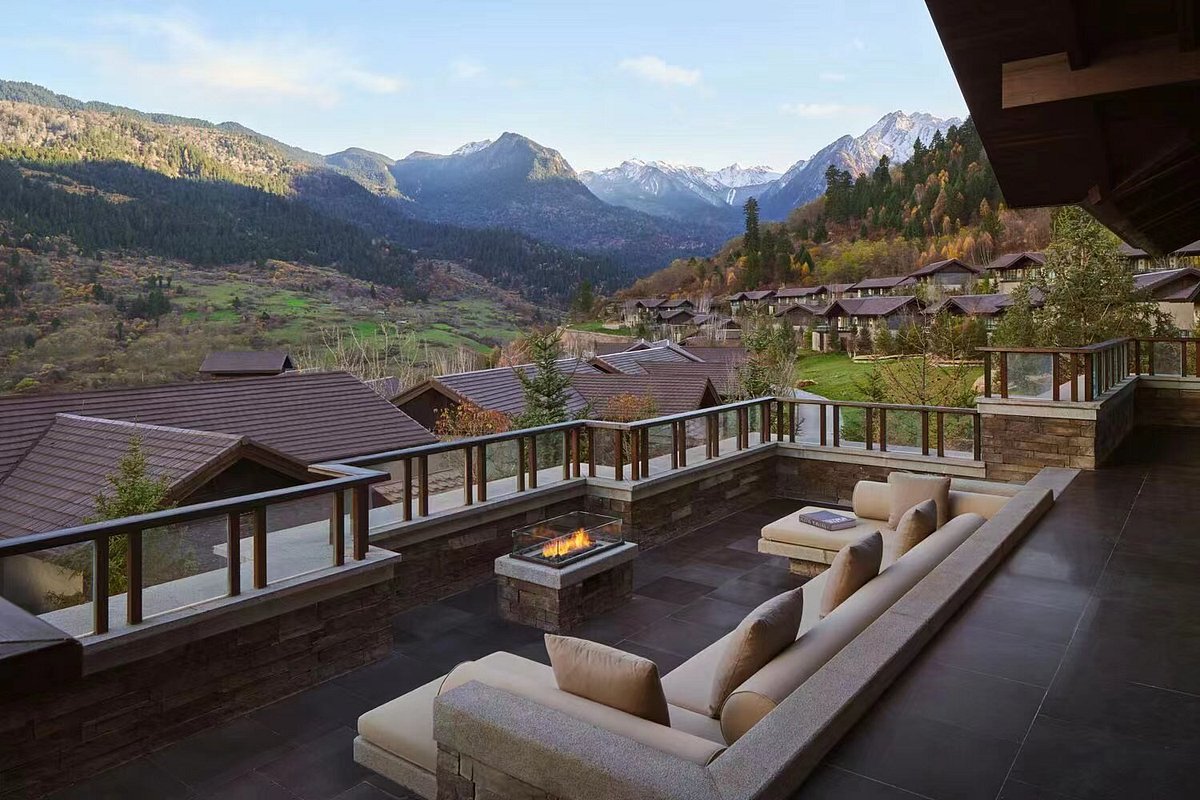
When traveling to Jiuzhaigou, Sichuan, you can usually choose to stay at a hotel located outside the Jiuzhaigou Scenic Area, right at the gateway to Jiuzhaigou, with a full range of high-end, mid-range and budget accommodations.
In addition, Zhangzha Town, Ganhaizi, Jiuzhaigou County, etc. According to Jiuzhaigou travel experience, you should stay in Jiuzhaigou Kou, which is closest to the scenic spots and has more hotel options.
You can choose a good hotel to stay in a group hotel, such as Tianyuan Howard Johnson, Sheraton, Jiuzhai Paradise, Hilton, etc.
Jiuzhaigou Kou
Most tourists choose to stay in Jiuzhaigou Kou, this area has a lot of hotels from star hotels to budget youth hostels, and there are also bustling food streets nearby. If you plan to visit Jiuzhaigou, staying here will save time traveling to and from the valley entrance.
Zhangzha Town
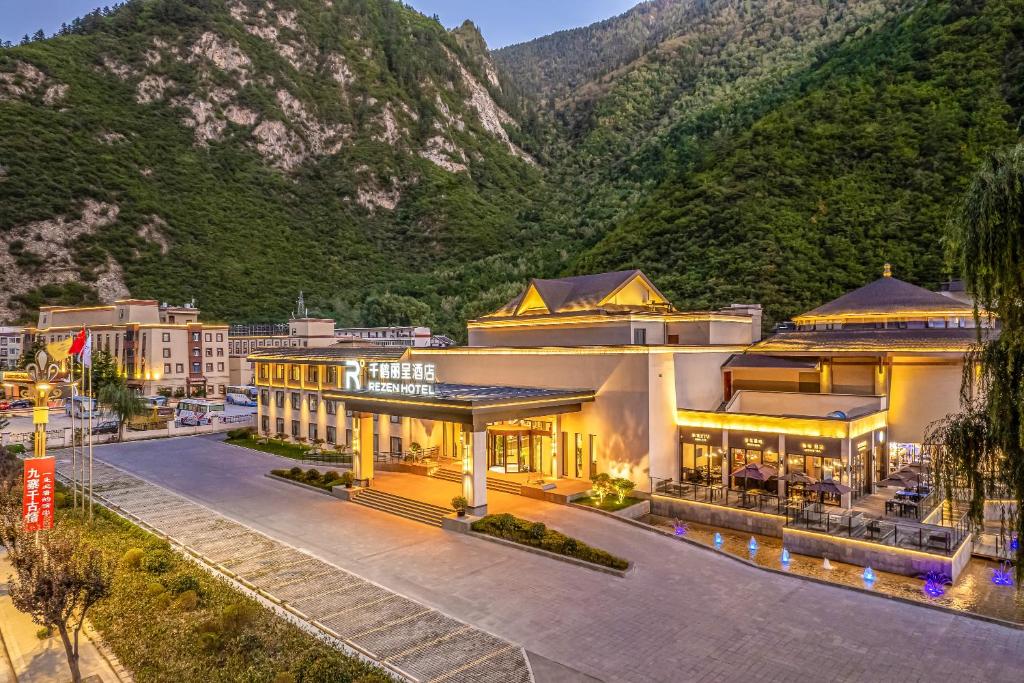
Zhangzha Town is not far from Mizoguchi, taking a taxi to Mizoguchi is the starting price, there are also many hotels in the area. Zhangzha Town has full facilities such as hospitals and schools nearby, suitable for people with high requirements for accommodation. In addition, Jiuzhaigou Tibetan Mi Grand Theater is also located here, where you can watch Tibetan and Qiang style dance performances in the evening.
Jiuzhaigou County
Jiuzhaigou County has more than 100 hotels, with better accommodation conditions than Mizoguchi and cheaper prices, but it is about 40km from Mizoguchi (less than an hour by car), so very few tourists choose to stay here. This is a good choice during the peak Jiuzhaigou tourist season.
Check out top and best hotels in Jiuzhaigou on Agoda or Booking.
How much does it cost to travel to Jiuzhaigou?
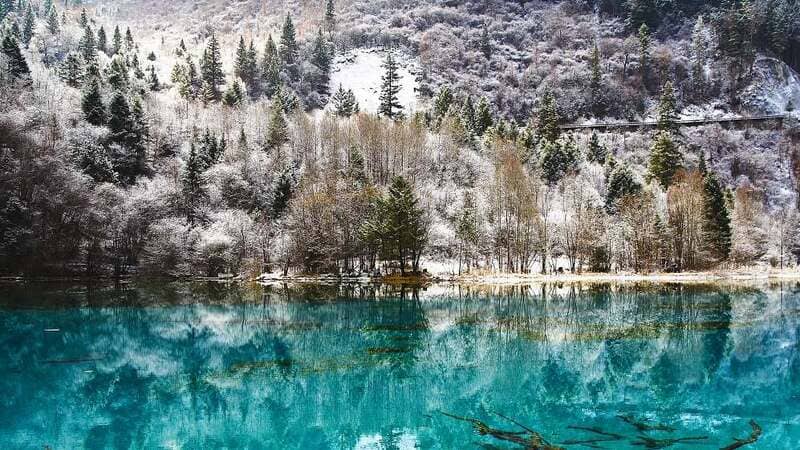
The price of a Jiuzhaigou tour depends on where you depart from, the type of transportation you use, as well as the standard of food and accommodation. There is no specific standard answer to this question, but some costs can be calculated during the trip as follows:
Transportation costs
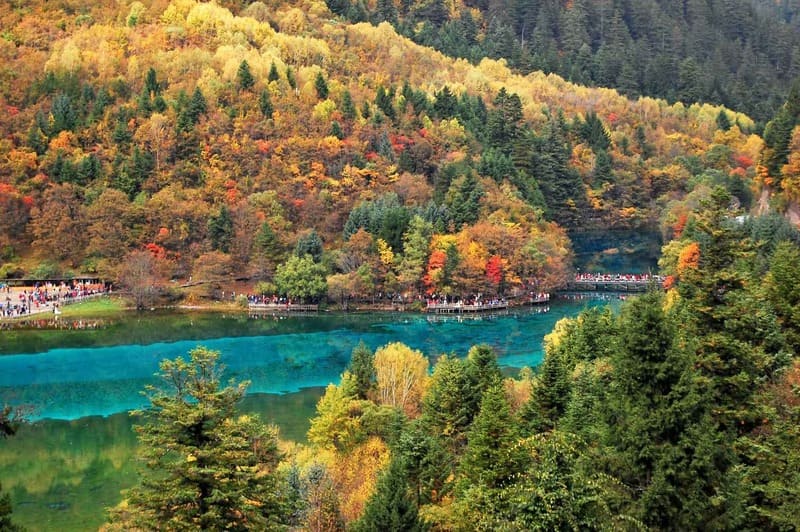
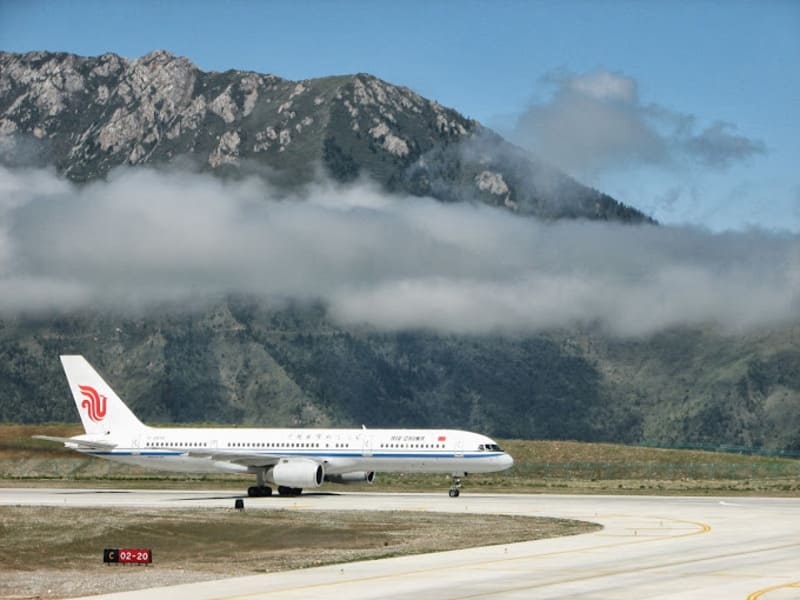
This cost usually accounts for the most in a Jiuzhaigou trip. Except for Beijing, Shanghai, Guangzhou, Chengdu, Chongqing, Xi’an, Mianyang and other cities with direct flights to Jiuzhaigou, other cities need to fly to Chengdu first and then transfer to Jiuzhaigou, the one-way ticket price from Chengdu to Jiuzhaigou is about 1,400 CNY (~4,800,000 VND).
The shuttle bus to Jiuzhaigou is cheaper and more affordable, the shuttle bus ticket from Chengdu to Jiuzhaigou is 147 yuan/person (~500,000 VND), the round trip is 292 yuan/person (~1,000,000 VND).
Accommodation costs
Accommodation prices vary greatly during the low and high seasons, there are many vacant seats in the off-season, the price is much cheaper, from tens to hundreds of yuan per room. In the high season, the price doubles.
Generally speaking, when traveling to Jiuzhaigou, you need to stay at least 2 nights, 200 yuan per night, usually a good hotel will cost more than 800 yuan for 2 nights.
Food costs
Along Jiuzhaigou Kou, there are many fast food restaurants, because many ingredients are imported from Chengdu, so the prices are a bit more expensive than on the mainland. However, in recent years, Jiuzhaigou has strongly developed greenhouse vegetables, the price of vegetables has decreased a lot. For stir-fried dishes, vegetarian dishes usually cost 8-10 yuan/dish and meat dishes 15-20 yuan/dish. Of course, you can also use noodles, steamed buns as snacks, which is more economical.
Food costs will cost about 300 yuan (~1,000,000 VND). There is a big difference in prices during the low season and the high season.
Other costs
Other costs include sightseeing tickets, show tickets (Jiuzhai Eternal Love show).
Jiuzhaigou ticket is 220 yuan/person (~750,000 VND) + sightseeing bus ticket is 90 yuan/person (~300,000 VND). Huanglong ticket is 200 yuan/person (~600,000 VND), total 2 attractions is 510 yuan/person (~1,700,000 VND). Of course, this is the peak season ticket, in the low season, Jiuzhaigou is 160 yuan (~550,000 VND) (including sightseeing bus) and Huanglong is 60 yuan (~200,000 VND). If you want to go to Huanglong, you need to take the cable car, the ticket price up is 80 yuan (~280,000 VND) and the way down is 40 yuan (~135,000 VND).
Including all of the above, the price of a 6-day, 5-night Jiuzhaigou tour ranges from 15,000,000 VND – 16,000,000 VND per person. If you go in a group, the cost will be lower.
Some best day tours, trips, activities and transfer services, tickets in, from and to Jiuzhaigou and Chengdu you can refer to
- [Klook Exclusive] Sichuan Stunning Jiuzhaigou 3-Day + X Private Tour
- Jiuzhaigou Valley Ticket with Shared Bus Transfer (3 Day Route) in Chengdu
- Jiuzhaigou High-speed Rail 3 Days (Songpan Ancient City + Jiuzhaigou Scenic Area)
- 3-day tour of Jiuzhaigou in western Sichuan
- 6-Day Tour of Jiuzhaigou Valley in Sichuan
- 5.5-day free travel in-depth tour of Jiuzhaigou in Chengdu, Sichuan Province
- Jiuzhaigou & Chengdu Giant Panda Base Three-Day Tour-Private Group Minimum Booking of 3 People
- 3-day 2-night round-trip train tour of Jiuzhaigou and Huanglong in Chengdu, Sichuan
- Dujiangyan Panda Base and Mount Qingcheng Tour from Chengdu
- Chengdu Gourmet Night Group Tour
- Chasing Dawa for 3 days and 2 nights (free Tibetan travel photography + Gedi Ram +
- Dawa Gengza + Shenmu Lei)
- Chengdu Radio and TV Tower Admission Ticket
- Essence of Chengdu City Private Day Tour
- Chengdu Downtown Private Car Charter
- Chengdu Panda Base Private Day Tour and Sichuan Cooking Class
- Dujiangyan Admission Ticket Chengdu
- Chengdu Food Day Tour with Chengdu Giant Panda Base Ticket
- Dufu’s Thatched Cottage Ticket Chengdu
- Classic Chengdu One Day City Tour
- Giant Buddha and Tea Terrace Town Day Tour from Chengdu
- Chengdu Private Day Tour (With Visit to Chengdu Panda Base and Hotpot Experience)
Read more top places to visit in Chengdu here. Read more China guide here.